


Top Stories

Court Cannot Grant Liberty To Amend Plaint While Rejecting It Under Order VII Rule 11(d) CPC: Supreme Court
The Supreme Court held that while rejecting a plaint under Order 7 Rule 11(d) of Code of Civil Procedure, the Court cannot grant liberty to the plaintiff to amend the plaint.The proviso to Rule 11 covers the cases falling within the ambit of clauses (b) and (c) and has no application to a rejection of a plaint under Order 7 Rule 11(d), the bench comprising Justices DY Chandrachud and MR...

Future Retail's Appeal Against Emergency Award Not Maintainable, Amazon Argues In Supreme Court
"Award delivered by the Emergency Arbitrator is valid, and Future Retail Ltd.'s interference is uncalled for", submitted Senior Advocate Gopal Subramanian, appearing for Amazon.com NV Investment Holdings LLC, to the Supreme Court in the appeal filed by Amazon pertaining to the Reliance-Future deal. A Bench headed by Justice Rohinton F. Nariman was hearing Amazon's challenge...

Motor Vehicles Act - Third Party Insurance Deemed To Be Transferred Along With Effective Control Over Vehicle In A Hire Agreement: Supreme Court
When a transport corporation hires a motor vehicle for use from its registered owner, the third-party insurance coverage will also be deemed to be transferred along with the vehicle, reiterated the Supreme Court in a recent decision.The person who is having the effective control and command of the vehicle will be regarded as the 'owner'. Therefore, along with the vehicle it must be deemed...
Supreme Court Upholds A Citizen's Right To Challenge A Constitutional Amendment Affecting States' Power
When a citizen of India challenges a constitutional amendment as being procedurally infirm, it is the duty of the court to examine such challenge on merits." , the Supreme Court observed while answering the Centre's submission that there is no challenge against Constitution 97th Amendment by States.The bench comprising Justices RF Nariman, KM Joseph and BR Gavai observed that the Constitution...
'Fundamental Right To Form Cooperative Societies', 'Article 43B': Remnants Of 97th Constitutional Amendment After Supreme Court Judgment
The Supreme Court struck down most of the provisions introduced by 97th Constitutional Amendment on the ground that the requisite ratification from states was not obtained as per Article 368(2) of the Constitution.The majority (2:1) also held that Part IXB is operative insofar as multi-State co-operative societies are concerned. But there are a couple of important provisions inserted by...

Once Substantive Provisions Of Part IXB Are Held Unconstitutional, Provisions On Multi-State Co-operative Societies Can't Be Saved : Justice Joseph's Dissent
The Doctrine of Severability must apply on surer foundations, said Justice KM Joseph while opining that the entire Part IXB of the Constitution dealing with co-operative societies is liable to be struck down.The majority judgment by Justice RF Nariman (Justice BR Gavai concurring) invoked doctrine of severability to hold that Part IXB of the Constitution of India is operative insofar...

De-Recognition Of Political Parties Can Be A Last Resort To Enforce Compliance, Election Commission Tells Supreme Court
"The recourse to Paragraph 16A in all cases may not be called for. Your Lordships may censure the political parties and see how an election or two fan out with the threat of 16A hanging over their heads. If nothing is done, the 16A route can be gone down", Senior Advocate Harish Salve, for the Election Commission of India, told the Supreme Court on Tuesday. The bench of Justices...
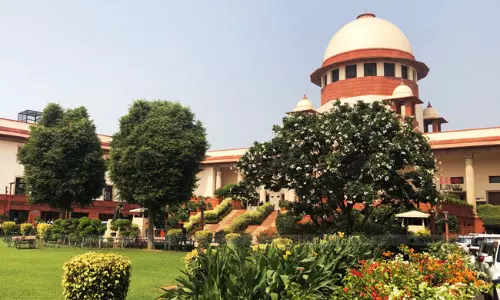
"Lawyers Think Entire Burden Is On Courts In PILs; PIL Like Any Other Writ Petition & Must Comply With Rules Of Pleadings": Supreme Court
The Supreme Court on Monday made it clear that while filing PILs, litigants have to comply with rules of pleadings and the entire burden of fact-finding cannot be left on Courts. "Advocates think that in PILs entire burden can be cast upon the Court. You at least produce which are the FIRs, give us the details. PIL is like any other regular writ petition. You have to help yourself and comply...
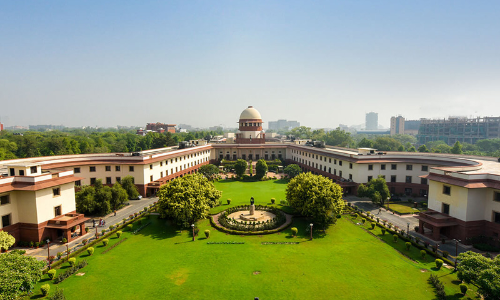
States Have Exclusive Legislative Power In Cooperative Societies' Matter: Supreme Court
Co-operative societies as a subject matter belongs wholly and exclusively to the State legislatures to legislate upon, the Supreme Court observed in its judgment striking down the provisions of the Constitution(97th Amendment) Act to the extent it introduced Part IX B in the Constitution to deal with co-operative societies.The bench comprising Justices RF Nariman, KM Joseph and BR...
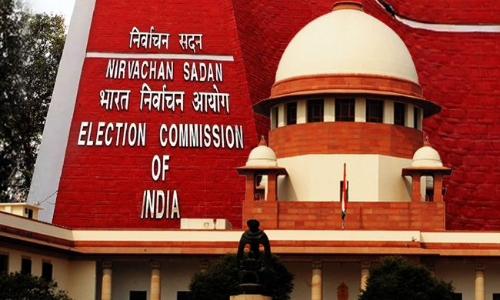
Can Political Parties Be De-Recognized For Failing To Publish Candidates' Criminal Antecedents Candidates? Supreme Court Discusses
"Are we to just put up our hands?", Justice Rohinton Nariman asked on Tuesday when Senior Advocate Kapil Sibal, for the Nationalist Congress Party, attempted to dissuade the Court against the invocation by the ECI of its power to suspend or withdraw recognition of a recognised political party for its failure to observe Model Code of Conduct or follow lawful directions and instructions of...