Supreme court
LiveLaw Supreme Court Weekly Digest: September 1 - 10, 2026
Administrative Law — Precedents & Internal Departmental Notings — Legal Efficacy - Internal Departmental File Notings — Held - Departmental file notings do not carry the sanction of law to become an executable order - A noting recorded by an officer (such as the Executive Director / LAD of SEBI) represents mere internal viewpoints/opinions expressed for internal deliberations...
Supreme Court Acquits Man In POCSO Case Over Victim's Failure To Identify Him In Court, Unexplained Delay In FIR
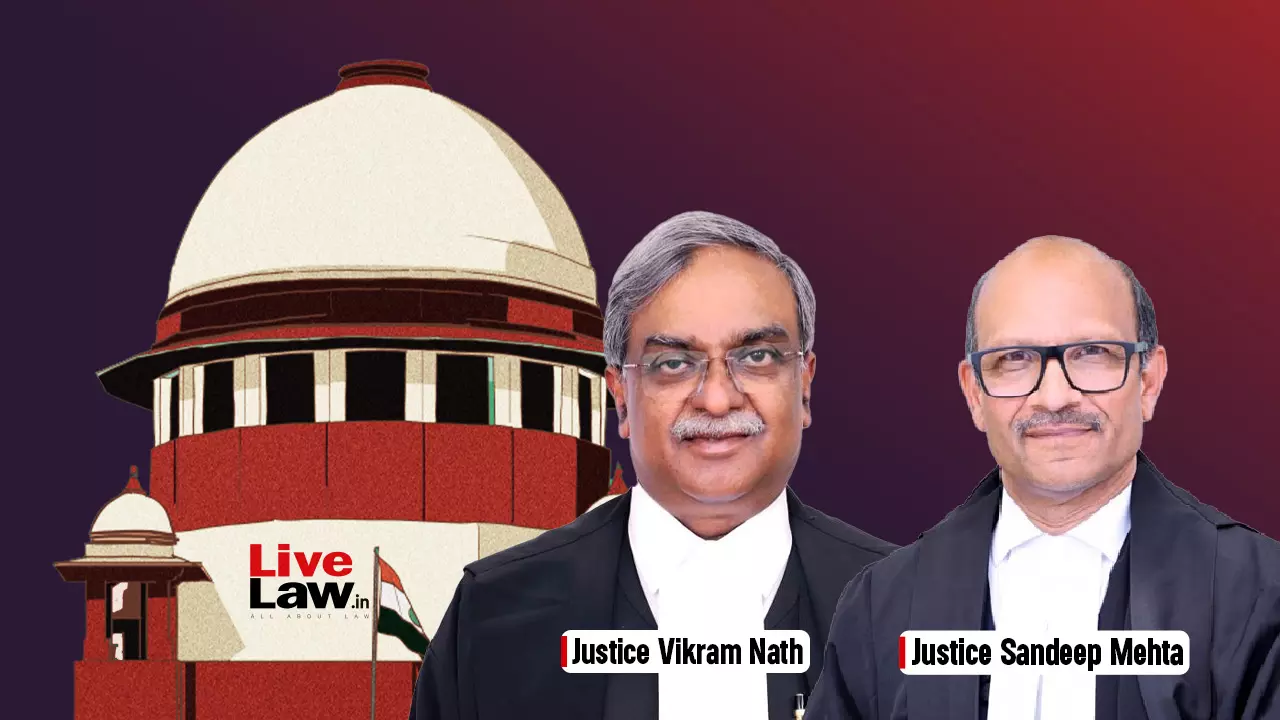
The Supreme Court on Friday (October 9) has acquitted a man convicted under Section 6 of the Protection of Children from Sexual Offences Act, 2012 (POCSO Act) for sexually assaulting a minor girl with intellectual disability, holding that the prosecution had failed to prove his guilt beyond reasonable doubt.A bench of Justice Vikram Nath and Justice Sandeep Mehta set aside the concurrent findings of the trial court and the Meghalaya High Court. It found that the evidence of the victim's mother...
Lawyers' Body Moves Supreme Court; Says Protests Cannot Paralyse Delhi, Impede Lawyers' Livelihood
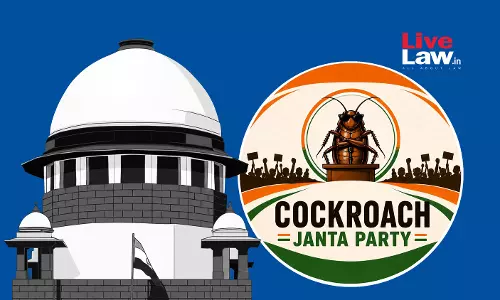
A lawyers' body has moved the Supreme Court alleging that successive demonstrations by Cockroach Janta Party (CJP) in Delhi are aimed at attracting media attention and are disrupting the livelihood and professional functioning of advocates.The plea has been filed by Lawyers Voice seeking permission to intervene in contempt proceedings arising out of a plea concerning protests called by CJP. The contempt plea alleges that metro services in the national capital remained substantially shut on...

PIL In Supreme Court Seeks Scrutiny Of Central Delhi Internet Shutdown During CEC Protest
A Public Interest Litigation has been filed before the Supreme Court seeking judicial scrutiny of the suspension of mobile internet services within a four-kilometre radius of the Janpath–Kartavya Path crossing in Central Delhi on October 9 and 10 during protest against Chief Election Commissioner Gyanesh Kumar.Filed by advocate Narendra Kumar Goswami, the petition seeks production of the original reasoned order authorising the suspension, the material relied upon to justify the restriction,...
CEC Protest: CJP Member Moves Supreme Court Seeking Release of Abhijeet Dipke, Saurav Das & Others Over Alleged Detention
Update at 1:01 am: The Advocates who filed the petition has clarified that the petition is not filed by the Cockroach Janta Party in its official capacity. As per latest developments, the petitioner Gaurav Bharti, has sought withdrawal.Cockroach Janata Party member has filed a habeas corpus petition in the Supreme Court seeking production and release of its founder Abhijeet Dipke, co-convenor Saurav Das, spokesperson Ashutosh Ranka and other persons allegedly detained in connection with the...
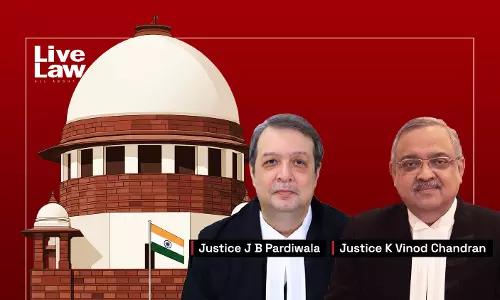
Govt Servant Cannot Claim Inter-District Transfer As Right; Education System Is For Students, Not Teachers' Convenience: Supreme Court
The Supreme Court has recently held that being displaced from one's family is a universal problem faced by employees, and that a Government servant cannot claim an inter-district transfer, as a matter of right on that ground.A bench of Justice JB Pardiwala and Justice K Vinod Chandran held so while setting aside an Allahabad High Court order that had prima facie found contempt in the rejection...
Hindu Widow's Limited Interest Became Absolute Under 1956 Succession Act : Supreme Court
The Supreme Court has held that a Hindu widow's limited interest in agricultural land can become absolute ownership under Section 14(1) of the Hindu Succession Act, 1956, and that succession must be determined by considering the personal law applicable at the time of her death.A Bench of Justice S.V.N. Bhatti and Justice N.V. Anjaria heard the case concerning a dispute over approximately...
Supreme Court Daily Round-Up : October 9, 2026
Links to the reports of October 9 :'Shocking' : Supreme Court Questions MP High Court For Reducing Murder Conviction In Cryptic & Casual MannerSupreme Court Orders Integration Of Digital Portals On Road Accidents To Curb Fake ClaimsVictim Also Has Right To Seek Speedy Trial Like Accused : Supreme Court'We Are Conscious' : Supreme Court To Consider Plea To Prioritise SIR-Deleted Voters'...
Once Prima Facie Existence Of Arbitration Agreement Shown, Dispute Must Be Referred To Arbitration : Supreme Court
The Supreme Court has held that once the prima facie existence of an arbitration agreement is established before a referral court, it ought to appoint an arbitrator and refer the parties to arbitration, reiterating that judicial scrutiny at the stage of referring disputes to arbitration is limited.A bench of Chief Justice of India Surya Kant, Justice Joymalya Bagchi and Justice V. Mohana...
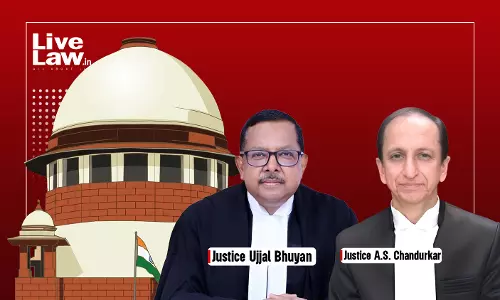
Victim Also Has Right To Seek Speedy Trial Like Accused : Supreme Court
The Supreme Court has held that a victim of an offence has the locus standi to approach the High Court seeking expeditious disposal of a criminal trial, ruling that the right to a speedy trial is not the exclusive prerogative of the accused but is equally available to the victim.A Bench of Justice Ujjal Bhuyan and Justice Atul S. Chandurkar set aside a Delhi High Court order that had dismissed...
Supreme Court Daily Round-Up : October 8, 2026
Links to the reports of October 8 : 'ASI Lost Credibility': Supreme Court Lambasts Agency After Lodhi-Era Monument Found Used As Cow Shed, Dumping YardFreebies To Doctors : Supreme Court Asks Union To Form Committee To Recommend Regulations On Pharma Marketing PracticesSupreme Court Adjourns Punjab Plea Challenging CBI Probe Against CM Bhagwant Mann's OSD Till TomorrowIf Breakup Ends Up...