




Tax

Looking For More Tax Law Updates?
LiveLawBiz is LiveLaw's dedicated platform for tax and regulatory laws.If you follow developments in direct tax, indirect tax (GST), customs, tax litigation or regulatory matters, we invite you to visit LiveLawBiz for more specialised and comprehensive coverage. LiveLawBiz brings you: - • IPR • Corporate Law • Competition Law • RERA • IBC While selected major tax developments will continue to appear on LiveLaw, more detailed and regular coverage is now available on...

No 'Intelligible Differentia' In Excluding Same-Sex Couples From Spousal Gift-Tax Benefits: Karnataka High Court Told
A same-sex couple challenging the denial of gift-tax exemption available to married couples under the Income Tax Act, 1961 has told the Karnataka High Court that the test of “intelligible differentia” under Article 14 of the Constitution cannot justify their sex-based exclusion, and the same would attract anti-discriminatory provision of Article 15.The submission was made before Justice B...
Income Tax | Fresh Claim Cannot Be Raised Before Revisional Authority Without Timely Revised Return : Supreme Court
The Supreme Court has held that a fresh claim before the Revisional authority cannot be filed by the assessee without filing a revised return in accordance with law. A bench of Justice Prashant Kumar Mishra and Justice Shree Chandrashekhar dismissed an assessee's plea against the Orissa High Court's decision to uphold the income tax authority's decision to decline the fresh claim of...
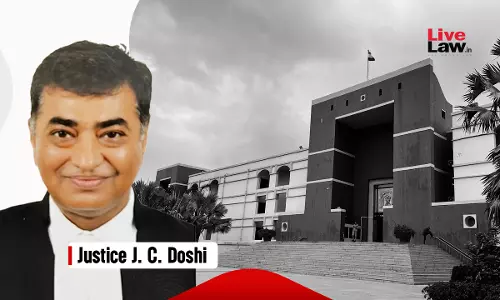
Unmerited Appeal Against Motor Accident Award Is Abuse Of Process, Aggravates Victim's Hardship: Gujarat High Court
The Gujarat High Court observed that the statutory right of appeal, though valuable, cannot be used to re-agitate issues already settled by binding precedents and in a manner that results in abuse of the process of law and aggravates victim's hardship. [2026 LiveLaw (Guj) 279]While dismissing an insurance company's appeal against a motor accident award, the High Court further held that Income...
Same-Sex Couples' Exclusion From 'Spouse' Benefits Under Income Tax Act Violates Article 15: Karnataka High Court Told
The Karnataka High Court was told on Friday (October 9) that excluding same-sex couples from the 'spouse' benefit under the Income Tax Act, 1961, amounts to discrimination on the ground of sex and violates Article 15 of the Constitution.Appearing for the petitioners, Dr. Dhruv Janssen-Sanghavi argued before Justice B M Shyam Prasad that the case is fundamentally about equality under Article...
Income Tax | Subsidy Can Become Taxable Depending On Purpose Test : Supreme Court
The Supreme Court on Wednesday (October 7) held that an electricity subsidy calculated based on power charges incurred by an industrial undertaking is a revenue receipt liable to tax when it is intended to reduce operational costs rather than contribute to capital investment. A bench of Justice Prashant Kumar Mishra and Justice Shree Chandrashekhar dismissed an appeal filed by an...
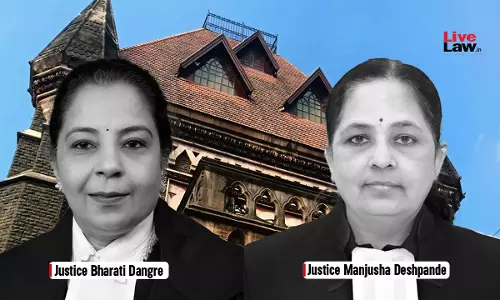
'Merely Running School Is Not Charitable Purpose': Bombay High Court Rejects Education Trust's Property-Tax Exemption Bid
The Bombay High Court has dismissed a petition filed by Jai Hind Sindhu Education Trust seeking exemption from property tax, holding that an educational institution must establish for every financial year that its buildings and lands are solely occupied and used for a public charitable purpose. The Court held that merely running an educational institution, or being a linguistic...
Tax Classification Must Be Based On Form Of Goods At Stage Of Sale & Not Its End Use : Supreme Court
"The tax authorities are bound to look at what is supplied and not at what is the 'end use' of the good," the Court said.
No More Arrest For Tax Recovery: What CBDT's Amendment To Rule 225 Really Changes
The CBDT on 17th September 2026 via a notification amended the new Income-tax rules of 2026 (“2026 Rules”) to remove the powers of the Tax Recovery Officer to arrest to recover tax arrears. This appears in line with the Finance Act 2026 which removed the substantive power to arrest from section 413 of the Income-tax Act, 2025 (“2025 Act”) and section 222 of the Income-tax Act, 1961 (“1961 Act”). Thus, the latest notification serves to remove the corresponding procedural machinery from the Rules...
Supreme Court Stays Delhi High Court's Judgment Upholding GST Dept Seizure Of Advocate's Office Computers
The Supreme Court today (28 September) stayed the Delhi High Court's judgment which had upheld the search and seizure conducted by the Goods and Services Tax Department (GST Department) at the office of Advocate Puneet Batra and his law firm, Bass Legal LLP. It also directed Batra to appear for investigation on Wednesday (30 September), instead of today. The bench also questioned the...
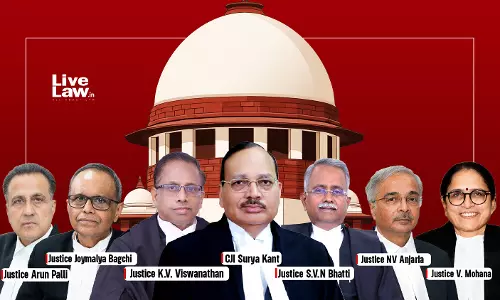
Supreme Court 7-Judge Reserves Judgment On States' Power To Levy Surcharge/Additional Tax On Sales Tax
The Centre said that the issues have become largely academic after the enactment of the GST Act in 2017

Kerala High Court Quashes Order Dismissing Actor Jayasurya's Income Tax Appeal, Remands For Fresh Consideration
The Kerala High Court has quashed an order dismissing actor Jayasurya's (Jayan Vathakkattu Moni) income tax appeal, holding that an income-tax appellate authority cannot dismiss an appeal solely because the assessee failed to appear for the hearing.Justice Ziyad Rahman A.A. observed that the appellate authority is bound to frame points of determination as per Section 250(6) and answer the same...