




Arbitration

Looking For More Arbitration Law Updates?
LiveLawBiz is LiveLaw's dedicated platform for arbitration and dispute resolution laws.If you follow developments in domestic and international arbitration, commercial disputes, enforcement of awards or related regulatory matters, we invite you to visit LiveLawBiz for more specialised and comprehensive coverage. LiveLawBiz brings you: - • IPR • GST/VAT/CST • Competition Law • RERA • Tax • IBC While selected major arbitration developments will continue to appear...
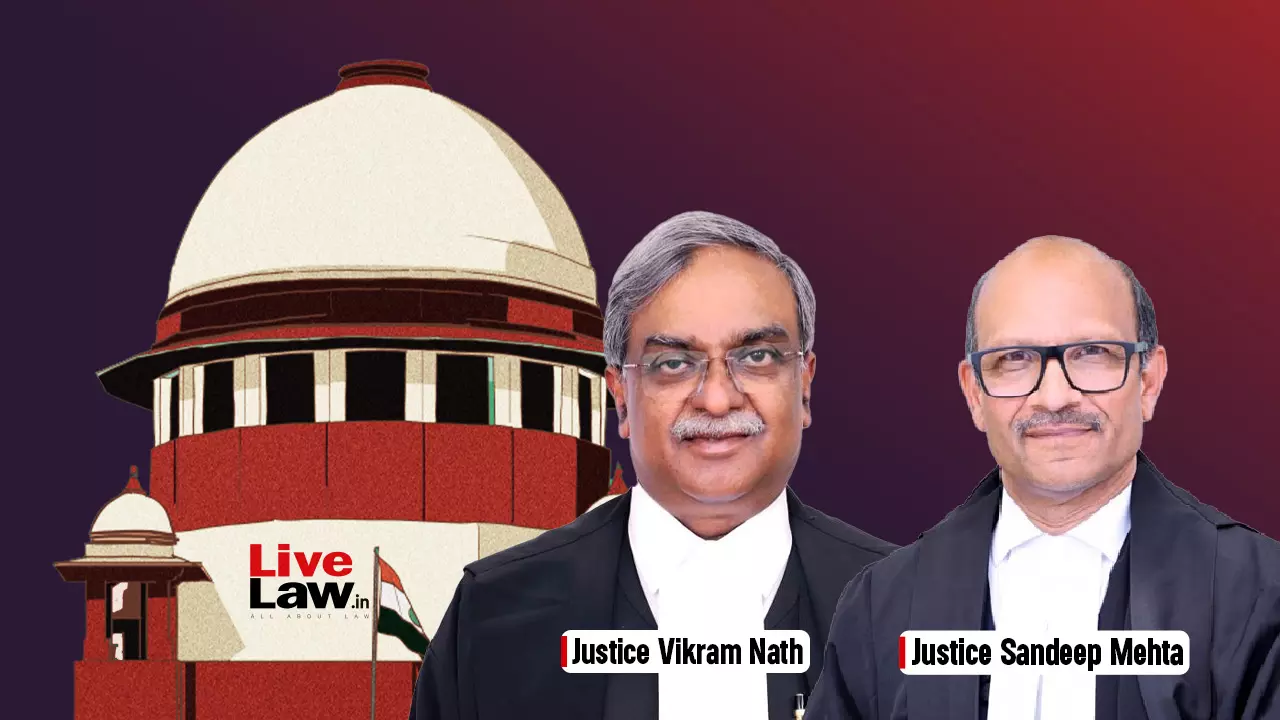
Arbitration Clause Does Not Bar Criminal Case : Supreme Court
The Supreme Court has recently held that the existence of an arbitration clause in an agreement does not bar criminal proceedings. It further observed that courts must first examine whether the allegations disclose the essential ingredients of the offence.A bench of Justice Vikram Nath and Justice Sandeep Mehta observed so while hearing an appeal against a Gauhati High Court order refusing...
Non-Signatories Can Be Joined In Arbitration If Dispute Affects Their Rights: Supreme Court
The Supreme Court has held that a non-signatory to an arbitration agreement may be included in arbitration proceedings when the dispute substantially affects their rights, emphasising that the determination of whether someone is a “veritable party” depends on the facts and circumstances of each case. A bench of Justice J.B. Pardiwala and Justice K. Vinod Chandran observed that the...
Arbitration | Governing Law Clause Relevant For Seat Determination Where Agreement Mentions Two Venues : Supreme Court
The Supreme Court on Monday (October 12) held that where an arbitration clause mentions two places for arbitration without clearly designating one as the juridical seat, the governing law clause conferring exclusive jurisdiction on courts at a particular place becomes relevant in determining the parties' intention to identify the seat of an arbitration. “that mere expression “place...
Once Prima Facie Existence Of Arbitration Agreement Shown, Dispute Must Be Referred To Arbitration : Supreme Court
The Supreme Court has held that once the prima facie existence of an arbitration agreement is established before a referral court, it ought to appoint an arbitrator and refer the parties to arbitration, reiterating that judicial scrutiny at the stage of referring disputes to arbitration is limited.A bench of Chief Justice of India Surya Kant, Justice Joymalya Bagchi and Justice V. Mohana...
S. 17 Arbitration Act | Arbitral Tribunal Does Not Exercise Appellate Jurisdiction Over Section 9 Orders: Supreme Court
The Supreme Court recently held that a High Court hearing an appeal under Section 37 of the Arbitration and Conciliation Act against an interim order passed under Section 9 cannot, even with the consent of the parties, delegate its appellate authority to the Arbitral Tribunal by directing it to hear the challenge to the Section 9 order under its Section 17 jurisdiction to grant interim...

Supreme Court Dismisses Percept's Appeal Against ₹14.49 Crore Arbitral Award In Favour Of Sourav Ganguly
The Supreme Court on Monday refused to entertain an appeal filed by Percept Talent Management challenging a Calcutta High Court judgment which upheld a ₹14.49 crore arbitral award in favour of former Indian cricket captain Sourav Ganguly.A bench of CJI Surya Kant, Justice Joymalya Bagchi and Justice V Mohana was dealing with Percept Talent Management Ltd.'s plea against the Calcutta High...
Arbitral Tribunal Cannot Award Pre-Reference Interest If There's Contractual Bar: Supreme Court
The Supreme Court has held that when a contractual clause bars claims for interest arising from delay in making periodical or final payments, it is impermissible for an arbitral tribunal to award the same as a pre-reference interest under Section 31(7)(a) of the Arbitration and Conciliation Act, 1996. A bench of Justice Pamidighantam Sri Narasimha and Justice Alok Aradhe set aside the...
Arbitration | High Court's Location Doesn't Become Arbitration's Seat Just Because HC Appointed Arbitrator : Supreme Court
The Supreme Court on Wednesday (September 23) has held that mere conduct of arbitral proceedings at a particular place does not, by itself, determine the juridical “seat” of arbitration, in the absence of an express designation or agreement between the parties. A Bench of Justice Sanjay Kumar and Justice Sanjeev Sachdeva set aside the Orissa High Court's judgment, which had deemed Cuttack...

Weaponizing Sections 11 And 16: Judicial Trends On Dilatory Tactics In Indian Arbitration
In India, arbitration is the most overpriced and time-consuming process for dispute resolution. This phrase became very popular amongst the members of the bar and bench, in recent years. The intent of the legislature to make India a hub of arbitration by introducing timelines right from invoking arbitration to parties completing their pleadings and in last pronouncement of the award by the Arbitrator. Furthermore, the legislature has introduced Section 11 and Section 16 the Arbitration and...
Why Arbitration Council Of India Still Not Taken Off?
In February 2026, the Government told Parliament what the arbitration bar already knew: the Arbitration Council of India has not been constituted as yet. The admission was brief, almost routine. It should not have been. Parliament wrote the Council into the statute book in 2019, gave it a head office in Delhi and a mandate to shape the future of Indian arbitration, and then left the chair empty for close to seven years. India has spent that time announcing its ambition to become a global...