


Arbitration
Pre-Arbitration Reference To DRC Would Not Be A Bar To Appointment Of Arbitrator When The Chief Engineer Has Failed To Respond To Notice Of Dispute: Delhi High Court
The Delhi High Court has held that in a multi-tier dispute resolution clause which provides for pre-arbitration reference to Dispute Resolution Committee (DRC), the failure to refer the dispute to DRC would not be a ground to refuse appointment of arbitrator when the Chief Engineer against whose decision an appeal was to be filed before DRC failed to respond to notice of...
Objection To Civil Suit In View Of Arbitration Clause To Be Raised Before Court Of First Instance: Karnataka High Court
The Karnataka High Court has set aside a trial court order dismissing a suit filed by Nova Medical Centers Pvt Ltd. on the premise that the dispute is arbitrable. Court noted that the defendant had failed to raise objection as to jurisdiction of Civil Court. A single judge bench of Justice Anant Ramanath Hegde observed,“It is a well-settled principle of law that the objection to entertain...
Designation Of Venue Would Override A Generic ‘Exclusive Jurisdiction’ Clause: Delhi High Court
The Delhi High Court has held that a venue where the arbitral proceedings were anchored is essentially the ‘seat of arbitration’ and it would override a generic exclusive jurisdiction clause. It held that a generic exclusive jurisdiction clause is not a contrary indicia that prevents the venue from becoming the seat of arbitration. The bench of Justice Sachin Datta held that for...
Arbitration Clause Cannot Be Incorporated By Reference, Without Clear Intention Of Parties: Calcutta High Court
The Calcutta High Court has recently dismissed applications for interim relief filed by Kobelco Construction Equipment India Private Limited under Section 9 of the Arbitration and Conciliation Act, 1996 (“Act”).In dismissing the prayer for an interim injunction on the respondents, and holding that the petitioners could not be allowed to incorporate an arbitration clause by-reference from...

Arbitration Cases Weekly Round-Up: 07 to 13 August 2023
Supreme Court: Court Has No Power To Modify Award Under S. 34 Arbitration & Conciliation Act : Supreme Court Case Title: Larsen Air Conditioning and Refrigeration Company vs Union of India The Supreme Court reiterated that a court, under Section 34 of the Arbitration and Conciliation Act, has no power to modify an arbitration award. The limited and extremely...
Court Has No Power To Modify Award U/Sec 34 Arbitration & Conciliation Act : Supreme Court
The Supreme Court reiterated that a court, under Section 34 of the Arbitration and Conciliation Act, has no power to modify an arbitration award.The limited and extremely circumscribed jurisdiction of the court under Section 34 of the Act, permits the court to interfere with an award, sans the grounds of patent illegality, the bench of Justices S Ravindra Bhat and Dipankar Datta said.In...
Claim Of Damages, Supplementary Agreement Executed Under Duress Can’t Come In The Way : Delhi High Court
The High Court of Delhi has held that a supplementary agreement executed by a contractor whereby it agrees to forego of its claims cannot preclude him from claiming damages against the employer if the execution of such agreement was a pre-condition to the issuance of PCC necessary for collection of toll taxes in BOT contracts. The bench of Justice Yogesh Khanna held that a party would...
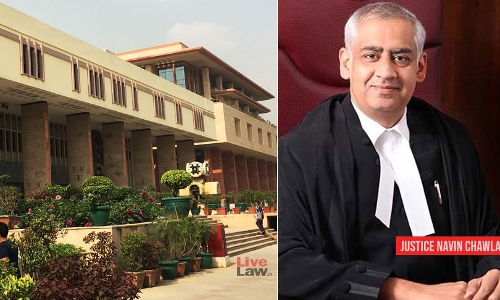
If Head Of The Families Are Parties To Arbitration Agreement And Others Have Signed, All Are Bound By Arbitration Clause: Delhi High Court
The High Court of Delhi has held that all the members of the families would be bound by the terms and conditions of a settlement agreement executed between the heads of the two branches of families if they have signed the said agreement that pertains to the properties owned by them. The bench of Justice Navin Chawla held that a party appending its signature of an MoU is bound by the...
Contractor Cannot Deny Payments To ‘Sub-Contractor’ Merely On The Ground That It Has Not Received The Payments From The ‘Employer’: Delhi High Court
The High Court of Delhi has held that a contractor cannot deny payments to the ‘Sub-contractor’ merely on the ground that the contract is on back-to-back basis and it has not received the payments from the main employer. The bench of Justice Manoj Kumar Ohri held that ordinarily in back-to-back contracts, the payments due to a ‘Sub-contractor’ is subject to the payment by...
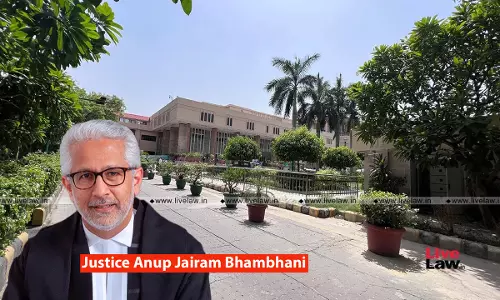
Delhi High Court Directs Release Of Rs. 16 Crores To Landmark Group As Per 2018 Arbitral Award Against Ansal Group
The Delhi High Court has directed release of over Rs. 16 Crores deposited with the court Registry, in favour of the Landmark Group in the execution petition filed by it seeking enforcement of the arbitral award passed against the Ansal Group. In 2018, an Arbitral Tribunal had awarded a sum of Rs. 46.01 Crores in favour of the Landmark Group against the Ansals in a dispute between the...
Time Limit For Passing Award Under S. 29A Of Arbitration Act A Non-Derogable Provision, S.4 Of The Act Has No Application: Bombay High Court
The Bombay High Court has ruled that even though the parties had participated in the arbitral proceedings continued by the Arbitrator after his mandate had expired, the same cannot amount to a waiver under Section 4 of the Arbitration and Conciliation Act, 1996 (A&C Act). The court remarked that Section 29A of the A&C Act that provides the time limit for passing the award, is...
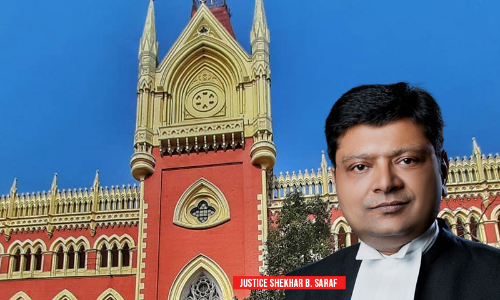
‘Fraudulent’ Conduct Of Railways Has Shocked Our Conscience: Calcutta HC Unconditionally Stays Arbitral Award, Directs Probe By Union Govt
The Calcutta High Court today unconditionally stayed an award granted in favour of the South Eastern Railways (“SER”) under the Arbitration & Conciliation Act, 1996 (“Arbitration Act”) on grounds of fraud and corruption perpetrated by collusion between the parties in obtaining the impugned award.In expressing his dismay and directing an investigation into the matter by a...