



Chhattisgarh High Court
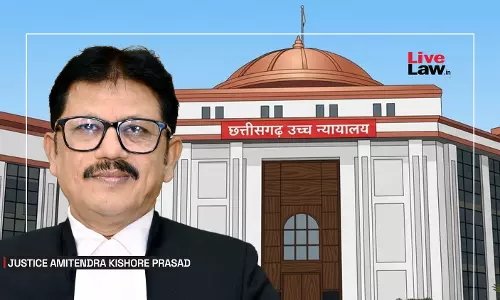
'Fatwas Have No Legal Status Or Binding Enforceability': Chhattisgarh High Court Dismisses Plea Alleging Social Boycott
The Chhattisgarh High Court has dismissed a writ petition alleging that a Fatwa issued by a local mosque committee had resulted in the social boycott of a brother and sister, observing that Fatwas have no binding legal force and cannot be enforced through coercive means. The Court observed that the petitioners had failed to produce cogent material establishing that the alleged Fatwa had...
Failure To Seek Recount During Counting Alone Does Not Justify Rejecting An Election Petition: Chhattisgarh High Court
The Chhattisgarh High Court has upheld an Election Tribunal's decision refusing to reject an election petition merely because the election petitioner had not sought recounting of votes during the counting process. The Court held that specific allegations of discrepancies in vote tabulation and manipulation of election records raised triable issues which required adjudication on evidence....
Supreme Court Collegium Recommends Six Names For Appointment As Chhattisgarh High Court Judges
The Supreme Court Collegium, in its meeting held on October 30, 2026, has approved the proposal for the appointment of six persons as Judges of the Chhattisgarh High Court.The six persons recommended for appointment include four advocates and two judicial officers.The advocates recommended by the Collegium are Anand Shukla, Ratna Nidhi Pusty, also known as R.N. Pusty or Ratan Pusty,...
Land Acquisition Can Be For 'Public Purpose' Even If Private Entity Derives Incidental Benefit: Chhattisgarh High Court
The Chhattisgarh High Court has held that land acquisition for railway connectivity to a Gati Shakti Multi-Modal Cargo Terminal constitutes a public purpose, even if a private company operating the terminal derives incidental or consequential benefit from the project. The Court observed that Section 20-D of the Railways Act, 1989, gives landowners the right to raise objections and have...
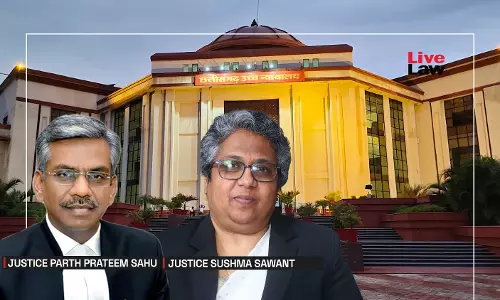
Mere Acquittal In Criminal Proceeding U/S 498A IPC Does Not Establish That Cruelty Allegations Were False: Chhattisgarh High Court
The Chhattisgarh High Court has held that a husband's acquittal in a criminal proceeding under Section 498A of the Indian Penal Code does not, by itself, establish that the allegations constituting cruelty against him were false. The Court observed that cruelty must be determined by examining the evidence in the matrimonial proceedings as a whole. [2026 LiveLaw (Chh) 142]A division bench...
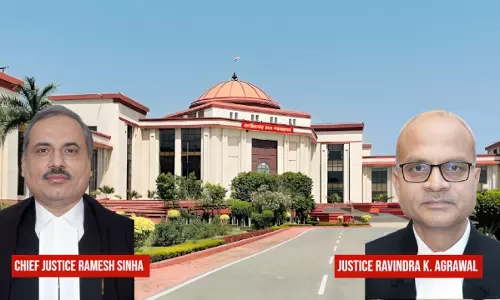
Probationer Can Be Terminated For Unsatisfactory Performance Without Enquiry: Chhattisgarh High Court Reiterates
A Division Bench of the Chhattisgarh High Court comprising Chief Justice Ramesh Sinha and Justice Ravindra Kumar Agrawal held that the termination of a probationer's services, based on unsatisfactory performance and allegations of misconduct is not punitive in nature, and it does not require a departmental enquiry under Article 311 of the Constitution. [2026 LiveLaw (Chh)...
LiveLaw Chhattisgarh High Court Monthly Digest: September 2026
Citation: 2026 LiveLaw (Chh) 51 to 2026 LiveLaw (Chh) 93Nominal IndexVasudev Sahu v. State of Chhattisgarh & Ors. 2026 LiveLaw (Chh) 51Samarpita Paul v. Union of India & Ors. 2026 LiveLaw (Chh) 52Chhaya Singh v. High Court of Chhattisgarh & Ors. 2026 LiveLaw (Chh) 53The Registrar General, High Court of Chhattisgarh & Anr. v. Bheem Singh Dhruv & Ors. 2026 LiveLaw...
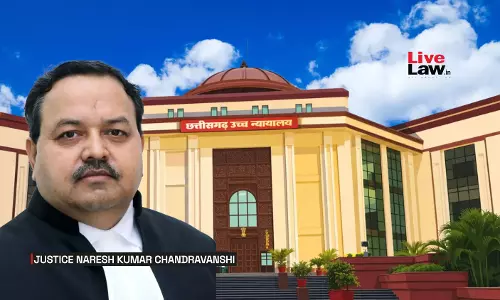
Mere Beating Five Days Before Suicide, Without Intent To Instigate Does Not Prove Abetment: Chhattisgarh High Court Acquits Accused
The Chhattisgarh High Court has acquitted four accused convicted under Sections 306/34 of the Indian Penal Code, holding that the beating of a woman five days before her suicide, without evidence of an intention to instigate her to take her life, does not establish abetment of suicide. The Court observed that a conviction under Section 306 IPC requires clear, conscious and deliberate intention...
'Officers Not Posted In Dept During RTI Response Period Cannot Be Penalised For Delayed Disclosure': Chhattisgarh High Court
The Chhattisgarh High Court has quashed a ₹25,000 penalty imposed under the Right to Information Act on two Tahsildars who were not posted at the concerned Tahsil when the RTI application and first appeal were filed. The Court held that no liability could be fastened upon the petitioners as they were not posted at Dhamdha when the information was sought and the State Information Commission...
Permanent Alimony Cannot Be Adjudicated For First Time On Appeal Without Pleadings, Evidence Before Trial Court: Chhattisgarh High Court
The Chhattisgarh High Court has held that Permanent alimony cannot be adjudicated for the first time in appellate jurisdiction when no claim was made before the trial court and no evidence was led in support of it. The Court observed that the amount of permanent alimony is to be determined after due consideration of the relevant circumstances. [2026 LiveLaw (Chh) 138]A division bench of...
Suicide Note Naming Accused Does Not Establish Abetment Without Proximate Instigation, Mens Rea: Chhattisgarh High Court
The Chhattisgarh High Court has held that mere reference to an accused's name in a suicide note cannot, by itself, establish abetment of suicide under Section 306 IPC. The Court observed that there must be a direct or indirect act of instigation in close proximity to the suicide, coupled with the requisite mens rea to abet the commission of suicide. [2026 LiveLaw (Chh) 137]Justice Naresh...
Municipal Corporation Lacks Power To Seal Nursing Home Under Chhattisgarh Nursing Home Law: High Court
The Chhattisgarh High Court has held that a Municipal Corporation has no statutory power under the Chhattisgarh Nursing Home Act and Rules to seal a nursing home. The Court observed that the regulatory and supervisory jurisdiction over clinical establishments is vested in the District Collector, and the Municipal Commissioner lacks statutory competence to exercise such powers. [2026 LiveLaw...