




Corporate

Looking For More Corporate Law Updates?
LiveLawBiz is LiveLaw's dedicated platform for corporate and commercial laws.If you follow developments in company law, securities, competition, banking, corporate governance or related regulatory matters, we invite you to visit LiveLawBiz for more specialised and comprehensive coverage. LiveLawBiz brings you: - • IPR • GST/VAT/CST • Competition Law • RERA • Arbitration • Tax • IBC While selected major corporate law developments will continue to appear on...

S. 53 Patents Act | Should Patent Term Be Counted From Date Of Grant If There Was Delay In Deciding Application? Supreme Court To Decide
The Supreme Court has issued notice on a plea seeking consideration of a mechanism for Patent Term Adjustment (PTA) in India, raising the question whether a patentee should receive additional patent protection where a substantial portion of the statutory 20-year term is lost because of delay in granting the patent. A bench of Justice Pamidighantam Sri Narasimha and Justice Alok Aradhe issued a notice in a plea challenging the Calcutta High Court's judgment, which had upheld Section 53 of the...

Supreme Court Dismisses Percept's Appeal Against ₹14.49 Crore Arbitral Award In Favour Of Sourav Ganguly
The Supreme Court on Monday refused to entertain an appeal filed by Percept Talent Management challenging a Calcutta High Court judgment which upheld a ₹14.49 crore arbitral award in favour of former Indian cricket captain Sourav Ganguly.A bench of CJI Surya Kant, Justice Joymalya Bagchi and Justice V Mohana was dealing with Percept Talent Management Ltd.'s plea against the Calcutta High...
Arbitral Tribunal Cannot Award Pre-Reference Interest If There's Contractual Bar: Supreme Court
The Supreme Court has held that when a contractual clause bars claims for interest arising from delay in making periodical or final payments, it is impermissible for an arbitral tribunal to award the same as a pre-reference interest under Section 31(7)(a) of the Arbitration and Conciliation Act, 1996. A bench of Justice Pamidighantam Sri Narasimha and Justice Alok Aradhe set aside the...
Arbitration | High Court's Location Doesn't Become Arbitration's Seat Just Because HC Appointed Arbitrator : Supreme Court
The Supreme Court on Wednesday (September 23) has held that mere conduct of arbitral proceedings at a particular place does not, by itself, determine the juridical “seat” of arbitration, in the absence of an express designation or agreement between the parties. A Bench of Justice Sanjay Kumar and Justice Sanjeev Sachdeva set aside the Orissa High Court's judgment, which had deemed Cuttack...
Five Adani Group Companies Settle SEBI Cases Over Hindenburg-Linked Issues For ₹1.5 Crore
Five Adani Group companies have settled SEBI adjudication proceedings arising from an examination into issues highlighted in the Hindenburg Report by paying combined settlement amounts of ₹1.508 crore. SEBI Adjudicating Officer Jai Sebastian passed the settlement order on Tuesday (September 22) The proceedings concerned Adani Enterprises Limited, Adani Total Gas Limited, AWL Agri...
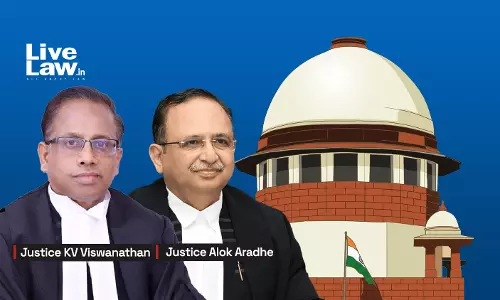
When Tender Acceptance Is Patently Contrary To NIT Conditions, Courts Can Interfere: Supreme Court
Revenue considerations cannot cure ineligibility of the bidder, the Court added.
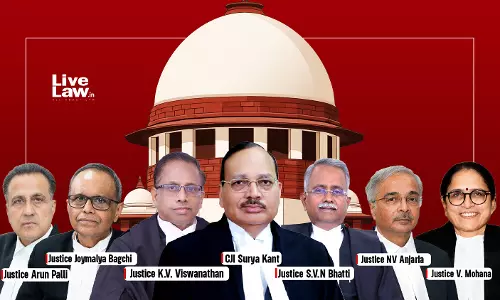
Supreme Court 7-Judge Reserves Judgment On States' Power To Levy Surcharge/Additional Tax On Sales Tax
The Centre said that the issues have become largely academic after the enactment of the GST Act in 2017
Central Government Can Authorise Any Officer Other Than SFIO Director To File Fraud Complaints Under Companies Act: Supreme Court
The Court dismissed Centre’s review plea against judgment holding that private complaint alleging fraud by a company is not maintainable.
'Arbitration Cannot Be Arbitrary' : Supreme Court Sets Aside Arbitral Tribunal Appointment For Lack Of Consent
The Court quashed the attachment orders passed by the Tribunal noting that the Tribunal's appointment was non-est.
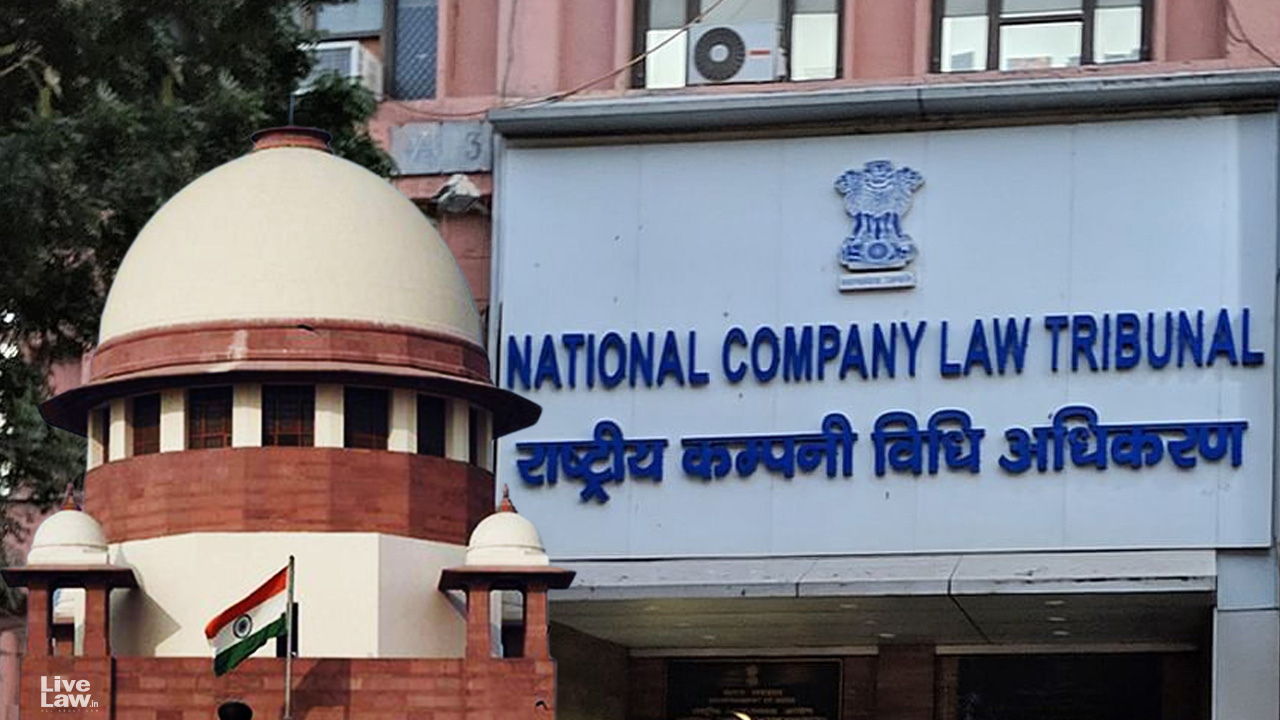
Supreme Court Seeks Centre's Report On NCLT Benches' Infrastructure Facilities
The Supreme Court on Monday called for a status report from the Centre on the infrastructural facilities available to the National Company Law Tribunal (NCLT) benches.The Court also directed the Union Government to identify the basic amenities urgently required by the National Company Law Tribunal (NCLT) after discussing with the NCLT President.Hearing an application filed by the NCLT...

Income Tax | CBDT Circular Not Binding On Court : Supreme Court
Reiterating that CBDT circulars are not binding on Courts, the Supreme Court recently dismissed a batch of appeals filed by assessees claiming deductions under Section 80HHC for the premium they received on the sale of their export quota. Section 80HHC provided tax deductions on export profits for Indian companies and resident taxpayers, but no deduction is available from April 1, 2005,...