


Arbitration
Award Can Be Said To Be Suffering From 'Patent Illegality' Only If It Is An Illegality Apparent On The Face Of It : Supreme Court
The Supreme Court observed that an award could be said to be suffering from “patent illegality” only if it is an illegality apparent on the face of the award and not to be searched out by way of re-appreciation of evidence.The narrow scope of “patent illegality” cannot be breached by mere use of different expressions which nevertheless refer only to “error” and not to...
2015 Arbitration Amendment Not Applicable Though S.11 Application Was Filed After It, If Arbitration Notice Was Issued Pre-Amendment : Supreme Court
The Supreme Court has ruled that where the notice invoking arbitration is issued prior to the coming into force of the Arbitration and Conciliation (Amendment) Act, 2015, i.e., prior to 23.10.2015, and the application under Section 11 of the Arbitration and Conciliation Act, 1996 (A&C Act), seeking appointment of an arbitrator, is made post the enforcement of the Amendment Act, the...
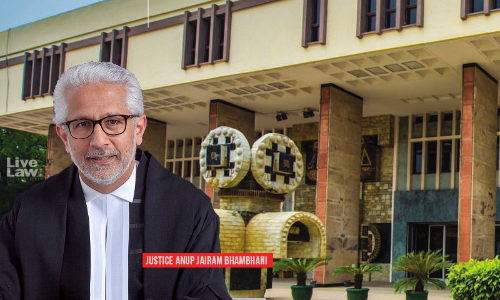
Delhi High Court Upholds Arbitral Award In Favour Of Reliance; Dismisses GOI’s Challenge Alleging Fraud And ‘Unjust Enrichment’ In Relation To Gas Extraction
The Delhi High Court bench comprising Justice Anup Jairam Bhambhani has upheld the 2018 arbitral award passed in favour of Reliance Industries Limited (RIL) in an international commercial arbitration arising from a dispute between the conglomerate and the Ministry of Petroleum & Natural Gas, Government of India, under a ‘Production Sharing Contract’ (PSC) executed in 2000,...
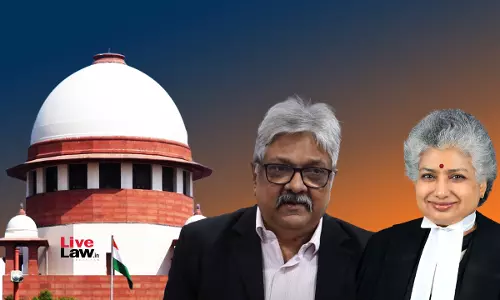
Court Cannot, After Setting Aside Arbitration Award, Proceed To Grant Further Relief By Modifying Award : Supreme Court
The Supreme Court observed that, in arbitration cases, a Court cannot, after setting aside the award, proceed to grant further relief by modifying the award.Indian Oil Corporation terminated dealership of M/s Sathyanarayana Service Station. The latter initiated arbitration proceedings and it culminated in an award upholding this termination. The District Court dismissed the petition...
Arbitration Cases Weekly Round-Up: April 30 To May 06, 2023
Bombay High Court: Invalidity Of Board Resolution Is A Procedural And Curable Defect, Cannot Lead To Rejection Of Claims And Termination Of Arbitral Proceedings: Bombay High Court Case Title: Palmview Investments Overseas Limited vs Ravi Arya The High Court of Bombay has held that any defect in the board resolution authorizing a person to initiate arbitration is only a...
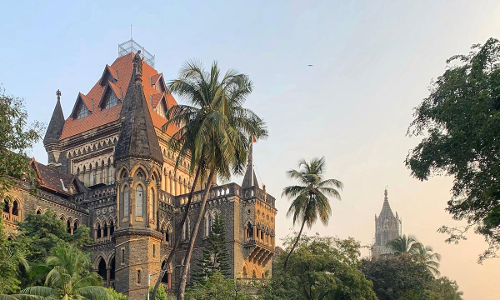
Illegality Of The Appointment Procedure Does Not Render The Entire Arbitration Agreement Invalid: Bombay High Court
The Bombay High Court has held that illegality of the appointment procedure does not render the entire arbitration agreement invalid. The bench of Justice Avinash G. Gharote held that merely because the procedure for the appointment of the arbitrator under the arbitration agreement is rendered invalid on account of the insertion of Section 12(5) and the Supreme Court judgment in...
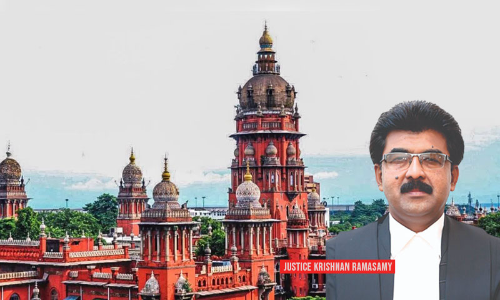
Provisions Regarding Appointment And Disqualification Of Arbitrator Are Mandatory, Will Apply To Retired Judges As Well: Madras High Court
The Madras High Court has recently held that the provisions for disqualification for appointment as arbitrator under the Seventh Schedule of the Arbitration and Conciliation Act would be applicable to any person, including a retired judge. The court noted that the provisions with respect to ineligibility and disqualification are mandatory and non-derogable. Justice Krishnan Ramasamy...
Invalidity Of Board Resolution Is A Procedural And Curable Defect, Cannot Lead To Rejection Of Claims And Termination Of Arbitral Proceedings: Bombay High Court
The High Court of Bombay has held that any defect in the board resolution authorizing a person to initiate arbitration is only a procedural and a curable defect, thus, it cannot be a ground for the rejection of the claims and termination of the arbitral proceedings. The bench of Justices K.R. Shriram and Rajesh S. Patil held that requirement of a board resolution authorizing a person...
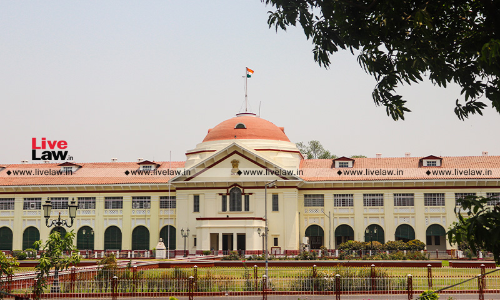
Arbitration Agreement Executed By Joint Venture Can’t Be Invoked By Its Constituents: Patna High Court
The Patna High Court has ruled that an arbitration agreement executed by a Joint Venture cannot be invoked by the constituents of the said Joint Venture, since they cannot be considered as a party to the arbitration agreement. While dealing with a petition under Section 11 of the Arbitration and Conciliation Act, 1996 (A&C Act) seeking appointment of arbitrator, the bench of...
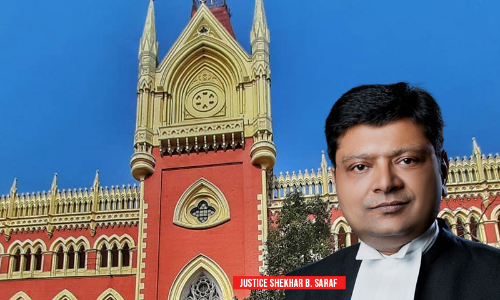
Entire 30 Days Extended Period Under Section 34(3) Of The A&C Act Coincided With Court Vacations, Calcutta High Court Invokes Power Under Article 133(1)(A) R/W Article 134A Of The Constitution
The High Court of Calcutta has invoked its powers under Article 133(1)(a) r/w Article 134A of the Constitution to allow the aggrieved party to directly appeal against its judgment to the Supreme Court on the ground that the case involves a substantial question of law of general importance. The bench of Justice Shekhar B. Saraf was dealing with a peculiar situation wherein the...
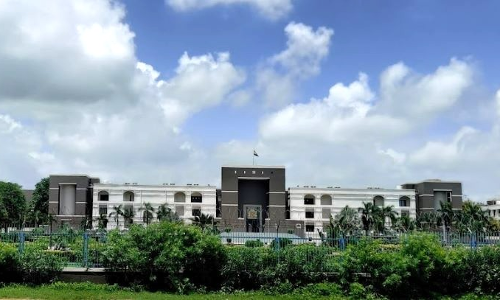
Arbitration Clause Extinguishes After Dissolution of Partnership; Gujarat High Court Rejects S.11 Petition
The Gujarat High Court has ruled that once the partnership at will is dissolved, the arbitration clause contained in the partnership deed cannot be invoked to refer the dispute between the partners to arbitration. The bench of Justice Biren Vaishnav was dealing with an arbitration clause which provided for reference of the dispute between the partners with regard to the “dealing of...
Arbitration Monthly Round Up- April 2023
Supreme Court: Arbitration Agreement In Unstamped Contract Which Is Exigible To Stamp Duty Not Enforceable: Supreme Court Holds By 3:2 Majority Case Title: M/s. N.N. Global Mercantile Pvt Ltd vs M/s. Indo Unique Flame Ltd & Ors A Constitution Bench of the Supreme Court, on Tuesday, answered the reference, which pertains to the issue - whether the arbitration clause in...