


Arbitration
Doctrine Of Group Of Companies, Can't Implead Third Party To Arbitration: Delhi High Court
The Delhi High Court has ruled that the Doctrine of Group of Companies cannot be applied to implead a non-signatory third party to arbitration, in a dispute arising between partners relating to the partnership business. The Court held that partnership in its very nature cannot be equated with a company to invoke the Doctrine of Group of Companies. The Single Bench of Justice...
Period Of Limitation For The Appointment Of Substitute Arbitrator Begins On The Date Of His Recusal/Removal, Date Of Knowledge Is Irrelevant: Delhi High Court
The High Court of Delhi has held that the period of limitation for appointing a substitute arbitrator under Section 15(2) of the A&C Act commences on the date of recusal/removal of the arbitrator and the date on which the fact of his removal/recusal comes to the knowledge of a party is irrelevant for the purpose of limitation. The bench of Justice Mini Pushkarna held that...
Section 31 Of The Credit Information Companies (Regulation) Act, 2005 Does Not Bar Constitution Of An Arbitral Tribunal: Madras High Court
The Madras High Court has ruled that the bar contained under Section 31 of the Credit Information Companies (Regulation) Act, 2005 (CIC Act) will not apply to proceedings for constitution of an arbitral tribunal, to resolve the disputes in the manner prescribed under the CIC Act. The Single bench of Justice Senthilkumar Ramamoorthy held that the object and purpose of Section 31 of the...

Subsequent Consulting Agreements Prescribing Arbitration Do Not Bind Parties When MoU Forming Basis Of Claim Doesn't Contain Arbitration Clause: P&H High Court
Punjab and Haryana High Court recently held that where the claim of a party to an agreement is based upon a Memorandum of Understanding which does not contain an arbitration clause, the Court is not required to refer the matter merely because the subsequent Consulting Agreements executed by the parties contemplate arbitration. The bench comprising Justice Augustine George Masih and...

Arbitration Cases Weekly Round-Up: 6 November To 12 November, 2022
Calcutta High Court: Arbitrator Cannot Apply 'Trade Usages' Against The Express Understanding Of The Parties: Calcutta High Court Case Title: M/s. Universal Seaport Private Limited versus The Chairman, Board Of Trustees For The Port Of Kolkata The Calcutta High Court has held that the arbitrator cannot, while adjudicating the dispute between the parties, apply trade usages...

Court Cannot Partly Set Aside Award In Absence Of Manifest And Patent Error, And Without A Finding As To Its Severability: Uttarakhand High Court
The Uttarakhand High Court has ruled that in the absence of a manifest and patent error in the arbitral award, the Court under Section 34 of the Arbitration and Conciliation Act, 1996 (A&C Act) cannot interfere with the award, by partly upholding it and by disallowing the rest of the claims of the claimant. The Division Bench of Justices Sanjaya Kumar Mishra and Ramesh...
Arbitrator Gets Jurisdiction Only With Respect To 'Notified' Claims; Delay/ Failure to Certify Claim as 'Notified', Does Not Operate As Waiver: Delhi High Court
The Delhi High Court has ruled that an arbitrator gets the jurisdiction only with respect to the claims which are 'notified' by the specified authority, as provided in the arbitration clause, and that if the claims are not notified, they will not form the subject matter of arbitration. The Single Bench of Justice V. Kameswar Rao held that the procedure of forwarding a panel of names...
Arbitrator Cannot Apply 'Trade Usages' Against The Express Understanding Of The Parties: Calcutta High Court
The Calcutta High Court has held that the arbitrator cannot, while adjudicating the dispute between the parties, apply trade usages against the express intention of the terms of the agreement between the parties. It held that by virtue of Section 28(3) of the A&C Act, an arbitrator can apply trade usages to determine the dispute between the parties, however, the same cannot...

Circumstances Mentioned Under Schedules V Do Not Per Se Render The Arbitrator Ineligible: Delhi High Court
The High Court of Delhi has held that unlike Schedule VII, the circumstances mentioned under the Vth Schedule do not per se render an arbitrator ineligible to be appointed as arbitrator unless it is established that the arbitrator's neutrality was indeed compromised. The bench of Justice Manoj Kumar Ohri held that merely because an Arbitrator has been appointed in more than two...
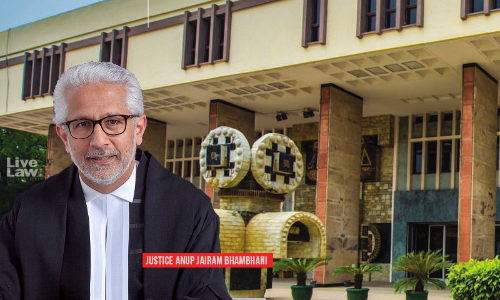
When Financial Institution Is A 'Borrower' It Can't Invoke Arbitration Under Section 11 Of SARFAESI Act: Delhi High Court
The High Court of Delhi has held that a borrower which also happens to be a financial institution cannot resort to arbitration provided under Section 11 of SARFAESI Act. The bench of Justice Anup Jairam Bhambhani held that Section 11 of SARFAESI Act provides for remedy by way of arbitration only in cases of inter se dispute between the financial institution but does not cover a...
Arbitration Cases Weekly Round-Up: 30 October To 5 November, 2022
Supreme Court: Issue Of Arbitrability Should Be Left To Arbitrator Unless On The Face It Is Found That Dispute Is Non- Arbitrable: Supreme Court Case Title: VGP Marine Kingdom Pvt Ltd versus Kay Ellen Arnold The Supreme Court reiterated that while considering application under Section 11(6) of the Arbitration and Conciliation Act, the dispute with respect to the arbitrability...
Arbitration Agreement "Exists" Only When It Is Enforceable In Law And Meets The Statutory Requirements Of A&C Act And Contract Act: Delhi High Court
The Delhi High Court has ruled that a mere exchange of communication is not sufficient to show that the parties are at ad idem with respect to an arbitration agreement, when none of the correspondence exchanged between the parties made any reference to an agreement containing an arbitration clause. The Single bench of Justice V. Kameswar Rao observed that the petitioner had failed to...