


Arbitration
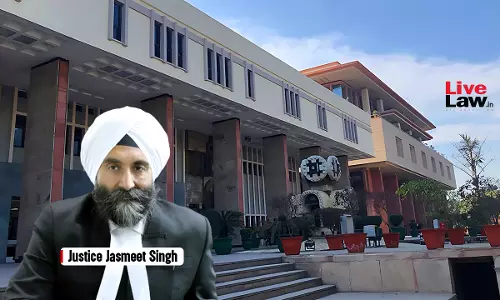
Plausible View Taken By Arbitrator Based On Facts Of Case Cannot Be Interfered With U/S 34 Of Arbitration Act: Delhi High Court
The Delhi High Court bench of Justice Jasmeet Singh affirmed that once an arbitrator has taken a plausible view based on the facts of the case, such a view cannot be interfered with under section 34 of the Arbitration Act. Brief Facts This is a petition under section 34 of the Arbitration and Conciliation Act, 1996 seeking setting aside of the impugned Arbitral Award dated...
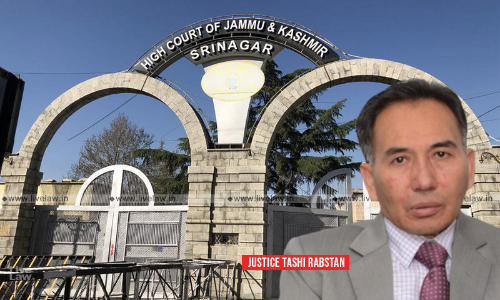
Petition U/S 11 Of Arbitration Act Is Maintainable If Statutory Remedy Before Invoking Arbitration Clause Is Exhausted: J&K And Ladakh HC
The Jammu & Kashmir and Ladakh High Court bench of Chief Justice Tashi Rabstan has held that once the statutory remedy under contract is exhausted, arbitration clause can be invoked and appointment of the arbitrator can be sought under section 11 of the Arbitration Act.In this case, the respondent had to constitute Dispute resolution Board (DRB) within 30 days after execution...
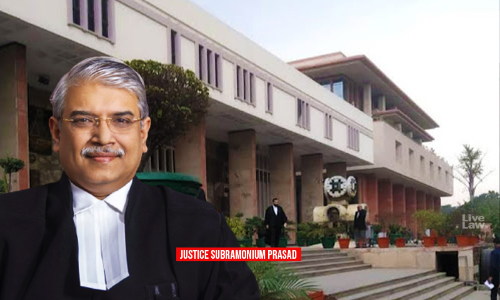
Court U/S 34 Of Arbitration Act Cannot Re-Appreciate Evidence And Substitute Arbitrator's Conclusion: Delhi High Court
The Delhi High Court bench of Justice Subramonium Prasad affirmed that under Section 34 of the Arbitration Act the Court cannot re-appreciate evidence and substitute its own conclusion to the one arrived at by the Arbitrator even though a different conclusion can be arrived at on re-appreciating evidence Brief Facts The instant petition is one under Section 34 of the...
Fresh Arbitrator Can Be Appointed By Court U/S 14 Of Arbitration Act If Proposed Arbitrator Is Ineligible U/S 12(5): J&K And Ladakh HC
The Jammu & Kashmir and Ladakh High Court bench of Chief Justice Tashi Rabstan affirmed that when the arbitration clause is found to be foul with the amended section 12(5) of the Arbitration Act, the appointment of the arbitrator would be beyond the pale of the arbitration agreement. In such eventuality, the court can be approached under section 14 of the Arbitration Act for...
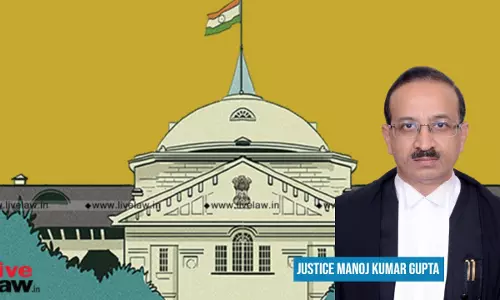
Whether Non-Signatory Bound By Arbitration Agreement Can Be Decided By Tribunal, Not Referral Court U/S 11 Of Arbitration Act: Allahabad HC
The Allahabad High Court bench of Justice Manoj Kumar Gupta affirmed that referral court under section 11 of the Arbitration Act stage cannot examine as to whether the non-signatory is bound by the arbitration agreement or not. Such an issue requires factual determination which can be decided by the arbitral tribunal under section 16 of the Arbitration Act. Brief Facts The...
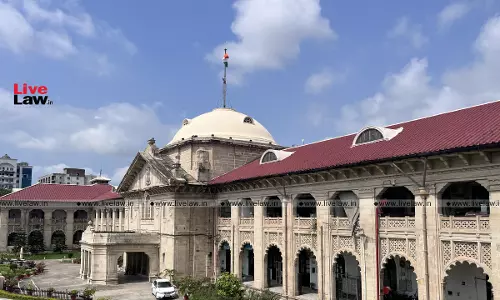
Since Award Is A Deemed Decree, Execution Can Be Initiated Anywhere Where Decree Can Be Executed: Allahabad High Court
The Allahabad High Court bench of Justice Neeraj Tiwari affirmed that the enforcement of an award through its execution can be initiated anywhere in the country where the decree can be executed and there is no requirement of obtaining a transfer of the decree from the Court which would have jurisdiction over the arbitral proceedings.Brief FactsLand of respondent Nos. 1 & 2 has been...
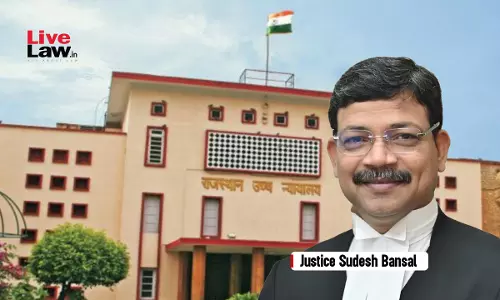
Unless Appointment Of Arbitrator Under Arbitration Clause Is Ex-Facie Valid, Jurisdiction Of Court U/S 11(6) Cannot Be Barred: Rajasthan HC
The Rajasthan High Court bench of Justice Sudesh Bansal affirmed that unless the appointment of the arbitrator is ex facie valid and such appointment satisfies the Court exercising jurisdiction under Section 11(6) of the Arbitration Act, acceptance of such appointment as a fait accompli to debar the jurisdiction under Section 11(6) cannot be countenanced in law. Brief...

Objections On Capacity Of Party To Initiate Arbitration Must Be Addressed Before Tribunal, Not While Appointing Arbitrator: Delhi HC
The Delhi High Court bench of Justice Sachin Datta has held that the objections as regards the capacity of the party to initiate arbitration is an aspect which is necessarily required to be gone into the arbitration proceedings, however, the same could not preclude the constitution of an Arbitral Tribunal. The court held that a party may raise appropriate...
Referral Court Has Limited Role U/S 11 Of Arbitration Act To Verify Existence Of Arbitration Agreement: Rajasthan High Court
The Rajasthan High Court bench of Justice Sudesh Bansal affirmed that the scope of arbitration application, in view of Section 11(6A) of the Arbitration Act, 1996 is confined and limited to the extent of examining the existence of arbitration agreement between the parties for resolution of dispute. Brief Facts Applicant has filed instant arbitration application under Section 11...
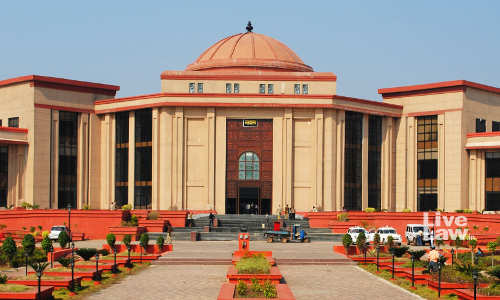
Enforcement Of Foreign Award Cannot Be Refused U/S 48 Of Arbitration Act Unless It Is Against Public Policy: Chhattisgarh HC
The Chhattisgarh High Court bench of Justice Deepak Kumar Tiwari has held that enforcement of a foreign award cannot be refused under section 48 of the Arbitration Act unless it is shown that the award is against the public policy of India. The court further observed that even during Covid-19 pandemic, the Banking Sector continued to provide essential services and in the Notification,...
Pre-Requirement Of Conciliation Before Invoking Arbitration Can't Prevent Filing Of Application U/S 11 Of Arbitration Act: Delhi High Court
The Delhi High Court bench of Justice Subramonium Prasad has held that pre requirement of conciliation in an arbitration clause before invoking the arbitration cannot be a bar to file an application under section 11 of the Arbitration Act seeking appointment of an Arbitrator. Brief Facts The present petition under Section 11(6) of the Arbitration and Conciliation Act, 1996...

S. 11(6) A&C Act | Referral Courts Should Limit Its Enquiry To Prima Facie Existence Of Arbitration Agreement : Supreme Court
In a recent decision, the Supreme Court reiterated that the referral courts under Section 11(6) of the Arbitration & Conciliation Act, 1996 (“Act”) should refrain from conducting an in-depth factual analysis of the dispute. Instead, their role is confined to assessing the prima facie existence of an arbitration agreement. “The scope of inquiry under Section 11 of the Act, 1996...