


Arbitration

Eviction Order Under Public Premises Act Doesn't Bar Arbitration For Contractual Disputes : Supreme Court
The Supreme Court observed that an eviction order passed by the Estate Officer under the Public Premises Act would not come in the way while invoking the arbitration clause upon filing an application under Section 11(6) of the Arbitration & Conciliation Act, 1996 (“Arbitration Act”) for appointment of an arbitrator to decide contractual disputes.The bench comprising Justice PS...
Non-Compete Clause Is Invalid Post-Termination Of Contract As It Results In Restraint Of Trade: Bombay High Court Sets Aside Injunction
The Bombay High Court Bench of Justice A.S. Chandurkar and Justice Rajesh S. Patil has held that though a non-compete clause can operate validly during the term of the agreement. But it would not be valid post-termination of the agreement as it would result in restraint of trade prohibited by Section 27 of the Indian Contract Act, 1872. Additionally, the court noted that it is required...
Standard Is Higher For Post-Award Section 9 Relief, Order To Deposit Amount Not Passed In Routine Manner: Delhi HC
The Delhi High Court Bench of Justice Hari Shankar held that the standard required to be met by a post-award Section 9 relief is higher than that required by pre-award Section 9 reliefs. In this case, interim relief under section 9 of the Arbitration and Conciliation Act was sought to secure the awarded amount. Brief Facts This matter is between National Highways Authority of...
When SLP Dismissal Order Is Non-Speaking, Review U/S 17 Of Arbitration Act Permissible: Delhi High Court
The Delhi High Court Bench of Justice Jasmeet Singh held that if an order of dismissal of the SLP is a non-speaking order and no reasoning has been given by the Hon‟ble Supreme Court for the same, then review of the order challenged is permissible. Brief Facts In the present case two applications have been filed against orders passed under section 17(2) of the Arbitration Act....

Article 227 Is A Constitutional Provision Which Remains Untouched By Non-Obstante Clause Of S. 5 Of Arbitration Act: Allahabad HC
The Allahabad High Court Bench of Justice Piyush Agrawal held that Article 227 is a constitutional provision which remains untouched by the non-obstante clause of Section 5 of the Act. In these circumstances, what is important to note is that though petitions can be filed under Article 227 against judgments allowing or dismissing first appeals under Section 37 of the Act, yet...
Interference Under Article 227 Is Permissible Only If Order Of Arbitrator Is Completely Perverse And Illegal: Delhi High Court
The Delhi High Court Bench of Justice Manoj Jain held that judicial interference under Article 227 of the Indian Constitution in the arbitral matters should be limited and confined to exceptional cases. In the present case, a petition under article 227 was filed by the petitioner, Dr. Rajan Jaiswal in which the order passed by the Sole Arbitrator on September 24,2024 was challenged....

Right To Seek Reference To Arbitration U/S 8 Can Be Waived At Instance Of Defendant: Delhi High Court
The Delhi High Court bench of Chief Justice Manmohan and Justice Tushar Rao Gedela has held that a Defendant (in a civil suit) has the right to withdraw an application filed under Section 8 of the Arbitration and Conciliation Act, 1996, and submit to the jurisdiction of the Civil Court. The court held that when the Defendant (herein, the Respondent) withdrew the application seeking...
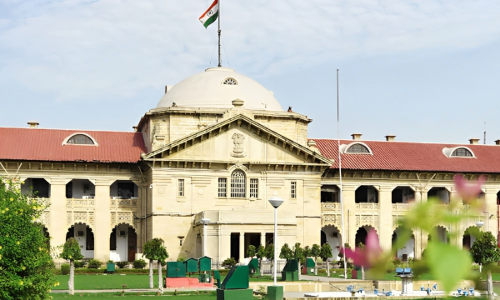
Arbitral Award Based On Law Prevailing At Time Of Proceedings Cannot Be Held To Be Illegal Due To Subsequent Apex Court Ruling: Allahabad HC
The Allahabad High Court Bench of Justice Piyush Agrawal, held that if parties were allowed to reopen concluded arbitrations based on new judicial rulings, it would lead to a flood of claims seeking to modify or overturn arbitral awards. Moreover, the retroactive application of judicial decisions to arbitral awards would create legal and procedural chaos. Arbitrators make decisions based on...
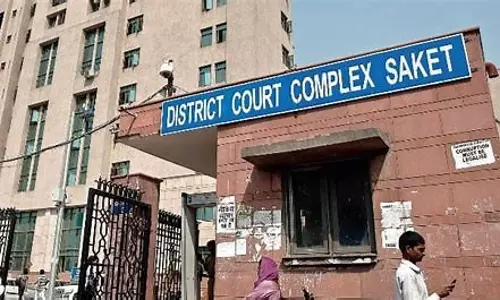
Court U/S 34 Of Arbitration Act Cannot Substitute Own Views Or Views Of Parties With View Taken By Arbitral Tribunal: Delhi Court
The Commercial Court, District Saket Courts, New Delhi, comprising Justice Ajay Kumar Jain, held that the Court under section 34 of the Arbitration and Conciliation Act cannot substitute its own views or the views of the parties with the view taken by the Ld. Arbitral Tribunal, if the view taken by the Ld. Arbitrator is not in conflict with the settled legal...

Unsuccessful Litigant In Arbitral Proceedings Cannot Claim Interim Relief U/S 9 Of Arbitration Act: Bengaluru Court
The Bengaluru District Court Bench of Justice Sri Arjun S. Mallur held that a party whose claim has been rejected in the course of the arbitral proceedings cannot obviously have an arbitral award enforced in accordance with Sec.36. The object and purpose of an interim measure after passing of the arbitral award but before it is enforced is to secure the property, goods or amount for...
Delhi High Court Dismisses Plea Challenging Recalculation Of Arbitral Fees, Upholds Separate Fee Calculation For Claims & Counterclaims
The Delhi High Court Bench of Justice Sachin Datta has held that the arbitral tribunal had correctly applied the IVth Schedule of the Arbitration and Conciliation Act, 1996, in recalculating the fees separately for the claims and counterclaims. Additionally, the court held that invoking Section 39(2) of the Arbitration and Conciliation Act, 1996 was premature since no award had...
![[Seat vs Venue] Bombay High Court Upholds Arbitrators Discretion To Change Venue Of Arbitral Proceedings](https://www.livelaw.in/h-upload/2023/02/09/500x300_458130-justice-arun-r-pedneker.webp "[Seat vs Venue] Bombay High Court Upholds Arbitrators Discretion To Change Venue Of Arbitral Proceedings")
[Seat vs Venue] Bombay High Court Upholds Arbitrator's Discretion To Change Venue Of Arbitral Proceedings
The Bombay High Court bench of Justice Arun R. Pedneker has held that an arbitrator has the authority to change the venue to a conveniently located place even if the venue is specified in the agreement. The court held that the arbitrator may shift the venue if conducting proceedings at the agreed venue would be detrimental to the arbitration process. It observed that Section 20(3) does...