


Arbitration
![[Arbitration Act] Public Policy While Considering Enforcement Of Foreign Awards Has To Be Construed Narrowly, In Consonance With International Notions: Delhi High Court](https://www.livelaw.in/h-upload/2022/05/11/500x300_417217-mcds-passive-action-to-unauthorized-constructions-in-delhi-delhi-high-court-calls-for-better-transparency-in-the-case.jpg "[Arbitration Act] Public Policy While Considering Enforcement Of Foreign Awards Has To Be Construed Narrowly, In Consonance With International Notions: Delhi High Court")
[Arbitration Act] Public Policy While Considering Enforcement Of Foreign Awards Has To Be Construed Narrowly, In Consonance With International Notions: Delhi High Court
The Delhi High Court bench of Justice Prateek Jalan held that the public policy argument while considering enforcement of foreign awards has to be construed narrowly and in consonance with international notions of public policy. The bench held that all violations of statute or supporting legislation do not satisfy this ground, and violations must be of fundamental...
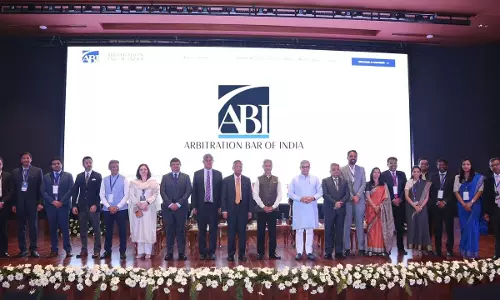
Inaugural Of The Arbitration Bar Of India
The inaugural ceremony of the Arbitration Bar of India (ABI) marked a significant milestone in the legal landscape of the country. Distinguished personalities from the legal fraternity attended the inaugural, certifying the pertinence of the event in the shaping and development of India's arbitration ecosystem. The occasion was in attendance of the External Affairs Minister Dr....
[Arbitration Act] Issue Of Limitation In Section 11 Petition Should Be Deferred To Arbitral Tribunal, Court May Address Only In Specific Circumstances: Delhi High Court
The Delhi High Court bench of Justice Prateek Jalan held that the court may address the issue of limitation during a petition under Section 11 of the Arbitration and Conciliation Act, 1996, but only under specific circumstances. It held that this occurs when the limitation bar is clearly evident from the petition and accompanying documents. At the preliminary stage, it held that the...
Dispute Resolution Clauses Have To Be Read In Pragmatic Manner And Not In Manner That Frustrates Purpose: Delhi High Court
The Delhi High Court single bench of Justice Dinesh Kumar Sharma held the dispute resolution clauses are considered sacrosanct and cannot be disregarded. Nonetheless, it held the clauses must be read in a pragmatic manner and not in a manner that frustrates the purpose. Brief Facts: The matter pertained to disputes arising from two Master Service Agreements entered into by the...
Court Doesn't Sit In Appeal Over Arbitral Tribunal's Interpretation Of Contract : Supreme Court
The Supreme Court held that it is for the Arbitral Tribunal to adjudicate upon the construction of the terms of a contract and the Court under Section 34, Arbitration and Conciliation Act, 1996 does not sit in appeal over the findings of the arbitratorThe bench of Justices A. S. Oka and Pankaj Mithal was pronouncing its judgment on an appeal by the NHAI against concurrent findings of the...
![[Arbitration Act] Court Cant Interfere Under Section 37 When Interpretation Is Plausible One, Section 37 Is Confined To Grounds Under Section 34: Allahabad High Court](https://www.livelaw.in/h-upload/2024/05/01/500x300_537203-allahabad-high-court-03.webp "[Arbitration Act] Court Cant Interfere Under Section 37 When Interpretation Is Plausible One, Section 37 Is Confined To Grounds Under Section 34: Allahabad High Court")
[Arbitration Act] Court Can't Interfere Under Section 37 When Interpretation Is Plausible One, Section 37 Is Confined To Grounds Under Section 34: Allahabad High Court
The Allahabad High Court division bench of Chief Justice Arun Bhansali and Justice Vikas Budhwar held that the extent of intervention in appellate proceedings according to Section 37 of the Arbitration and Conciliation Act, 1996 is confined to the grounds permissible under Section 34 for contesting the award. It held that the award need not be invalidated unless it is tainted by an...
![[Arbitration Act] Requirement To Provide Reasons By Arbitrator U/s 31(3) Hinges On Pleadings And Available Documents On Record: Allahabad High Court](https://www.livelaw.in/h-upload/2024/05/01/500x300_537204-allahabad-high-court-02.webp "[Arbitration Act] Requirement To Provide Reasons By Arbitrator U/s 31(3) Hinges On Pleadings And Available Documents On Record: Allahabad High Court")
[Arbitration Act] Requirement To Provide Reasons By Arbitrator U/s 31(3) Hinges On Pleadings And Available Documents On Record: Allahabad High Court
The Allahabad High Court bench of Chief Justice Arun Bhansali and Justice Vikas Budhwar held that the requirement to provide reasons by the arbitrator, in accordance with Section 31(3) of the Act, hinges on the pleadings and available documents on record. It held that if the party neither expressly denied the claim of the other party nor supported its case accurately, then it's evident...
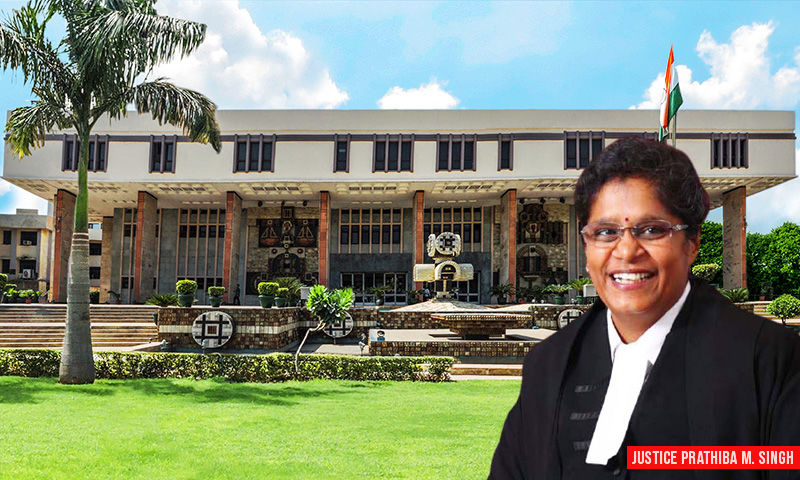
Delhi High Court Grants Interim Protection U/S 9 Of Arbitration And Conciliation Act To SBI Cards To Avoid Any Disruption In Card Services
The Delhi High Court single bench of Justice Prathiba M. Singh granted ex-parte ad-interim injunction to SBI Cards under Section 9 of the Arbitration and Conciliation Act, 1996 to ensure access to and operation of certain licensed software. The bench directed the Respondents from taking any action or steps, which would result in the disruption in the credit card services of...

Unregistered Arbitral Award Can Be Admissible In Evidence Only For Collateral Purposes: Telangana High Court
The Telangana High Court single bench of Justice Laxmi Narayana Alishetty held that the unregistered Award can be admissible in evidence only for the collateral purpose to the extent of establishing the severance of title, nature of possession of various shares, i.e., in other words, to establish the character, nature, identity, and location in respect of the subject matter, but not...
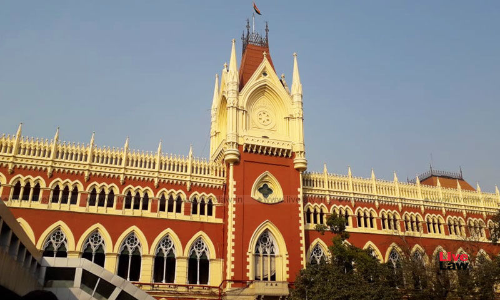
Incorporating Arbitration Clause Via Subsequent Circular Isn't Valid Unless Explicitly Mentioned And Included In Original Agreement: Calcutta High Court
The Calcutta High Court single bench of Justice Ravi Krishan Kapur held that if an agreement or clause within it necessitates or anticipates additional consent before arbitration can occur, it doesn't constitute arbitration itself but rather an agreement to potentially engage in arbitration in the future, which isn't inherently enforceable. It held that incorporating an...
![[NHAI Act] Landowner Shouldnt Suffer For Act Or Omission Of Arbitrator, Right To Property Is Constitutional Right Under Article 300A: Himachal Pradesh High Court](https://www.livelaw.in/h-upload/2020/11/30/500x300_385262-himachalpradeshhighcourtlivelaw.jpg "[NHAI Act] Landowner Shouldnt Suffer For Act Or Omission Of Arbitrator, Right To Property Is Constitutional Right Under Article 300A: Himachal Pradesh High Court")
[NHAI Act] Landowner Shouldn't Suffer For Act Or Omission Of Arbitrator, Right To Property Is Constitutional Right Under Article 300A: Himachal Pradesh High Court
The Himachal Pradesh High Court single bench of Justice Ajay Mohan Goel held that the landowner shouldn't suffer for the act of omission of the Arbitrator to make an award within a period of 12 months from the date the arbitral tribunal enters upon the Reference as per Section 29(A) of the Arbitration and Conciliation Act. It held that the reason that as right to property is...
[Contempt Of Court] Delhi High Court Directs International Avenue To Deposit Rs. 5 Crores Within One Week Considering Due Of 15 Crores Arbitral Award
The Delhi High Court bench of Justice Prathiba M. Singh has directed International Avenue to deposit Rs. 5 crores within one week considering the substantial amount due under the arbitral award. The bench held that despite providing multiple opportunities to the company, it failed to comply with the order. It held that this constituted contempt of court. Brief Facts: The...