


Articles

The Case For Regulating, Not Banning Bike Taxis
The bike taxi sector in India is currently valued at USD 50.5 Million and is expected to grow to USD 1.4 Billion by 2030. The reason for this growth lies in bikes being an economical alternative to all other types of taxis. However, this aggressively expanding industry has been facing its fair share of regulatory struggles. On 19th February 2023, the Delhi government issued newspaper advertisements asking digital companies such as Ola and Uber to stop allowing personal bike taxis citing...
Section 156(3) R/W 397 Of Criminal Procedure Code: A Pillar To Post Provision(?)
The Code of Criminal Procedure (“Code”) provides a supplementary way to report a cognizable offence. Under Section 156(3), the Magistrate has the competence to order an investigation of an offence of which he may have taken cognizance under Section 190. Ergo, any application of Section 156(3) can only be at the pre-cognizance stage. Section 156(3) empowers a Magistrate to order police investigation when he himself refrains from issuing process under Section 204. Once the procedure under...

Black, White and Red – The Curious Case Of Court Complexes And Washroom Equity For Women in India
Recently, the Minister for Higher Education and Social Justice in the State of Kerala, Dr. R. Bindu, had declared that necessary steps would be taken in order to implement menstrual leave in all universities in the State, having regard to “the mental and physical difficulties faced by female students during menstruation”. When a PIL in this regard had been filed by Advocate Shailendra Mani Tripathi before the Supreme Court, the Apex Court had refused to entertain the same stating that...

International Women’s Day: Recent Important Supreme Court Judgments On Women’s Rights
“Honesty, pride and self-esteem are crucial to the personal freedom of a woman. Social progress depends on the progress of everyone. Following words of the father of our nation must be noted at all times: To call woman the weaker sex is a libel; it is man's injustice to woman. If by strength is meant moral power, then woman is immeasurably man's superior. Has she not greater intuition, is she not more self-sacrificing, has she not greater powers of endurance, has she not greater courage? Without...
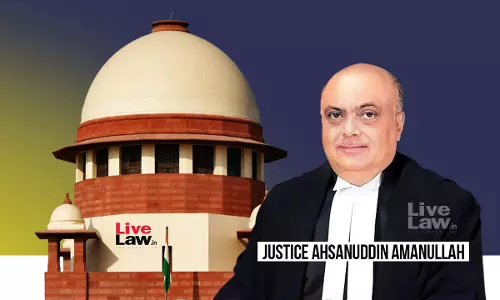
Spotlight On Recent Appointments To Supreme Court - Justice Ahsannuddin Amanullah
A general criticism of the Indian Courts has been that very little is known to the public about the judges being recommended by respective Collegium before their appointment, on merit and suitability. A designated Secretariat ideally should do the job, unfortunately we don’t have such a mechanism. Livelaw has taken an initiative to share relevant information about the appointees and we are starting with the appointments to the Apex Court. The focus is to shed light on some of their significant...

Why The Workplace Sexual Harassment Law In India Is Focused On Women?
At outset, I would like to clarify the nowhere the article is in denial of the fact that individuals not assigned female sex at birth and those who do not identify themselves as women are not victims of workplace sexual harassment. Also, it is important to recognise that complaints from them need to be acknowledged and redressed through mechanisms within organisations. However, the article is an attempt to explain reasons for India having a workplace sexual harassment law for women.The article...

“Section 27” Of The Evidence Act And The Verdict In “Pulukuri Kottaya” Continue To Elude The Comprehension Of Many Judges At All Levels
A “confession” made to a “police officer”, by a person (presently or subsequently) accused of an offence cannot be proved against him and is, therefore, inadmissible in evidence before a Court of law in view of Section 25 of the Indian Evidence Act, 1872 (“Evidence Act” for short). Similarly, a confession by a person (presently or subsequently) accused of an offence and made while he is in the custody of a police officer, is also excluded from being proved against him by virtue of ...
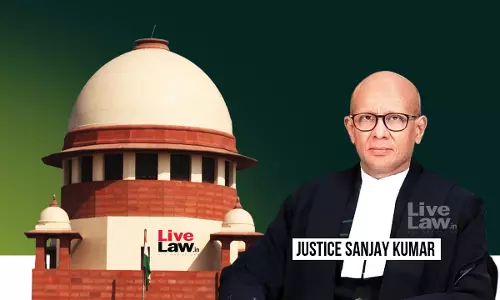
Spotlight On Recent Appointments To Supreme Court: Justice PV Sanjay Kumar
A general criticism of the Indian Courts has been that very little is known to the public about the judges being recommended by respective Collegium before their appointment, on merit and suitability. A designated Secretariat ideally should do the job, unfortunately we don’t have such a mechanism. Livelaw has taken an initiative to share relevant information about the appointees and we are starting with the appointments to the Apex Court. The focus is to shed light on some of their significant...
Supreme Court Judgement In Balram Singh vs. Kelo Devi - A Critique
Whether the legal proposition laid down by the Supreme Court in Balram Singh vs. Kelo Devi [2022 LiveLaw (SC) 800] prescribing a blanket bar in passing a decree for specific performance of a contract based on an unregistered document/ agreement to sell immovable property is a dictum applicable pan India? This question has been raised by many in the legal fraternity.In Balram Singh, a contention was raised on the side of the defendant/ appellant that the agreement to assign immovable...

Restrictive Interpretation To Section 438 Of The Code Of Criminal Procedure
The High Court of Allahabad has held that (Rajesh Kumar Sharma Vs. C.B.I.)[1] the application for anticipatory bail (Sec 438 CrPc) shall not be maintainable if the person is already arrested and is in custody in relation to a different case. For arriving at the conclusion, the court has wrongly relied upon the judgments of the Rajasthan High Court in Sunil Kallani vs State of Rajasthan,[2] and the Apex Court in Narinderjit Singh Sahni and Another vs U.O.I And Others[3], According to the...
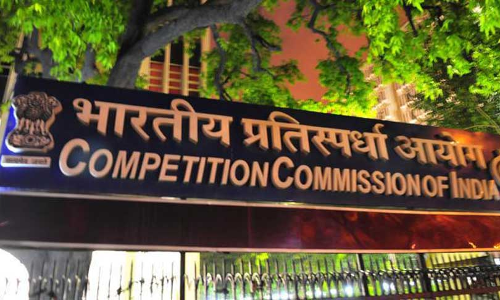
Exclusionary Conduct Of Competition Law In India And The Jurisprudence Behind It
Anti-trust laws are essentially the Magna Carta of free enterprise. In principle, the aim of anti-trust laws is to protect the integrity and core of free market in an economy by protecting dissipation of monopolistic power in the hands of dominant individual enterprises and protecting consumer interests in the process. However, dwelling into the jurisprudential context of why and how should competition laws even exist in an economy, we find that while these laws serve to regulate and act...

Is Artificial Intelligence The Next Big Thing In The Field Of Law?
It’s nothing but a paradox. We often talk about the Justice system as an antidote to human failures - the duty of the state to punish perpetrators of crime who often give in to intense passions of jealousy, deceit and misdemeanour. But what if this very system of justice is unable to maintain fairness and reeks of another human failing – biasness? What if the system, to begin with, is not even diverse enough to represent the society as a whole? It is undeniable that as humans we are...