




Articles

Institution-Routed, Not Institution-Neutral: Arbitration's Quiet Return To Unilateral Control
There is a deeply troubling pattern emerging in India, particularly in the sphere of financial services arbitration, which, after appearing in several such matters over the past few months, I can no longer remain silent about.For nearly a decade, Indian arbitration jurisprudence has steadily evolved toward one foundational principle: a party interested in the outcome of a dispute cannot...
India's Child Marriage Framework: While Permitting Union Criminalizing Its Consummation
The statutory framework governing child marriage in India suffers from a profound structural contradiction. On one hand, the civil law extends legal recognition to child marriages by keeping them valid until annulled. On the other hand, the criminal justice system characterizes the consummation of that very union as a severe offense. This legal asymmetry creates a precarious environment for millions of minors who are legally married in the eyes of the state, yet stripped of effective legal...
Stock Witnesses – Imperative Need For Procedural Reform
The Supreme Court in Anwar Hussain vs. State of Madhya Pradesh (SLP (Crl.) No. 14087/2025, decided on 19 March 2026) has categorically highlighted the grave and recurring issue of “stock witnesses” in criminal investigations. The Court observed with concern the casual and mechanical manner in which witnesses are initially cited in the FIR and subsequently arrayed as charge-sheet witnesses, often as a mere formality rather than on the basis of their actual presence or knowledge of the incident....

Citizenship Conundrum : A Passport Holder's Dilemma
Having travelled the world over the last few years as a proud Indian, one was jolted to a rude awakening that the Indian government does not view our passports as proof of citizenship! Though one never sought to prove one's 'Indian-ness' abroad by dancing boisterously to “chhaiya chhaiya” on railway tracks (our true strong and silent culture be damned), but one did indeed proudly wear the stamp of our Nationality on one's sleeve in the form of not only one's demeanour but also the...
When Bar Becomes Its Own Legislature: Three Constitutional Fractures In Telangana Advocates Protection Act, 2026
On 23 May 2026, senior advocate Khaja Moizuddin was shot dead outside his Hyderabad residence. Ten days later, the Telangana Advocates Protection Act, 2026 had cleared the legislature, received the Governor's assent, and come into force. The political achievement was real. The constitutional scrutiny was absent.This article provides it. The Act rests on three structural fractures that have received no serious analytical attention not because they are obscure, but because the profession that...

The Judge Who Did Her Duty
A truck left Madhya Pradesh on the night of 2 August 2022. It carried cattle and three men from Amravati in Maharashtra. Near Barakhad village, in the Seoni Malwa police area, a crowd stopped it. The crowd beat the three men with sticks and staves. Nazir Ahmed, a man of about fifty, did not survive. The other two lived to tell the court what happened.Four years later, a judge weighed the evidence. On 12 June 2026, the First Additional Sessions Judge at Seoni Malwa convicted seven men. She held...
Pause, Priest, Smoker And A Lawyer
Convocation speeches tend to arrive with predictable cargo. Advices about success, resilience and the road ahead. Since a convocation marks the end of a chapter and the beginning of another, naturally, speakers try to leave graduates with something worth carrying forward. I graduated with the batch of 2026 from Dharmashastra National Law University, Jabalpur ('DNLU'). The third convocation of DNLU, which concluded this June, included distinguished guests such as Hon'ble Judges of the Supreme...
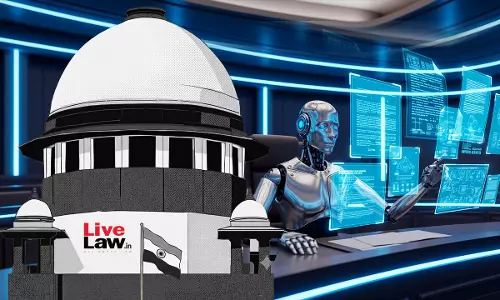
Governing AI In Indian Courts
After lamenting lawyers, litigants and judges for using AI during court hearings, the top brass of the Indian judiciary has finally taken the plunge, seeking to govern it with structured, principled rules. The Supreme Court of India has released a draft policy¹ on the Use of Artificial Intelligence (AI) in Courts 2026, laying the framework for AI use throughout Indian courts. Here is the critique.Possible Friction Between the Supreme Court and High CourtsOne of the more undiscussed challenges of...
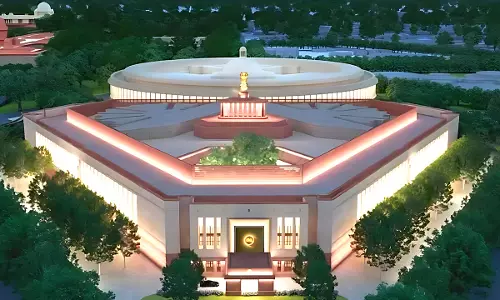
Great Indian Defection Circus: How Tenth Schedule Became A Shield For 'Wholesale' Betrayals
The Tenth Schedule came into being while a part of the 52nd Amendment of the Constitution in 1985, and was touted as a noose around the neck of the infamous 'Aaya Ram, Gaya Ram' culture. The Anti-Defection Law has turned into a paradox of democracy almost close to four decades later. It eliminates dissent, individual dissent, principled dissent, and it legally cleanses mass, syndicated political betrayals.One of the Supreme Court's most consistent trends in jurisprudence has been that each time...
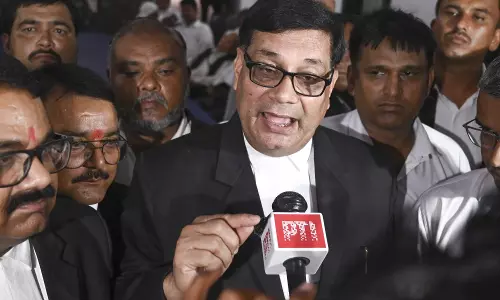
Why Ayodhya Lawyers' Refusal To Represent Accused In Ram Mandir Donation Theft Case Violates Law
In the wake of alleged embezzlement of donations received by the Shree Ram Janmbhoomi Teertha Kshetra Trust for Ayodhya's Ram Mandir, the Faizabad/Ayodhya Bar Association in Uttar Pradesh recently passed a resolution restraining its members from representing the accused.The resolution stated that none of its members would represent persons arrested in connection with the alleged...
How Gujarat's Disturbed Areas Act Drifted From Protection To Segregation
The legislative intention of the Gujarat Disturbed Areas Act, 1991 was to safeguard and protect the interests of minorities facing systematic migration from distressed sale of property. However, it has resulted in increased segregation based on religion with respect to residential corpus over its three decades of implementation and amendment. The said act was enacted in 1986 and subsequently made permanent in the year 1991. What it intended to achieve was never too complicated or undoable....
Losing Side Finally Gets To Fight Back: How Supreme Court Rewrote Rules On Interim Relief In Arbitration
Imagine you have just lost arbitration. The award sits on the table, and the other side is already moving to enforce it. You believe the award is wrong – perhaps it was procured through fraud, or perhaps the arbitrator overlooked a decisive point of law. While you challenge the award under Section 34 of the Arbitration and Conciliation Act, 1996, a process that can take years, the...