


Articles
Why Latest SC Judgment Denying Gratuity To Teachers Is 'Per Incuriam' ?
In what can be unhesitatingly termed as a 'Per Incuriam' judgment, the Supreme Court on Monday held that a teacher, irrespective of the type of educational institute he/she is working, is not an 'employee' under Section 2(e) of the Payment of Gratuity Act and, therefore, has no right to invoke the Act for claiming gratuity from his/her employer.Per Incuriam judgment is the one which is decided without reference to a statutory provision or earlier judgment which would have been relevant. This...

Mental Health Of Lawyers & Judges :Need To Shed Stigma
"The judges of the Supreme Court and High Courts are not immune to this problem. Judges are quite often seen exhibiting impatience, irritability, anger management issues, stubbornness etc. in courts. Such erratic behaviour from persons who are otherwise learned and judicious cannot be dismissed as mere personality issues; they could be pointers to work-induced stress, which is affecting the temperament of judges."


Who Reads A Judgment?
"CR" in legal circles does not refer to Christiano Ronaldo, the mercurial Portuguese striker. Rather, it is a contraction for 'Certified for Reporting" and refers to judgments deemed worthy of publication in the law reports by the judge himself. To the judge concerned it is the raison d'etre of his whole being, a manifestation of his selfless desire to edify the masses-both laymen and lawmen; even though the inveterate cynic would snidely remark that it is merely a cheap ticket to imagined...


IBC - Two Years On - The Game is On
"Curiouser and Curiouser" – Hon'ble Justice R.F. Nariman quotes from "Alice in the Wonderland" to describe the tactics adopted promoter of Essar Steel in the case of Arcelormittal India Private Ltd vs Satish Kumar Gupta.It has been more than two years now when the path-breaking and drastic law governing insolvency was passed and implemented with great speed and purpose. The speed was necessary as the financial sector was reeling under NPA of more than 10 trillion rupees and the system needed...
Rebuilding Kerala Post-Floods : Law & Policy Perspective
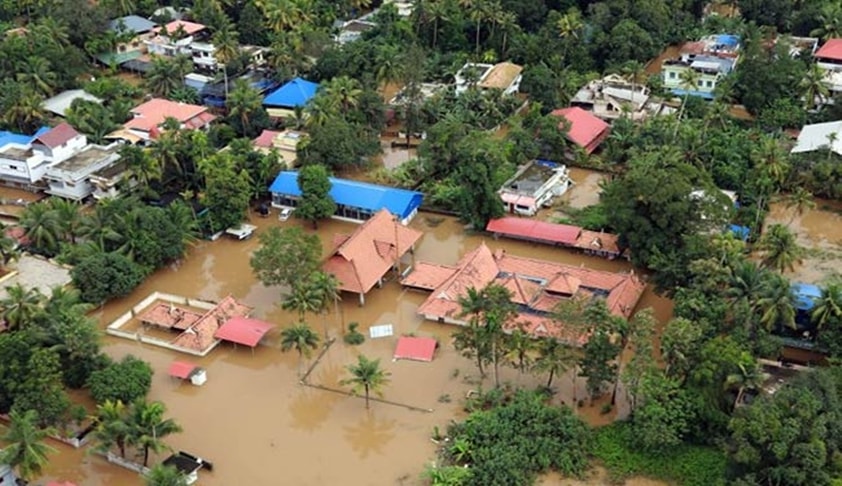
IntroductionThe floods which ravaged Kerala in July-August this year was its worst natural disaster of the century. The deluge claimed 483 human lives, lives of innumerable other living beings and caused damage of over Rs. 20,000 crore.The state witnessed the worst drought of the century in 2017 which led to severe water crisis, and a furious cyclone Ockhi in 2017 which adversely affected he coastal stretch of the state and the fishing communities, in particular. This is not to speak of the...
The Applicability Of The Law Of Limitation To Petitions Filed Before The District Judge Under The P & MP Act, 1962
The legal issue which has impelled me to right this Article is as to whether Section 5 of the Limitation Act, 1963, enabling condonation of delay on the ground of sufficient cause, is applicable to applications filed before a District Judge under sub-section (2) or under sub-section (5) of Section 10 of the Petroleum and Minerals Pipelines (Acquisition of Right of User in Land) Act, 1962 (hereinafter referred to as the “P & MP Act” for short). The conflict of judicial opinion by the High...
Government And Its Naamkaran Ceremonies: Understanding The Procedure Of Renaming Of States And Cities In India
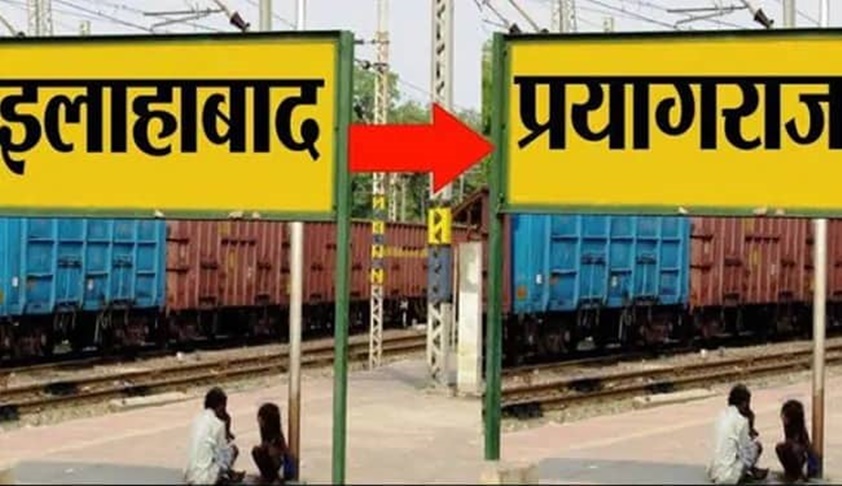
‘Naamkaran’ is the ceremony when a newborn is bestowed with a name by her/his parents. This name then becomes her/his identity and follows her/him for all his life. Although people do change their name, the occurrence is rare. Several state governments, however, are making this rare occurrence a commonality by way of undertaking this ceremony to states and cities in India. Uttar Pradesh Chief Minister Yogi Adityanath leads this, with his recent spree of renaming the cities of Uttar Pradesh....