



Articles
![Evolution Of Law Of Corporate Insolvency [PART -II] Formation Of NCLTs And Evolution Of Insolvency Jurisprudence](https://www.livelaw.in/cms/wp-content/uploads/2017/12/Insolvency-and-Bankruptcy-code-1.jpg "Evolution Of Law Of Corporate Insolvency [PART -II] Formation Of NCLTs And Evolution Of Insolvency Jurisprudence")
Evolution Of Law Of Corporate Insolvency [PART -II] Formation Of NCLTs And Evolution Of Insolvency Jurisprudence
Law Commission of India vide its 124th Report[1], while highlighting the issues of multiplicity of jurisdictions with High Courts, pendency of cases, multiplicity of stages of appeal/ review/ revision under the Code of Civil Procedure, and need of having specialized bodies to deal with specialized matters, recommended for setting up of specialized Tribunals. This paved way of setting of various Tribunals.NCLTs were set up under section 408 of the Companies Act, 2013 w.e.f. 01st June 2016....
Evolution Of Law Of Corporate Insolvency "A Balance Sheet Of Working Of IBC 2016" [Part-I]
This Article traces implementation of IBC and progress achieved over the past one year and the challenges faced by each of the of the Pillars during their one year of journey.For the sake of convenience and better understanding, the article is divided into four parts.Part-I Captures Criticality of IBC as a piece of legislation and challenges & achievements of IBBI.Part-II - Traces Formation of NCLTs and evolution of insolvency jurisprudence,Part-III- Deals with the role of two other critical...

Decriminalisation Of Adultery
The decisions to criminalize or decriminalize in India do not seem to be based on the established principles in the realm of criminal jurisprudence. It therefore leads to a variety of confusion and most discussion in this regard remain centered around personal opinions and conjectures. In order to test the proposition, this paper focusses on the initiative of the Supreme Court to decriminalize adultery in certain terms.Adultery, said Vladimir Nabokov, “is a most conventional way to rise above...
Are We Nearing Collapse In The Dispensation Of Justice In India?
India perceives its justice system as one of the pillars of its democracy (Kant, 2017). However, Sengupta suggests that India’s justice system is erratic, slow and under-staffed thereby implying that cases have taken so long to be heard and justice has long been denied to many people. For example, after the Sikh riots were held in 1984, a final decision on those that had been accused has not been delivered (2017). Not just this, umpteen number of cases do not see the light of justice in a time...
Buried Conscience
Unprecedented are the happenings in the Supreme Court in the recent past. It seems that the new jurisprudence is in the offering, where the bar and the bench are contributing to shaking faith in the judiciary. Something unwarranted witnessed the Chief Justice Court on Monday, which in ordinary course merits dismissal with exemplary cost. However, surprisingly it ended in uproar by few regular practitioners, and thereafter business as usual.These days, conscience is a word used in the Court...
Judge Loya Case: Denied Justice, Delayed Justice Or Just-Ease
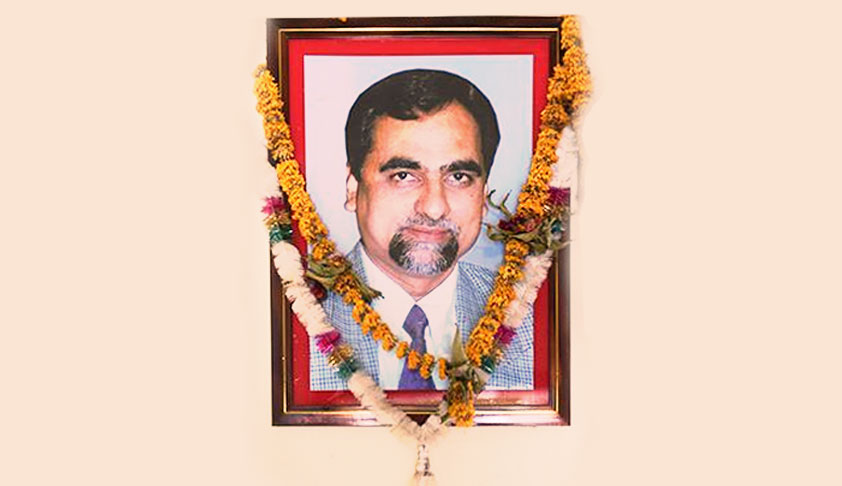
Hearing of the Petition seeking an investigation in the death of Judge Loya presiding over the CBI court in the Sohrabuddin Sheikh fake encounter case has been ongoing for quite a few days in the Supreme Court of India and a battery of esteemed lawyers are fielding for both the sides, whether an independent probe should be ordered, or not. Astonishingly the State of Maharashtra is opposing an independent probe in the matter citing an already concluded purportedly executed probe by Commissioner...

India Should Make Forensic DNA a Priority in Sexual Assault Cases
Forensic DNA is by far the most impactful justice tool ever utilized in the criminal justice system. In the late 1980s, DNA was first used as a method to determine if the DNA from known suspects matched the DNA found at crime scenes. This collect, test and compare approach has been replicated in most countries. Fifty-five countries have also moved beyond just focusing on DNA as tool to link a known suspect to a crime scene, and have created national criminal offender DNA database programs. These...
'Any Attempt by Supreme Court to Introduce Safeguards Against SC/ST Act Would Send Wrong Message'
On 20th November 2017, a bench of Justice Adarsh Kumar Goel and Justice Uday Umesh Lalit, while hearing the case Dr Subhash Kashinath Mahajan v State of Maharashtra, framed the following question for consideration: Whether there can be procedural safeguards so that provisions of Scheduled Castes and the Scheduled Tribes (Prevention of Atrocities) Act 1989 are not abused for extraneous considerations?The facts of the case being heard by the bench are that certain adverse remarks were recorded...
The Power Of Dissent And The Silence Within
The fate of the judiciary as an institution, and our fate as a democratic nation, hinges on whether we, as a people speak out, or watch passively.Justice D.Y. Chandrachud of the Supreme Court recently remarked that India needed to rethink the power of dissent. Delivering the presidential address at an event organised by O.P. Jindal Global Law University at the Indian Law Institute on January 11, he highlighted the three most powerful dissents in the history of the Indian legal system – by...
When Rule Of Law Becomes A ‘Dead Horse’: SC Order Refusing Probe Into ‘Attack’ On Kanhaiya Kumar Is Unfortunate
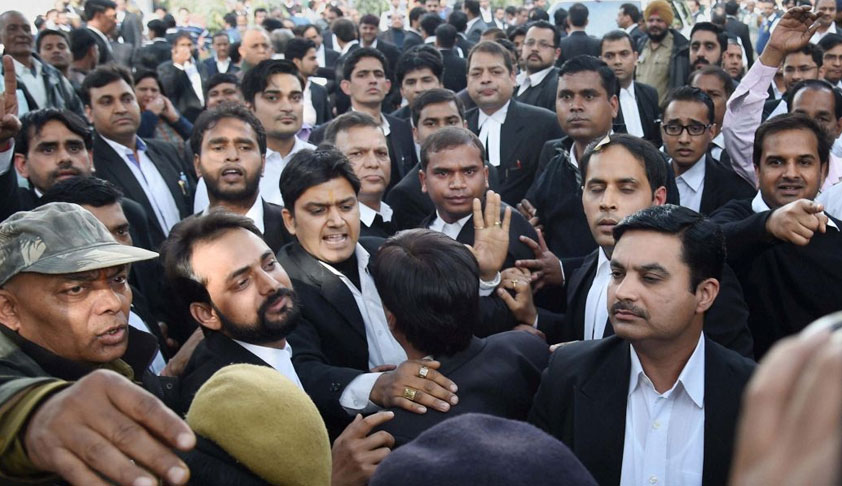
On 24th January, the Supreme Court dismissed the plea seeking probe by a Special Investigation Team into the attack of JNU student leader Kanhaiya Kumar which took place in the premises of Patiala House Court during February 2016. Reportedly, the bench comprising Justice Ranjan Gogi and Justice R Banumathi dismissed the plea, observing “We don’t want to flog a dead horse back into life”. The court felt that nothing survived in the matter and closed it.As much as it is disappointing, it is also...

Apex Imprimatur On Acquittal Of ‘Peepli Live’ Co-director Mahmood Farooqui In Rape Case
In this era of me-too and him-too naming and shaming campaigns, which have placed the issue of consent centre stage, we have the dismissal by the Supreme Court of the appeal against the acquittal of Mahmood Farooqui by the Delhi High Court. It is to be borne in mind that Farooqui was convicted by the trial court judge for rape and sentenced to seven years imprisonment. The conviction was reversed by the Delhi High Court. The throwing out of the petition at the threshold without deeming it fit to...
Police Should Grant Bail For Non-Bailable Offence: A Discussion
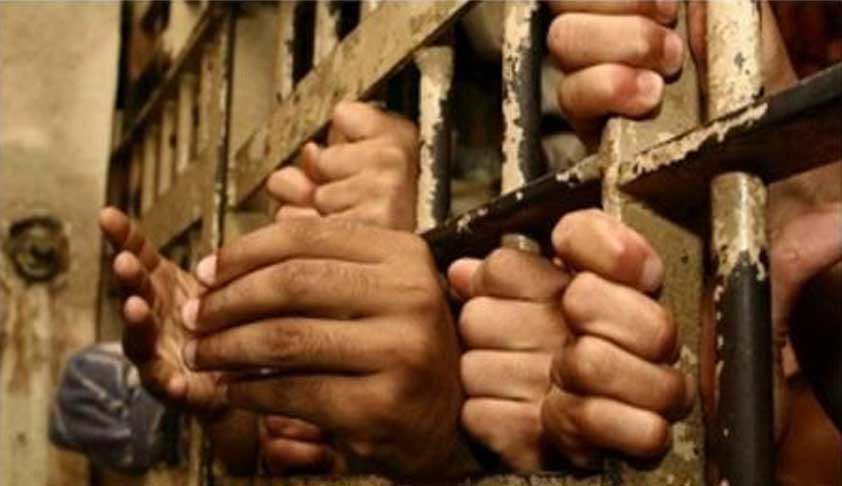
Normally, it is believed that only in a bailable offence, an accused can ask the police official to release him from the custody on furnishing bail and for a non-bailable offence no such facility is available. The system apparently has not been able to dispel this misconception either from the mind of general public or of the police officials. Result is that Magisterial courts are burdened unnecessarily with the production of accused and dealing with their remand application and bail...