


Articles
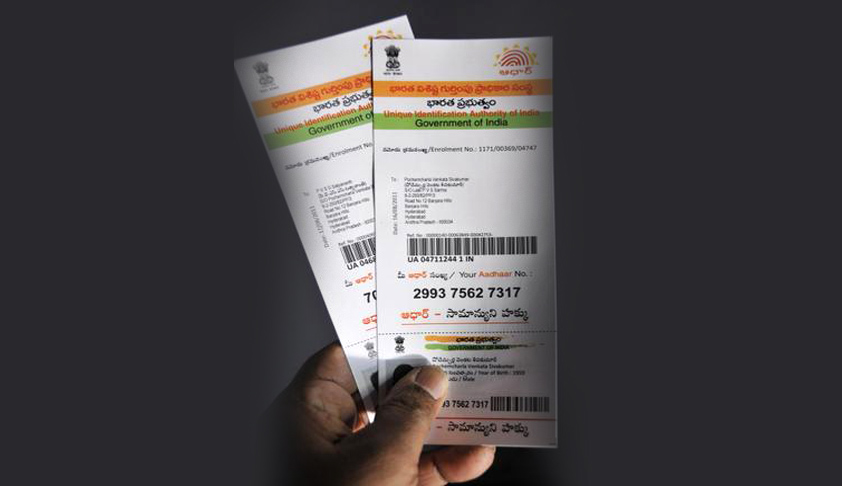
Journey From Civilian Application To Defence Application Of Aadhaar
Citing a letter from Department of Electronics & Information Technology, Ministry of Defence sent an Urgent/Top Priority Circular to Chief of the Naval Staff, Chief of the Army Staff and Chief of the Air Staff asking them to compulsorily ensure that all the employees enrolled for UID/Aadhaar Number. Another letter was sent by Ministry of Personnel, PG & Pensions Department of Personnel & Training to the Secretary Department of Defence Production asking him to introduce Aadhaar...
The Last Chance After Last Chance - Curative Jurisprudence
The Supreme Court has recently dismissed a curative petition filed in the much debated Saumya murder case. A six-member bench observed that no case was made out within the parameters indicated in Rupa Ashok Hurra vs Ashok Hurra & Anr [(2002) 4 SCC 388].In this piece, let us take a peep into the experience in the past 15 years of introduction to the curative theorem and how the system of curative petitions works.The CPC and CrPC both mandate that institution of a suit has to be in the lowest...
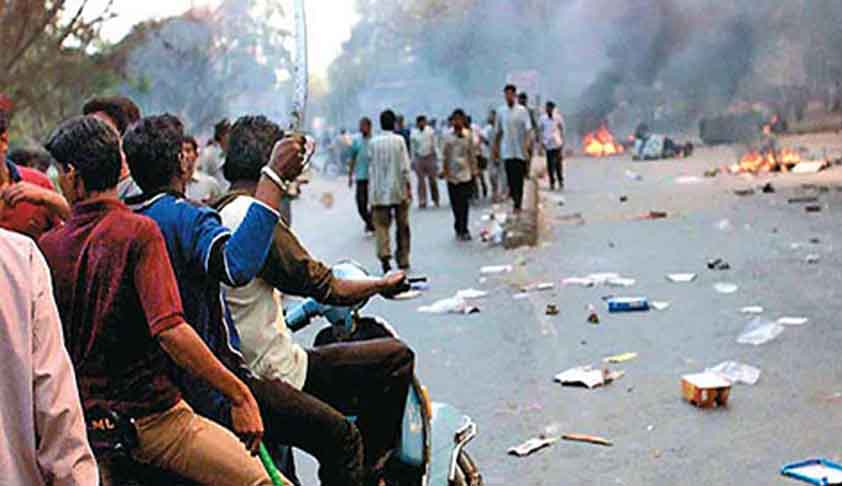
Gujarat Riot Victim's Case: Not Rarest Of Rare?
The debate on the rarest of rare doctrine and its applicability ensued the moment the verdict was pronounced in the unnerving case of Mukesh & Anr vs State of NCT for Delhi ( Nirbhaya case). The verdict has called for criticism of the common people with regard to the non-applicability of the same doctrine in another gruesome case of rape and mass murder decided by the Bombay High Court .Where the dismissal of the appeal of the accused persons found much resonance in the society with all...

Criminal Defamation Versus Free Speech And Liberty
In the criminal defamation case against Kejriwal, media reports manage to convey the palpable pleasure of Mr. Jethmalani in cross examining Mr. Jaitley. In the midst of the bickering over the payment of his fee, we may well find Jethmalani with his maverick ways, offering to pay Kejriwal for the pleasure and the opportunity for the cross examination!It is relevant to recollect that the Editors Guild had met the then Minister of Information and Broadcasting Ambika Soni in 2011 asking for...
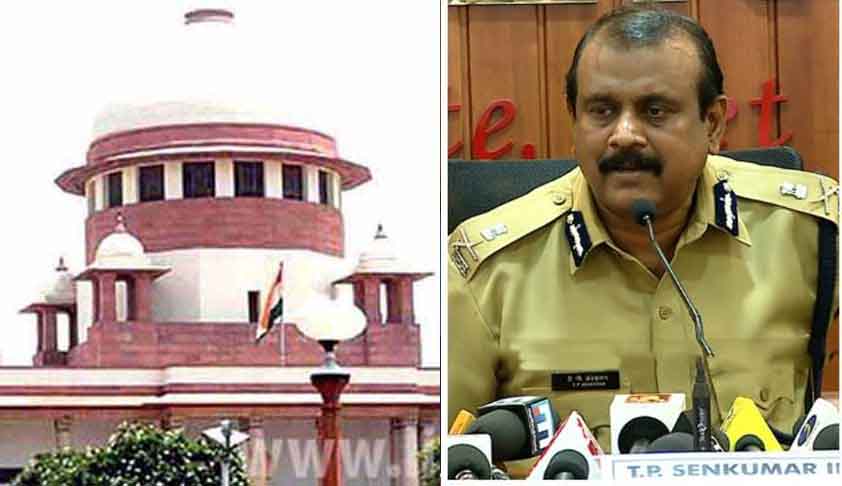
‘Pleasure Doctrine’ & Senkumar Case
The Government of Kerala suffered a jolt with the judgment of the Supreme Court upsetting its order removing T.P. Sen Kumar from the post of State Police Chief. The Apex Court dubbed the decision of the State Government as arbitrary and ordered to reinstate Mr. Senkumar as State Police Chief. Sen Kumar was removed from the post of State Police Chief following the change of guard in the Government after the General elections to the Kerala Legislative Assembly held in May 2016. When Left...

RERA - A Relief For Consumers?
With the coming into force of the Act on Labors day, in Maharashtra, the previous Act styled as MOFA (Maharashtra Ownership of Flats Act, 1963) governing the real estate also continues. How is RERA (Real Estate (Regulation and Development) Act, 2016) going to benefit the purchaser, designated as “Allottee” under the new Act.No promoter is allowed to advertise, market, book, sell or offer for sale, or invite persons to purchase in any manner any plot, apartment or building, without registering...

RERA (Real Estate Regulatory Act) - Will Haryana Implement The Right, Earnest, Rare, Approach?
The much exulted RERA (Real Estate Regulatory Act) will soon be implemented in Haryana from 1st May, 2017. The residents are expecting a lot from RERA and hoping that the attempt to safeguard the legislation by the Centre remains strong. There has been news about reported watering down attempts of the RERA by the States. However, in January 2017, the Centre had vehemently refuted it and warned against any modifications to the basic guidelines governing the Act.In the recent years, we have...

Impact Of GST On Power Sector
The central theme of this paper is an analysis of the impact of tax on fossil fuel electricity production in India. An attempt is made to sequentially examine the existing tax structure, and draw a parallel to the new GST structure. As an economy about to embark revolution, it becomes vitally significant to understand the approach adopted by other GST countries, whose experience can be considered as reliable precedents to India’s evolution. Hence, this paper takes an evaluative approach towards...

A Dispute As To "Dispute"
The Insolvency and Bankruptcy Code, 2016 ("the Code") enables a financial creditor and an operational creditor to initiate insolvency proceedings against a corporate debtor. While in case of a financial creditor, the creditor may initiate a case without serving "demand notice" on the corporate debtor; an operational creditor, before taking action under section 9, shall first serve a demand notice on the corporate debtor. If in response, the corporate debtor intimates existence of a "dispute",...
Aadhaar And The Supreme Court’s Sense Of Urgency
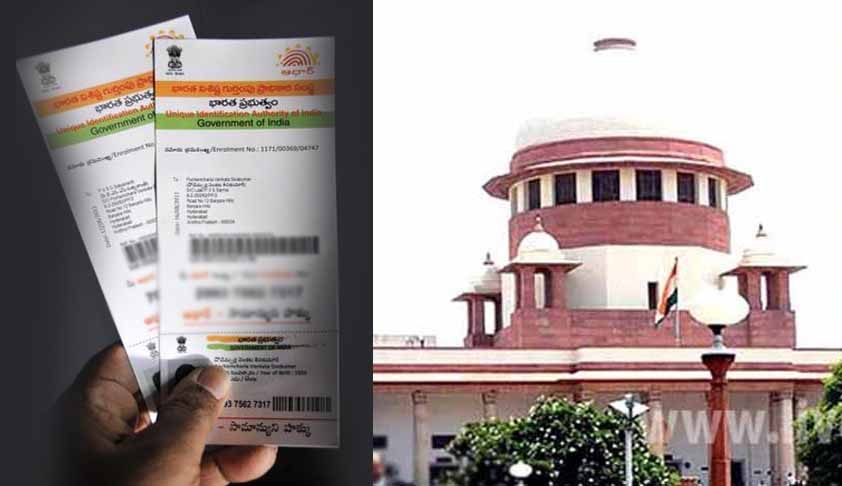
On 21 April, when Justice A K Sikri headed Bench of Supreme Court heard two cases Writ Petition (Civil) 277 of 2017 by Major General (Retd) Sudhir Vombatkere and Bezwada Wilson, leader of Safai Karamachari Andolan besides another petition filed by CPI leader Binoy Viswam related to violation of rights due to amendments in the Aadhaar Act, 2016 through Finance Act, 2017 enacted as a Money Bill, the questions he asked Attorney General gave a sense of deja vu.Some four years ago, Chief Justice A K...

Kidnapping Of Child A Bailable Offence Under IPC Becomes Non-Bailable Under JJ Act: A Discussion By Rakesh Kumar Singh
In the present paper, we will discuss the effect of newly enacted Juvenile Justice (Care and Protection of Children) Act, 2015 vis a vis offences related to kidnapping and abduction as envisaged in IPC, 1860. We know that kidnapping of a child below certain age (different for male & female) from lawful guardian is an offence punishable upto 7 years imprisonment but is a bailable offence. Prime issue herein is whether the enactment of new JJ Act which covers every persons under 18 years of...

Neutrality Of Arbitrators: The Road Ahead
Dispute resolution and primarily litigation in India, has been subject of wide criticism. The criticism finds its basis in the substantial amount of time and cost which is involved in getting reliefs. While alternate means of having disputes adjudicated through arbitration existed and were governed by the Arbitration Act, 1940 but with the passage of time, the Arbitration Act, 1940 soon became rudimentary to the more complex and complicated arrangements which were being executed. To be abreast...