


Articles
Not Hereditary Property; Common Property!
Karthika Annamalai, daughter of a stone quarry worker from Marenahalli Bande, a village near Bengaluru, is the only one to go to higher secondary school from her village. She knows Tamil and Kannada.The sought after destination of all technocrats, Bengaluru, is just a call away. But there is no toilet in Karthika’s house. For that, one has to search for a misty open space. Today, she is getting qualification from NUJS, Kolkata. “My past cannot imprison me” – said Karthika, and proved it too.Her...

The Life And Times Of Justice V R Krishna Iyer
Justice V R Krishna Iyer (1915-2014) had it all that takes to be the cream of the crop among his contemporaries in terms of judgeship, statesmanship, leadership and much more that shaped him up as a dynamic legal practitioner, prominent legislator, minister for key portfolios in Kerala, member of Indian Law Commission, Judge of High Court and later of Supreme Court. He who began his legal practice as an advocate in 1937 at Taluk level subordinate court in Telliserry, Kerala beseeched, defended...

Is There A Regulatory Vacuum At The Helm Of Television Content Regulation?
In relation to the imposition of a penalty of prohibition of transmission/re-transmission of NDTV India channel on any platform throughout the territory of India, for a period of 1 day, would this question be posed? In the event that it is posed, would the question be answered in the negative? If that be so, would it have the effect of rendering the prohibition order bad in law? This piece is not about the imposition of a penalty of prohibition of transmission/re-transmission of NDTV India...
Section 27 Recovery: Wrong Application Of Law
Reversing the judgment of the Special Judge for trial of NDPS cases, Thodupuzha convicting A1 and A3 for an offence punishable under Section 20 (b) (ii) (B) of the Narcotic Drugs and Psychotropic Substances Act, 1985 (“the NDPS Act”), for having been found in possession of 18 Kgs of ganja, the High Court of Kerala in Ramesh Vs State of Kerala 2016(5)KHC 303, has recorded an order of acquittal.PROSECUTION CASE The prosecution case as discernible from the reported verdict is as follows:-At about...

Dialing 19(1)(a) For The 9/11 Ban On #NDTVINDIA
The Ministry of Information and Broadcast (MIB) vide an order dated 02.11.16 issued through the Director, Broadcast prohibited NDTV India Channel from broadcasting/rebroadcasting for 24 hours on 09.11.16 as a ‘token penalty’ (referred to as the 9/11 ban hereinafter). This order follows the penal recommendation of an Inter Ministerial Committee (IMC)for allegedly revealing “strategically sensitive” details during its coverage of the Pathankot attacks in January this year.A lot of ink has since...

Time To Snap Out Of The Day-Dream Of Arbitration; The Entire Ecosystem Needs An Overhaul
A three day long conference on strengthening arbitration and its enforcement in India was recently organized by the Niti Aayog in the National Capital. It was more or less another arena where the ongoing tussle between the judiciary and the executive regarding the abysmal ratio of pending cases to the number of judges in the Indian courts came to the fore. Yes, alternative dispute resolution mechanisms like arbitration, mediation and conciliation are important for effective functioning of the...

Equal Pay For Equal Work For Temporary Workers: A Note On Jagjit Singh Judgment
Judgement delivered by the Supreme Court in the case of State of Punjab and others V/s Jagjit Singh and others in civil appeal no. 213 of 2013 is a landmark judgment in my view.In the said judgment the issue which arose for consideration was whether temporarily engaged employees (Daily Wage employees, Adhoc Appointments, Employees appointed on a casual basis, Contractual Employees and the like) are entitled to the pay-scale along with Dearness Allowance (as revised from time to time) of a...
Appeal To Voters In The Name Of Identity Politics
In a recently concluded hearing before the Seven Judges Bench of the Supreme Court, Mr Kapil Sibal raised the very fundamental issue in relation to the changed electoral politics in India stating that the very purpose of all the laws regulating corrupt practices in an election is to protect the ‘underlying/enduring constitutional ethos’ and for that the Court must lay down the guidelines which could control the mischief being played by various candidates and political parties in view of the ‘new...
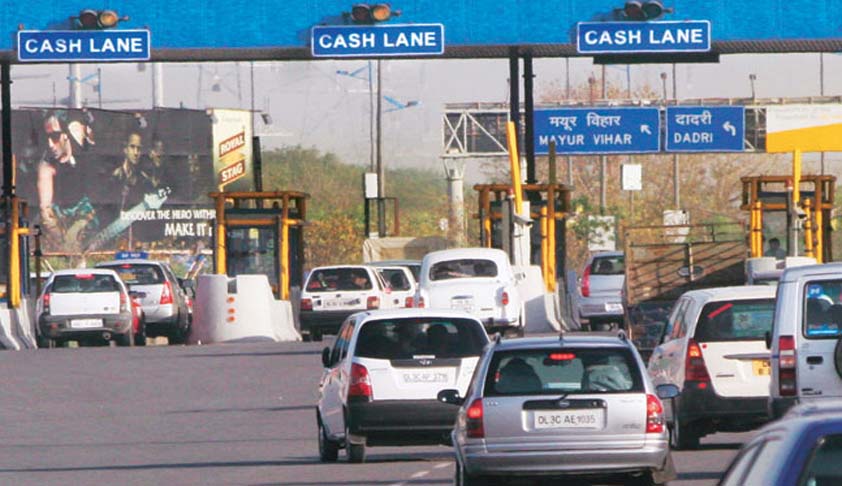
DND Toll Scrapping, Theory Of Regulatory Capture And The Challenge Before The Supreme Court
A Division Bench of the Allahabad High Court comprising of Justices Arun Tandon & Sunita Agrawal, in Federation of NOIDA Residents Welfare Association v NOIDA Toll Bridge Company Ltd. & Ors (NTBCL), recently scrapped the toll collected on the DND (Delhi-NOIDA-Direct) flyway. In June 2016, the Supreme Court had directed the High Court to decide the PIL filed in 2012 within 3 months. The High Court’s paraless 121 page judgment was immediately challenged before the Supreme Court which also...

The Uniform Civil Code Debate – What Is Missing
For the past several weeks there have been screeching debates on prime TV on the Muslim Personal Law and the need for a Uniform Civil Code. Unfortunately these issues are being dealt with only from the following three perspectives: A patronizing patriarchal perspective - which assumes the sub-ordination of women to men; The religious perspective – pertaining to the validity of certain practices under the religion; The economic perspective – concerning the rights of the “second” wife.In this...

Mediation In Cheque Dishonour Cases: Legality And Binding Effect
This article is an attempt to highlight a very important question of law facing magisterial courts today. The question is ‘the legal permissibility of referring a complaint case u/s 138 of the NI Act for amicable settlement through Mediation, and the legal implications of breach of a mediation settlement agreement’.The question becomes extremely important, having regard to the increased reliance on Mediation as an ADR mechanism for speedy and qualitative disposal of cases.Beginning at the...
Prosecution Sanction – A Former Judge Pleads Guilty
What prompted me to make this unusual confession is the painful realization that a past verdict of mine in Antony Cardoza V. State of Kerala 2011 (1) KHC 377=2011(1) KLT 946=ILR 2011 (1) Kerala 503, has unfortunately been responsible for several unmerited acquittals at various levels of the judiciary including in the High Court of Kerala. Antony Cardoza, the first accused in that case along with another was prosecuted for offences punishable under Sections 13(2) read with 13(1)(c) of the...