




Articles

ECTA Has A Dispute Architecture Problem. CECA Should Fix It
India and Australia have built a trade corridor of growing technical complexity. The dispute settlement architecture beneath it is not equal to what the corridor will generate — for its commercial parties or for the workers whose movement makes the commerce possible. The CECA negotiations are the moment to say so.

Remove The Predator, Not The Prey
Rethinking Interim Relief Under Section 12 of the Sexual Harassment of Women at Workplace (Prevention, Prohibition and Redressal) Act, 2013I. The Structural ParadoxThe Sexual Harassment of Women at Workplace (Prevention, Prohibition and Redressal) Act, 2013 ('the POSH Act') was enacted to protect women at their workplaces. Section 12 was written to give that protection a practical interim mechanism during the pendency of inquiry. In twelve years of the Act's operation, institutions have found a...
Green Competition: Why India's Competition Act Must Account For Environment
India has transformed how it thinks about corporate wrongdoing. The Jan Vishwas (Amendment of Provisions) Act,2023 decriminalized over 183 provisions across 42 Central Acts, converting criminal penalties into civil ones with enhanced monetary fines. The aim is straightforward, ease of doing buisness, not jail terms should be the default response to corporate non-compliance. The Competition (Amendment) Act, 2023 reflects the same instinct with heavier penalties, faster process but no prison bars...

Removal Of Disqualification And Principle Of Fresh Start Under Juvenile Justice Law
Declaration of a conviction for a criminal offence or a pending criminal proceeding is a standard part of employment application, for individuals seeking employment in government service or standing for public office. In regular parlance one may know it as a 'character certificate'. Employers including the government, carry out verification of character and antecedents to assess if the candidate is a 'fit person' and a potential employer can adjudicate the candidate's antecedents on an...

Difference Between Mortgage By Conditional Sale And Sale With An Option To Repurchase
The difference between Mortgage by Conditional Sale and Sale with option to repurchase continues to be a vexed question despite being answered by several Courts. Both the deeds are seldom expressed in identical terms. The most rudimentary exercise is perusal of the document in its entirety, analysis of the same where the language used is express and clear. However considering the old nature of documents executed by rustics, scribed by men who lacked the legal acumen which invariably has resulted...
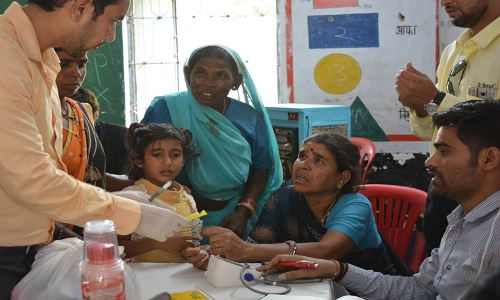
Reproductive Autonomy And State Negligence: A Legal Analysis Of Women Bodily Rights In India
In the recent news by India today it was covered that around 173-180 tribal women were sterilized at Community Health Centre (CHC) in Bag, Dhar district of Madhya Pradesh. Again, forceful removal of women uterus in the name of diagnosing menstruation related problem just to make them work and not to give me leave. This raises serious question on the government and regulatory authority regarding the safety and autonomy of the women. India's family Planning scheme has long been considered as one...

Why Attendance In Law Schools Reflects A Civilisational Crisis And Demands Structural Intervention
In recent weeks, the issue of law students' attendance in classrooms has received considerable public attention. Several colleges debarred students from appearing in the examination due to insufficient attendance, sparking an uproar on social media. Those criticising the college's actions relied heavily on the judgement delivered by the Delhi High Court in November last year. Challenging the Delhi HC judgement, the Narsee Monjee Institute of Management Studies (NMIMS) has filed a plea. In its...

Power Always Must Be Accompanied With Grace
Rhetorically, the Bar and the bench are by design Siame twins. In practice however , one is the proverbial Big Brother. By systemic mechanics the later is far too dependent on the former on a day to day basis to perpetuate the myth that they are in fact operationally but two sides of the same coin. Perhaps it is not a coin of popular functional currency. The issue yet again comes up for mention and concern in the context of a young lawyer green behind the ears taking on a High Court...
Court Culture As A Missing Variable In Judicial Reform
Judicial reform in India cannot be reduced to vacancies, infrastructure and technology. These matter, but the everyday culture of courts decides whether formal reforms actually improve access, quality and trust.India's judicial reform debate usually begins with pendency. This is understandable. The National Judicial Data Grid shows a huge burden on district and taluka courts, with lakhs of cases pending for more than 10 years. It also shows a recurring gap between institution and disposal in the...

GST Arrests Post Radhika Agarwal V. Union of India: Has Supreme Court Redefined Tax Investigations?
For many businesses facing GST investigations today, the process itself often becomes the punishment. Notices are issued; documents are asked for; top management is being called upon so many times, and arrest, even without the final assessment, is a looming possibility. Many taxpayers have already alleged that the threat of arrest is itself used as a pressure tactic during the...

Increase In Supreme Court Strength Through Ordinance-A Critique
It has become fashionable to talk of increasing the judge-strength to cope with the mounting work and pendency in courts. That is spoken of even about the highest court. Such talk is translated into action by increasing the number of judges. The Constitution originally fixed the strength of the Supreme Court to be eight-the Chief Justice of India and seven other judges. The Constitution enables Parliament by law to increase the strength. That has been done quite a few times over the 76 years of...

Before Passing Laws, India Must Forecast Court Burden—Starting With Tribunals
The Chief Justice of India has reportedly constituted a Judicial Infrastructure Advisory Committee to assess the infrastructural requirements of courts across the country and support a demand for nearly Rs. 40,000-50,000 crore in government funding. The figure is striking, but the deeper issue is timing. India usually counts judicial capacity after pendency has accumulated, after vacancies have slowed disposal, after courtrooms have become inadequate, and after litigants have already paid for...