


Articles
Yet another instance of Conflicting Verdict
If a Judge is of opinion that the interpretation of a legal provision by another Judge in a reported verdict, is erroneous, then, in the absence of a binding precedent to the contrary either by a larger Bench or by a Superior Court, judicial discipline demands that he refers it to a Division Bench through the proper channel. Instead of adopting that course, if the second Judge considers himself to be intelligent enough to tread a different path, it is the system which suffers. That is precisely...
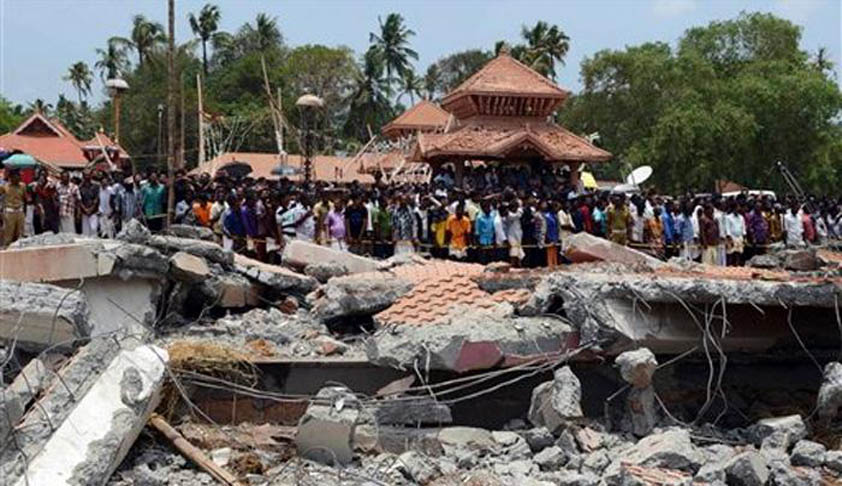
Death in Kollam Firework – Who are responsible ?
Fireworks are displayed using explosives. Explosives have made certain good and bad contributions to the history of mankind. But the benefits which explosives have produced far outweigh their misuse in certain pursuits. Recent deaths in Kerala will prove this fact.Fireworks are of two types, noise making and colorful. Colorful fireworks are enjoyed by all. But noisy fireworks are not accepted by most. Noise creates vibrations. Excessive noise can have severe physiological and psychological...

Criminal Profiling in the Detection and Apprehension of Offenders
The last decade has seen an extensive usage of criminal profiling during criminal investigations to detect and get criminals. It has been accepted as one of the most useful techniques in forming the profile of an offender since this activity helps in defining the behavior of an offender before his criminal career peaks. Law enforcement departments have used criminal profiling successfully in various areas and has proved effective in narrowing the area of investigation (Holmes and Holmes, 1996)....
Article 356: A “Living Monster”
Contrary to the imagination of our Founding Fathers, Article 356 is consistently haunting the health of Indian democracy like a ‘living monster’. The assurances of Dr. B. R. Ambedkar in the constituent Assembly appear meaningless which state that “the first thing the President will do would be to issue a mere warning to a province that has erred, that things were not happening in the way in which they were intended to happen in the Constitution....”. Instead of being a ‘dead letter’ or ‘rare...
Dissenting Opinions of Judges in the Supreme Court of India
IntroductionTraditionally, an empirical work on the dissenting opinions of Judges in the Supreme Court of India has been fairly limited. This may be attributed to the uncertainty of methodology to collect data and produce the most reliable results to understand the pattern of judgment delivery system in the Supreme Court. To overcome this limitation, the present paper aims to argue the case for an empirical study on how judges exercise their legal acumen to come to an independent conclusion on...

Offences of Fraud - Need for New Perspective
“What is fraud?” A simple definition of fraud as an offence has been skillfully avoided by jurists, judges and law makers, perhaps, due to its everlasting flexibility. Fertility of human mind to develop new ingenuous and unforeseen deceptive methods to make profit and gain wrongfully causing loss or injury to another, may be the reason why a comprehensive definition to fraud is not attempted to, and for laws against fraud to vary from State to State.2.Now, in the era of Information Technology,...
The Banker, The Borrower and Their Balance
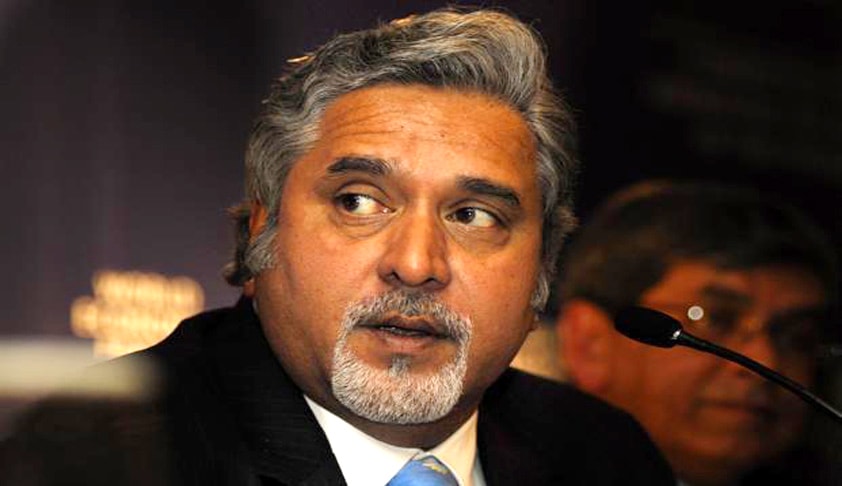
Recent prime-time coverage concerning a Forbes billionaire / Mr. Vijay Mallya/ theself-proclaimed “King of Good Times” and various Nationalised Banks seeking recovery, has engaged adequate public attention. Mr. Mallya’s condemnation as the perpetrator and the Bank’s portrayal as hapless victim/(s), raises various pertinent / logical questions of public significance, e.g.- Why are our Banks being presented in such a hapless and pitiful state? Why can’t they proceed against the secured assets? Are...

Legal Implications in Technology and Cyberstalking
Cyberstalking in general regards repeated and persistent trial by one individual, who is the stalker, to harass the other person, who is the victim. The action occurs using the Internet or any given open network. Cyber stalking gets mostly experienced on networked Personal Computers (PCs), but it can also extend to portable devices such as laptops, PDAs (Personal Data Assistants), mobile phones and devices that get connected to the internet(EBSCO, 1999).Law enforcement agents require the modern...
Ministers should take oath of transparency, not of ‘secrecy'
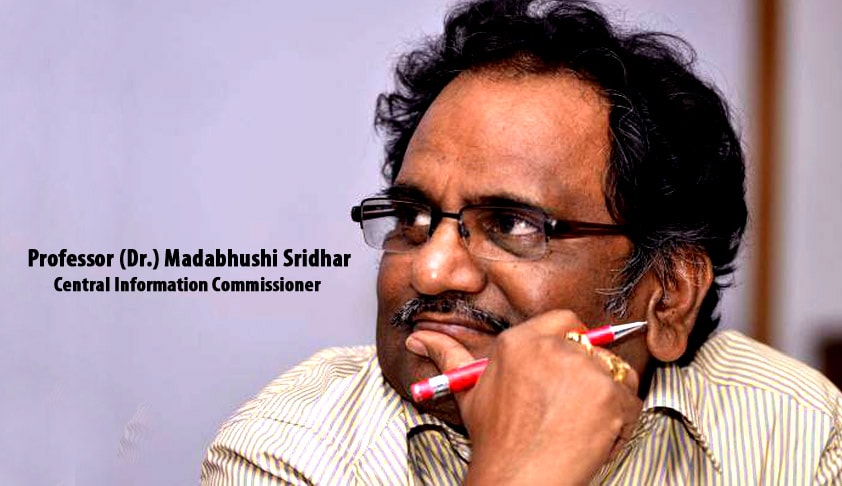
During debate on Right to Information Act, 2005, Mr Ram Jethmalani, MP and renowned Advocate said: simple philosophy of article 19 of the Constitution is that no servant can tell his master, "I have a secret to keep from you". If the people of India are the ultimate masters, no servant has a right to tell even a single master, "I will not give you this information; I will keep it as a secret".Mr Jethmalani reminded the Rajya Sabha that leaders of Indian Independence demanded repeal of Official...
Teachers of Law to Blame for Strange Judicial Orders
The Supreme Court of India in a 1987 judgment paid rich tributes to our high courts by observing, “Our High Courts are High Courts. Each High Court has its own high traditions. They have judges of eminence who have initiative, necessary skills and enthusiasm. Their capacity should be harnessed to deal with every type of case arising from their respective areas, which they are competent to dispose of.” This author is in complete agreement with this statement of the apex court about the general...
Juvenile Justice Act 2015; An Emotional Aftermath of the Dreaded ‘Nirbhaya Incident’; A Step Backward
22nd of December 2015, the day on which the Upper House passed the long pending Juvenile Justice (Care and Protection of Children) Bill, 2015 and thereby brought it into the Statute book, marks a black spot and a step backward in the history of the Juvenile Justice Regime of India.History of Juvenile Justice Regime in India In earlier days, the criminal justice system as available for adults was applied to a juvenile or the child irrespective of his age. The first legislation in India providing...

Union government taking U-turn from its earlier stand to make appointment-process in higher judiciary public
The Union government surprisingly takes a U-turn on its earlier view of making appointment-process in higher judiciary public. Unfortunately reverse-stand of the government comes a few months after the luminaries from bar and bench apart from Union government agreed to make appointment-process in judiciary to be covered by RTI Act. It is significant that such matters were in open discussion including the one by the then Chief Justice of India on non-appointment of Gopal Subramaniam as Supreme...