


Articles
A Chance that the court missed
“Everything secret degenerates, even the administration of justice; nothing is safe that does not show how it can bear discussion and publicity.” -Lord Acton.No imaginative legal preposition is laid down in the judgment in the “Fourth judges’ case” that dealt with National Judicial Appointment commission (NJAC). True that there are certain glimpses in Justice Chelameswar’s dissent. As Gautam Bhatia correctly observes “…the considerations that weighed with the Court in declining referral tend to...
Can Justice be delivered in reasonable time?
The Supreme Court has declared Right to Speedy justice as a fundamental right of citizens, but this remains a myth. Disregard of a fundamental right is happening in the courts of India, and there is no redressal available. Nearly two thirds of those in the overcrowded prisons are under trials. A judicial system which proclaims that a person is innocent until proven guilty, incarcerates two thirds of those in prisons without any guilt having been proved. The rich and powerful are treated as...

Amendment of Indian Arbitration Act: A Sigh of Relief for the Indian Arbitration Professionals and Clients!
The Indian arbitration scenario had always been abysmal. If the way in which arbitration proceedings were conducted under the 1940 Arbitration Act had made lawyers laugh and legal philosophers weep in view of unending prolixity, at every stage providing a legal trap to the unwary, the attempt to correct it under the 1996 Arbitration Act also failed. Arbitrators were competing with Courts to make it slower and expensive! Clients felt they were being fleeced by arbitrators.In fact in the...

Cancellation of Bail ; Kerala HC Jt in James George @ Basaliyos Marthoma Yakob -Pradaman v. State - 2015 (4) KHC 943 does not appear to be correct
The first accused who had allegedly committed offences punishable under Sections 420, 468 and 471 read with Section 34 of the Indian Penal Code, was granted bail by the Chief Judicial Magistrate. Subsequently, the Sessions Judge was moved through a petition filed under Section 439 (2) Cr.P.C. for cancellation of the bail granted to the Ist accused. The said petition was allowed by the Sessions Judge. Aggrieved by the order of the Sessions Judge cancelling the bail, the Ist accused approached the...
NJAC - Misadventure of Elected towards Tyranny
On 16th October, 2015, the Apex Court subdued mischievous attempt by the Executive to curtail the independence of ‘watchdog’ of this Country. Being one of the Petitioners in the matter, it gave me immense joy that Supreme Court rose up to the occasion and delivered what can be humbly termed as a ‘historic’ judgment. The 99th Amendment of the Constitution and NJAC Act were struck down by the Supreme Court as it impinged upon Independence of the Judiciary.But what followed next disturbs me as a...
The #NJAC Debate
It refers to Times Now debate where former CJI RM Lodha now favoured making appointment-process of judges public. Big question is what RM Lodha did for constituting a larger bench as directed by a Division Bench of the Apex Court long five years ago on 26.11.2010 to its registry to decide stay-order dated 24.11.2009 in SLP(C) numbers 32855 & 32856 of 2009 on CIC-verdicts on several aspects also including making appointment-process in higher judiciary public. Now ever since bill on National...
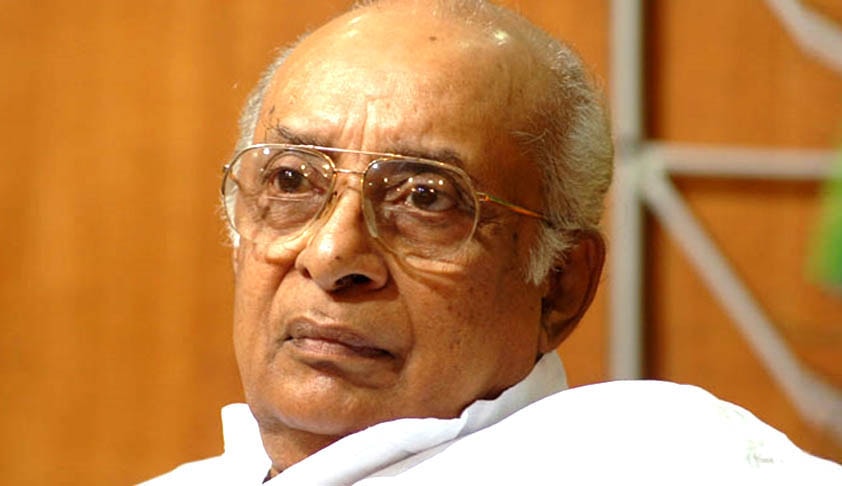
#NJAC Judgment reflects a craving of the Judiciary to arrogate to itself the Power of Appointment
This is an unfortunate judgment. Look at the background of the Constitutional amendment. It was felt almost unanimously that the collegium system is studded with flaws like subjectivity, partiality and lack of transparency. Some of the most eligible persons could not get into both levels of the court (High Court and Supreme Court) as they were not inclined to do any lobbying work. In fact, the two jurists, Fali S Nariman and J S Verma, who were principally responsible for evolving the collegium...
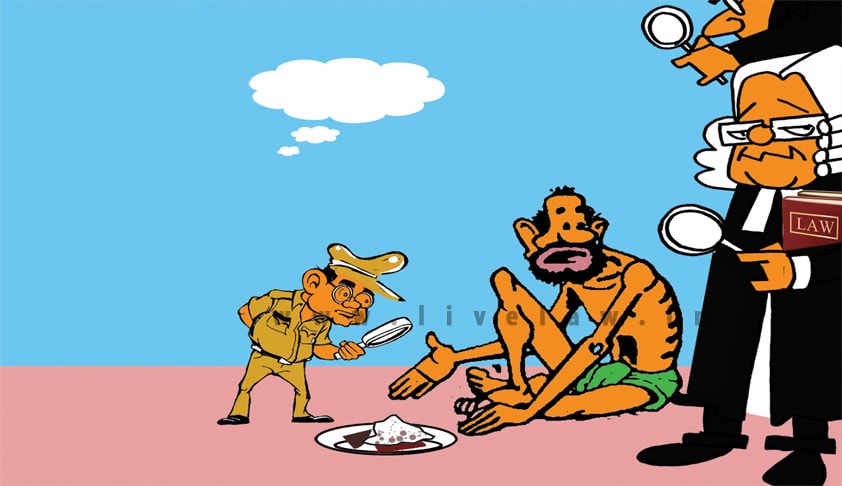
Ban on Cow Slaughter: The Camouflage of Article 48
In primary school, we had a composition book in which we wrote compositions on different topics. One such topic was ‘The Cow’. I neither remember having written anything like “Cow is my mother”, or “The cow is more than a mother to me”, nor did I write about the cow being sacred. I might have written that cow is a domestic animal; that cow gives us milk; that cow has four legs and a tail;or that cow dung is used as manure. Excuse me, I hail from the State of Kerala, where I never came across...
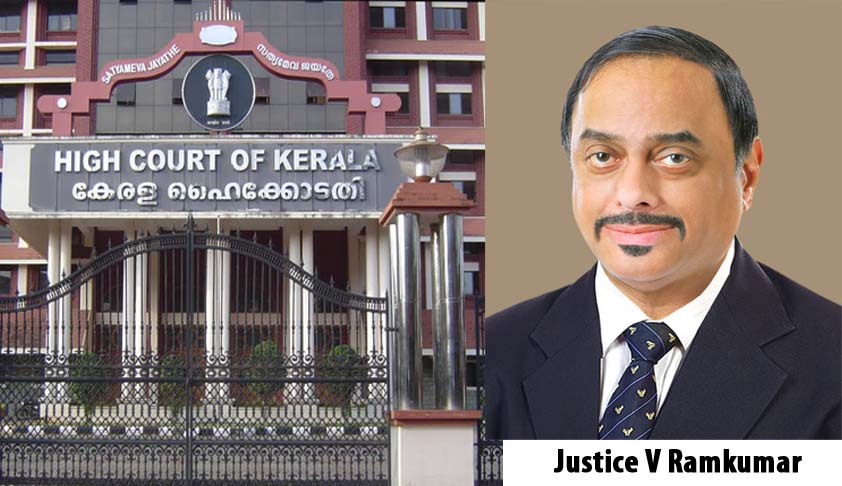
Sanction for Prosecution ; In my view, George Vs. State of Kerala – 2015(3) KLT 219 does not lay down the correct law
THE FACTS LEADING TO THE ACQUITTALThe case which came up for consideration before the Hon’ble High Court of Kerala, was an appeal against the conviction entered and sentence passed against the appellant ( a U.D.Clerk in the Town Employment Exchange, Pala) by the Enquiry Commissioner and Special Judge, Thrissur ( “Special Judge” fort short) for offences under Section 13(1)(c) read with Section 13(2) of the Prevention of Corruption Act, 1988 (“ P.C. Act” for short) and Sections 409, 465, 471 and...
Munsiff-Magistrate selection fiasco – Delaying justice?
The Munsiff-Magistrate selection process conducted by the Honourable High Court of Kerala during 2013 was challenged with serious allegations by Adv Kiranlal of Kollam through Writ Petition (C) No: 17185/2014 which was dismissed by a learned Single Judge who held that the High Court in its administrative side didn’t go wrong. The Petitioner who appeared for the examination chose to go in appeal before the Division Bench. The prime allegation of the petitioner was that a second valuation was...
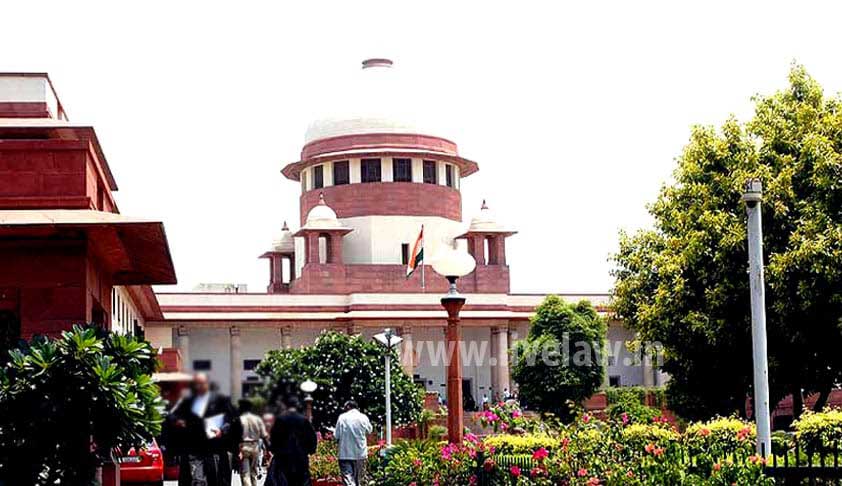
Collegium: Not the fault inherent; but corrective
There are as many criticisms against the method of Judge’s appointment and critics are mainly on attacking the foundation of so called ‘judge made system” of judge’s appointment. But the present system of collegium is not mooted by the Judges, but the Law Commission as per its 80th report submitted on 10-08-1979, suggested the system to improve the then selection process of Judges. Renowned Jurist and former Chairman of Law Commission Justice H R Khanna has a major role in recommending the...

Collegium Wapsi & the journey from Assembly debates to 4th Judges Case – A Sketch
“Let judges also remember that Solomon’s throne was supported by lions on both sides: Let them be lions, but yet lions under the throne; being circumspect that they do not check or oppose any points of sovereignty”Francis Bacon, ‘Of Judicature’BackgroundIn a path breaking judgment stretching to over 1000 pages, a Constitution Bench of the Supreme Court comprising of 5 judges (all of whom have penned words in sequence of seniority) in SCAORA v UOI (4th Judges Case) with a majority of 4:1 declared...