


Articles
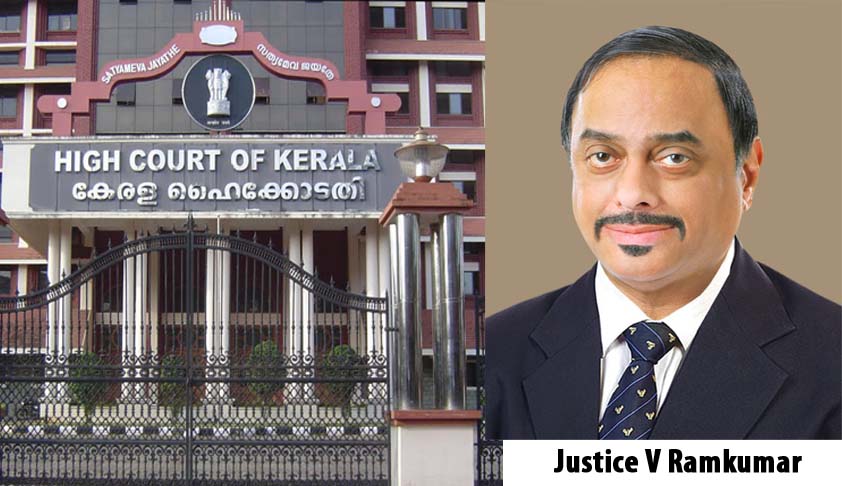
My understanding of Order XLI Rule 22 CPC
1. Under sub-rule 1 of Order XLI Rule 22 CPC a respondent may, not only support the decree (which is wholly in his favour) but also may assail any (adverse) finding against him without filing any appeal or cross- objection. As per the said provision, a respondent can also assail any part of the decree either by filing a separate appeal or by filing a memorandum of cross-objection. The words “respondent may object to decree as if he had preferred separate appeal” occurring in the heading of...
![[Exclusive] : A true Account by Anoop Kumaran , who slayed draconian 118(d) of Kerala Police Act, along with 66A IT Act; Why our ruling class panic of the democratization of communication space?](https://www.livelaw.in/cms/wp-content/uploads/2015/04/Sec-66-A-and-118d-of-KP-Act-LL-Size1.jpg "[Exclusive] : A true Account by Anoop Kumaran , who slayed draconian 118(d) of Kerala Police Act, along with 66A IT Act; Why our ruling class panic of the democratization of communication space?")
[Exclusive] : A true Account by Anoop Kumaran , who slayed draconian 118(d) of Kerala Police Act, along with 66A IT Act; Why our ruling class panic of the democratization of communication space?
The recent judgment of the Honourable Supreme Court of India in Shreya Singhal v. UoI [Anoop.M.K v. UoI] is a milestone in the history of fights for rights and freedom in India. It will be hailed for years to come for upholding the freedom of speech and expression. In this case, the Supreme Court declared section 66A of the Information Technology Act and Section 118d of the Kerala Police Act as unconstitutional. This decision raises important questions as to what prompted the central and the...
Judging the Judges: Debating Judicial Conduct
The Supreme Court Bar Association had proposed a resolution demanding “fair treatment of lawyers” by judges. The notice issued recently by the Association, which consists of members from almost all the states in the country, says that the lawyers must receive respect “irrespective of their standing and seniority”. It also protests against the “hurried and selected manner” in which some Supreme Court Benches hear the cases (The Hindu, 3.3.2015). The subsequent circular issued by the...

Changing Nature of Indian Judicial Structure – The Political Implications
Recent amendments made in the Indian Judicial Structure, though made considerable spaces in national media, the talks revolved round the principle of Judicial Independence and the discrepancies in judicial appointments. The formation of National Judicial Appointments Commission and the enactment of 121st Constitutional Amendment Bill 2014, which got its Presidential assent on 31st December 2014, were of no substantial importance to social networks neither the issues were analysed in a larger...

For 66A, the 19(2) operated as AK 56 !!!
Can anyone in any democracy imagine an expression crime without defaming or inciting a crime, affecting public order, decency or morality and devoid of mens rea? Section 66A was opposed not only to constitutionally guaranteed expression freedom but also to cardinal principles of criminal justice anywhere in the rule-of-law-governed states. The offence created by Section 66A (of Information Technology Act 2000 as incorporated by amendment in 2008) has no proximate relation with any of the eight...

Respect All, Suspect All; ‘Whether sealed or, not?’ As long as the proposed ‘Net Content’ to be sold is pre-determined, every package has got to be a ‘pre-packed’ commodity
Instead of shuffling through heaps for our daily needs grabbing onto the instant fix has been rendered rather easy as the market is, increasingly, being in-undated with the pre-packed options of every other product. And, the building passion towards catchy labels leaves little to doubt that buying through these options of goods has some conspicuous edge – obviously, it cuts short on time taken with mundane bargaining, apart from repeatedly weighing and measuring the utilities in the presence of,...

Causation Vanishing into a Morbid Silence in Criminal Jurisprudence
A criminal act consists of two parts. Mens rea ( the guilty mind) and Actus reus ( the act) The culpability depends on the resultant damage. Volumes have been written about Mens rea. It is being transformed and metamorphosized into finer propositions and the guilt is fixed by the degree of it. The resultant punishment of the Act depends upon this aspect of the mind. A causes the death of B by hitting him with a car. If the intention of killing is proved, A’s liability is for murder. If...

Women’s Day Special: 15 Supreme Court judgments that made India a better place for women
“Women have served all these centuries as looking glasses possessing the magic and delicious power of reflecting the figure of man at twice its natural size.” -Virginia Woolf, A Room of One's OwnWomen have always been considered as the weaker sections of the society, as the victims. They have been shown merely as characters in a man’s world. What they don’t realise is that women are leaders everywhere you look, from the CEO who runs a Fortune 500 company to the housewife who raises her children...

To redefine the maxim “Pater est quem nuptiae demonstrant”
The meaning of the above maxim is that the father is he who is married to the mother. The above maxim is well accepted in India through section 112 of the Indian Evidence Act, 1882 (the Act). The section 112 of the Act says as follows:-“112. Birth during marriage, conclusive proof of legitimacy.-The fact that any person was born during the continuance of a valid marriage between his mother and any man, or within two hundred and eighty days after its dissolution, the mother remaining unmarried,...
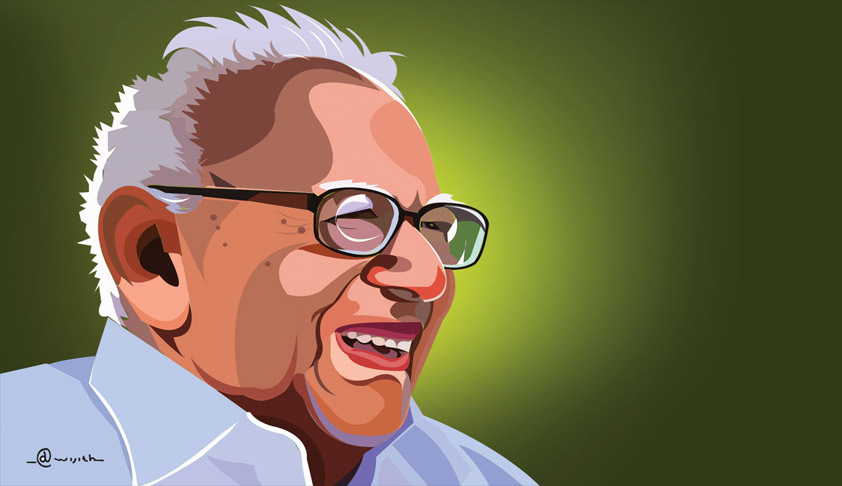
Justice Krishna Iyer: A man of light and learning; a seeker after justice
Krishna Iyer is no more. He has left behind us a rich legal legacy worthy of emulation. He was undoubtedly one of the greatest judges and legal experts that the world has ever produced. He was a great soul. His soul was in anguish for the millions of ‘Dharithranarayanans’ of the country. He was guided by Jerome Frank’s theory that courts in a democracy do not belong to lawyers or the judges, but they belong to the people. Throughout his career as a judge, he stuck to this ideological base and...

Some Thoughts on the Admissibility of Electronic Records in the Light of Anvar P.V.vs P.K. Basheer
The Honourable Supreme Court in Anvar P.V. vs. P.K. Basheer overruled the part of the judgment held by that Court in State (NCT of Delhi) vs. Navjot Sandhu alias Afsan Guru, relating to the admissibility of electronic records. As we all know, the law governing the admissibility of secondary evidence of electronic records is governed by Section 65B of the Indian Evidence Act (the Act, for short) in general, and as to the Banking documents, Section 2(8) of the Banker’s Books Evidence Act, in...

Re-writing the Concept of Burden of Proof; Supreme Court Judgment in Sher Singh @ Partapa Vs. State of Haryana requires re-consideration
The golden rule that runs through the web of civilised criminal jurisprudence is that an accused is presumed to be innocent unless he is found guilty of the charged offence. Presumption of innocence is a human right as envisaged under Art.14 (2) of the International Covenant on Civil and Political Rights 1966. Art.11(1) of the Universal Declaration of Human Rights 1948 also provides that any charged with penal offences has a right to be presumed innocent until proved guilty according to law in a...