


Articles

Will India's Initiative Turn Out To Be A Significant Breakthrough In Reorienting The Indus Water Treaty?
The Indus Waters Treaty (IWT) is one of the "most successful" transboundary water agreements in the world, which was borne out in the late 1950s, as a result of the extensive discussions between India, Pakistan, and the World Bank. It has long been regarded as thestandard for institutional bilateral water-sharing agreements, particularly because it has withstood numerous wars and crises and demonstrated its independence from political conflicts. However, IWT has a history of controversy...

Is Not The Magistrate A Prisoner Of Section 175 (3) Read With Section 173 (4) Of BNSS?
What impelled me to pen this article is the grievance voiced by some members of the Bar to the effect that on receiving “private complaints” all Magistrates are seeking the report of the Police before deciding to order investigation under Section 175 (3) of the Bharatiya Nagrik Suraksha Sanhita, 2023 (“BNSS” for short). 2. For a better assimilation of the problem, it may be necessary to make a comparative evaluation of Section 156 Cr.P.C. and Section 175 of BNSS by means of a tabular...

Understanding Crime & Youth Delinquency By Revisiting The Movie 'Dev.D'
While cinema (or now OTT) is often critiqued for being a bad influence upon the society, or overly exaggerating some claims, there can still be some kernel of truth reflected in them. In this piece, the author would employ the learnings from 'Development of Life Course' (DLC) theory in the field of criminology to analyse the movie 'Dev.D' as a case study to understand youth delinquency in urban India. Based on a 1917 Bengali novel 'Devdas', this story has been adapted for several plays and...

Exploring AMU Minority Judgment: A Legal Analysis Of Issues And Implications
The Aligarh Muslim University (AMU) case represents one of the most complex and prolonged constitutional debates on the minority status of educational institutions under Article 30 of the Indian Constitution. This article examines the historical and legal backdrop of AMU, the evolution of the case through pivotal amendments, judgments, and constitutional interpretations, and the recent judgment's extensive analysis of indicia for minority institutions. Although the expectation was for the...

The Unintended Victims: How POCSO Affects Adolescents' Autonomy And Access To Health
In the last six months almost every High Court has faced the question of criminalization of romantic relationships under the Protection of Children from Sexual Offences Act, 2012 (here in after POCSO). Different high courts have adopted different measures while dealing with such cases, but what remains common is the recognition of need for reforms under the POCSO, to ensure no step-motherly behavior is faced by the adolescents. Recently the Delhi High Court has observed that teenage love falls...
Zero FIR
“Zero FIR” is a concept which has already been prevailing in Indian law without any statutory backing now for a considerable length of time. The above concept allows the registration of a “Zero FIR” in any Police station within whose territorial limits a cognizable offence was not committed and subsequently transferring the FIR at the earliest to the appropriate police station having the jurisdiction. When a person approaches a police station with “information” pertaining to a “cognizable...

Delhi High Court Verdict In Airports Authority Of India Case Is A Renewed Call To Uphold The Spirit Of The Arbitration Act
Almost all weekend conferences on Arbitration- organized with the intent to promote India as a 'hub for arbitration'- witness stakeholders coming together to call for increased predictability vis-à-vis enforcement of arbitral awards. As is conventional wisdom, one primary factor to ensure certainty of execution is nominal judicial intervention in tribunal findings and ultimately, the award. However, despite the usual platitudes and ubiquitous lip service, recent experience would show...

Article 227 In Arbitration-Related Commercial Disputes: Scope And Judicial Boundaries
In India, the question of whether writ petitions can challenge arbitration decisions—especially dismissals of Section 34 petitions by Commercial Courts—is a sensitive balance between constitutional authority and arbitration's intended autonomy. The Commercial Courts Act, 2015 (Commercial Courts Act, hereinafter) provides a specialized framework for the adjudication of commercial disputes so that the process becomes faster and more efficient. Though the Commercial Courts Act is aimed at...


Abetment Of Suicide – Applicability Of Law In Suicide Cases At Workplaces
The recent unfortunate incidents of suicide at workplaces, coerces one to discuss the reasons of such mishaps and to what extent the workplace ecosystem is to be blamed. This article delves into the intricacies of the law associated with abetment of suicide and recapitulates the jurisprudence applied by the Courts while deciding the cases of suicide at workplaces. Alongside, it also offers measures to create an inclusive and healthy work culture. For the prosperity of the country's...

Understanding Arbitration And Conciliation (Amendment) Act, 2015: Whether Retrospective Or Prospective In Nature
The Arbitration and Conciliation (Amendment) Act, 2015 marks a watershed moment in the history of Arbitration in India. The idea of the Amendment germinated in a Law Commission Report submitted in 2014 which recommended an overhaul of the current framework of the Arbitration.[1] The Amendment aimed to reduce judicial interference and ensure the timely resolution of the Arbitration matters by amending sections 9, 11, 17, 34 and 36 of the Act. However, the amendment brought in uncertainty...
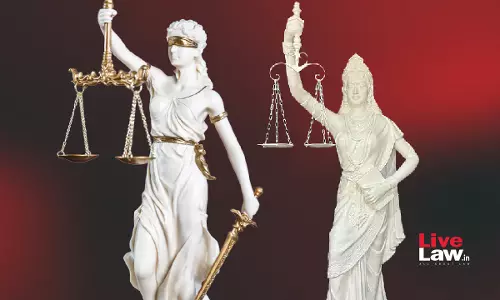
Images Of Justice: Open-Eyed Or Blindfolded?
In an attempt to re-imagine the representation of justice, a new statue of Lady Justice or goddess Justitia has been unveiled in the Supreme Court of India. It shows the Lady Justice donning a saree, with a scale in one hand, the constitution in the other, and without a blindfold. It replaces some of the symbols traditionally associated with the Lady Justice- the blindfold and the sword, which are associated with judicial impartiality and the force of the law. This has sparked debates...