


Articles

Curse Or Cure? Indian Supreme Court Exercises “Curative Jurisdiction” Setting Aside Arbitral Award
A public-private partnership was entered into between the state-owned Delhi Metro Rail Corporation Limited (the “DMRC”) and the private consortium Delhi Airport Metro Express Pvt. Ltd. (“DAMEPL”) by way of a 2008 Concession Agreement (the “CA”). Under the CA, DAMEPL was granted exclusive rights to implement the project and concession in respect of the airport metro express line in Delhi. In 2012, disputes arose on certain alleged defects in the structures of the project which DAMEPL...

Inheritance Tax In India: A Timely Imperative
Inheritance tax, often dubbed the "death tax," has resurfaced as a topic of debate in India following recent comments by Indian Overseas Congress chairman, Sam Pitroda. It was levied as per Estate Duty Act of 1953, but was subsequently repealed because of not achieving its objective of “curbing the social inequality”. While many academics are opposed to the inheritance tax, several nations are taking steps to implement it due to various objectives including social equality or economic...

Pre-Arrest Bail To Accused Residing Abroad
Situation 01: 'A' is accused of a bank fraud case (Non-bailable offences) in which it is alleged that he has siphoned off crores of rupees. It is alleged that A had applied for bank loan during financial year 2016-2017 on the basis of forged documents and bogus business estimates, in connivance with certain bank officials. The loan later turned NPA in 2019. Pursuant to this, bank conducted a staff accountability report as well as forensic audit, and the NPA account of 'A' was declared as...

The Doctrine of Single Economic Entity And The Direction & Control Test
European Union Competition law prohibits enterprises from entering into agreements that are anti- competitive for the market. In this context, the doctrine of Single Economic Entity is applied to subsidiaries that are controlled by another parent group. The holding company and its subsidiaries are considered one big single unit. Therefore, agreements between a subsidiary and its parent company are not prohibited because subsidiaries have no independence in decision making and their daily...

Section 23(4) of the Arbitration & Conciliation Act, 1996: Mandatory or Directory ?
Speedy adjudicationis at the heart of arbitration. To achieve this objective which is innate to the very concept of arbitration, the legislature, through a series of amendments has introduced provisions which have shifted the paradigm and patently altered the landscape of arbitration in India. This article proposes to discuss whether the timelines contemplated in Section 23(4) of the Arbitration & Conciliation Act, 1996 (as amended up to date) (referred to, hereinafter for ease of...

Successive References Under One Arbitration Agreement: Possible Or Not?
While the answer to the topic lies in the intricate details of individual contracts and/or arbitration agreements entered into between parties, the Arbitration and Conciliation Act, 1996 (“the Act”) permits successive references under one arbitration agreement. Sections 7 (1), 8 (3) and 21 of the Act read in consonance clearly portray that the legislative intention has always been to permit successive references. As stated by the Hon'ble Delhi High Court in Gammon India Ltd. and Anr. v...

Jurisdictional Delineation: Power Of Revisional Court Vis-À-Vis Quashing Of FIR
In a significant judgment pronounced recently in the case of Arun P.Gidh v. Chandra Prakash Singh and Ors., a three-judge bench of the Bombay High Court extensively examined the question of revisional court's power to quash an FIR registered pursuant to an order of magistrate under Section 156(3) Cr.P.C. To delve into this issue, it is pertinent to examine the following aspects: Statutory Framework Section 154(1) read with Section 156(1) Cr.P.C. provides an inference that the Police...

Diplomacy And Conflict Management
Diplomacy is the art, the science, and how nations, groups, or individuals conduct their affairs to safeguard their interests and promote their political, economic, cultural or scientific relations while maintaining peaceful relationships with each other. If used tactfully, diplomacy can be best used in the workplace or even for building international relationships. History reveals that war is the cause of the end of diplomacy, and diplomatic Efforts will directly help resolve the...
Are UGC Regulations Mandatory Or Recommendatory On Statutory Universities? An Analysis With Judicial Developments
University Grant Commission (UGC) regulations are typically obligatory for statutory universities in India. Statutory universities are established by an act of parliament or state legislature, and they operate under the purview of the University Grants Commission (UGC). The UGC Act of 1956 empowers the UGC to coordinate, determine, and maintain standards of higher education. The term 'University' has a wider connotation under Section 2(f) of the Act . It reads as "University means a...

Parliamentary Privileges Of Parliament & State Legislatures Vis-À-Vis Fundamental Rights Of Citizens
The Parliament and State Legislatures don their privileges from the Constitution as provided under Article 105 and 194, respectively. Although, few privileges such as a member's freedom of speech within the Parliament/ State Legislature have been expressly mentioned in Articles 105 & 194, a vast majority of parliamentary privileges have not been enumerated or codified under the Constitution. This decision of framers of the Constitution, has left the future parliamentarians to...
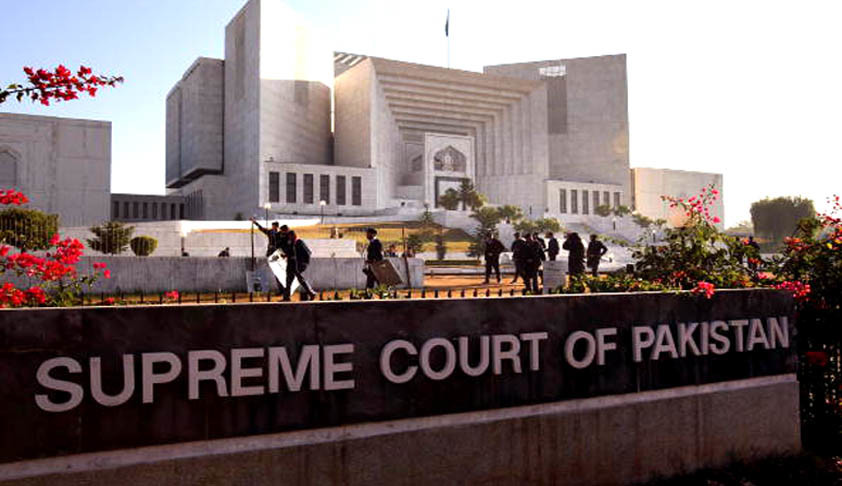
How The Supreme Court Of Pakistan Has Legitimized Every Military Coup Under The Doctrine Of Necessity
Pakistan is known to be a country where the military prevails in influence and power over its civilian government since its very inception in 1947. The country has faced military coups which have sprung up military dictators such Ayub Khan, Zia Ul Haq and Pervez Musharraf. The irony of these coups is in its legitimacy as provided by the Courts especially the Supreme Court of Pakistan which has put their seal of approval on every betrayal of democracy by the military in Pakistan since 1955....

Construction Contracts: Rising Importance Of Enforceable Arbitration Agreement
In the past two decades, India has witnessed large scale infrastructure developments across the country. High stake construction contracts are awarded by the government agencies to Indian and/or foreign contractors by executing construction contracts. The Parties to construction contracts usually adopt arbitration as a mechanism to resolve their disputes expeditiously as against the long drawn procedure before a Civil Court. The Arbitration Agreement therefore assumes importance and it...