


Articles

Section 303 Of IPC: Judgement In Mithu V. State Of Punjab And The Newly Added S. 104 Of BNS
As we all know, Section 303 of the Indian Penal Code, which mandates the death sentence for a person who commits murder while undergoing imprisonment for life was struck down by the Supreme Court in Mithu v. State of Punjab (1983) since it violated Article 14 and 21 of the Constitution of India.In the new penal code, The Bharatiya Nyaya Sanhita 2023 (BNS), the old Section 303 is replaced with Section 104 as: "Whoever, being under sentence of imprisonment for life, commits murder, shall be...
![Uttarakhands UCC – Unifying Laws Or Dividing Communities? [Part-II]](https://www.livelaw.in/h-upload/2024/03/16/500x300_528558-uttarakhand-ucc-justice-k-kannan.webp "Uttarakhands UCC – Unifying Laws Or Dividing Communities? [Part-II]")
Uttarakhand's UCC – Unifying Laws Or Dividing Communities? [Part-II]
Read the First Part of this Article hereProbate and Letters of AdministrationA cumbersome and expensive step has been added to intestate succession in a chapter dealing with testamentary succession, probate, and letters of administration. Letters of administration (LoA) for intestate succession under the Indian Succession Act are applicable in a very limited way to a narrow class of non-Indians and do not apply to Hindus, Muslims or Christians. As of now, it is a purely voluntary...
CAA's Discriminatory Nature : Explaining With The Help Of A Supreme Court Case
After keeping the controversial Citizenship Amendment Act, 2019(CAA) on the backburner for over four years, the Union Government on March 11 notified the rules to implement the legislation, which purports to give citizenship to persecuted minorities in our neighbouring countries who fled to India. The interesting aspect is that neither the Act nor the Rules mention fleeing from "religious persecution" as a condition to apply for citizenship. In other words, undocumented migrants from...
Why The Case Against Constitutional Activism Fails? A Response To Its Critics
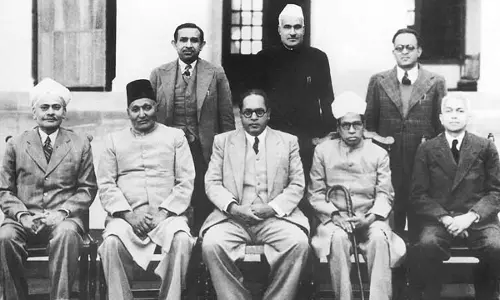
There has been a swirl of criticisms levelled by those who for convenience alone we call 'the anti-activists'. The central thesis of their argument' is that those who are critical of the judiciary demanding constitutional activism are both undermining the judiciary and posing a danger to democracy. They target lawyers, retired judges, members of civil society, academics, and intellectuals demanding a pro-active court. The latter group, for the sake of convenience, are labelled as...
![Uttarakhands UCC – Unifying Laws Or Dividing Communities? [Part-I]](https://www.livelaw.in/h-upload/2024/03/13/500x300_527752-uttarakhand-ucc-justice-k-kannan.webp "Uttarakhands UCC – Unifying Laws Or Dividing Communities? [Part-I]")
Uttarakhand's UCC – Unifying Laws Or Dividing Communities? [Part-I]
All the transient provisions in the Constitution, such as for language, reservation, special status to Jammu and Kashmir, or the Uniform Civil Code (UCC), were treated as transient because there was no unanimity at the time of the Constituent Assembly debates. Now, the BJP-led Uttarakhand government has passed the UCC Bill into law on February 7, 2024. Here, I deliberately skirt any potent argument[1] against framing a law that even the 21st Law Commission headed by Justice B.S. Chauhan declined...

The Doctrine Of Implied Repeal - An Essential Component Of Parliament Supremacy?
The Indian Parliament has absolute sovereignty to enact or repeal any law. What is important to the Parliament's supremacy is that the predecessor's act cannot bind the successor's action. In this backdrop, the principle of the “Doctrine of Implied Repeal” comes into the picture. It states that “if an Act of the Parliament is in conflict with an earlier Act, the latter is deemed to have repealed the earlier one, by implication.” Derived from the latin maxim "leges posteriores priores...
Political Background Not Sufficient Reason To Deny Judgeship: Supreme Court Collegium Rejects Centre's Objection Over CPI(M) Affiliation
On March 12, 2024, the Supreme Court collegium headed by Chief Justice D.Y. Chandrachud recommended the name of Shri Manoj Pulamby Madhavan for appointment as Judge of the Kerala High Court.In evaluating the suitability of Shri Manoj, the collegium evaluated and scrutinized all the materials available on record. The Department of Justice had observed that Shri Manoj was a CPI(M) sympathiser and was appointed as a Government Pleader in 2010 and 2016-2021 by the LDF Government.The collegium...

Abortion As A Constitutional Right: France Judgment From Indian Perspective
In recent news, France made headlines by declaring abortion a constitutional right, marking a milestone in the realm of rights for women. But does it align with the values and perspectives of other nations, particularly India? In recent years, the global perspective on reproductive rights has witnessed a significant development with France's groundbreaking decision to declare abortion a constitutional right. France's decision to recognize abortion as a constitutional right reflects a...
Is The Legislative Measure Of Repeal And Substitution Of The Three Existing Major Penal Statutes, An Inevitable Desideratum?
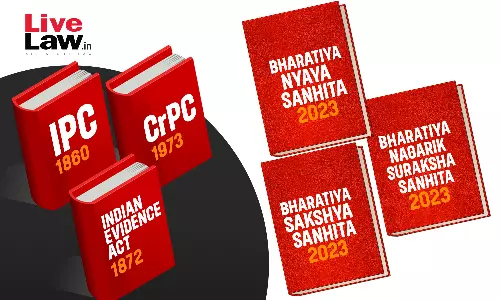
On principle, I am against the proposed repeal of the existing major criminal laws namely, the Indian Penal Code, 1860, the Indian Evidence Act, 1872 and the Code of Criminal Procedure, 1973 (which is a substantial reproduction of the Code of Criminal Procedure, 1898) and the replacement of the same by the Bharatiya Nyaya Sanhita, 2023 (“BNS” for short), the Bharatiya Sakshya Abhiniyam, 2023 (“BSA” for short) and the Bharatiya Nagarik Suraksha Sanhita, 2023 (“BNSS” for short) respectively. When...

Decriminalisation Of Environmental Offence: Rethink About The Binary Approach
The Water (Prevention and Control of Pollution) Amendment Act, 2024 (“Water Act 2024”) was passed by the Parliament of India in the interim budget session. As per the Statement of Object and Reasons, the bill is to amend the Water (Prevention and Control of Pollution) Act, 1974 (“Water Act”) ”,,,for rationalising criminal provisions and ensuring that citizens, business and the companies operate without fear of imprisonment for minor, technical or procedural defaults”. This...
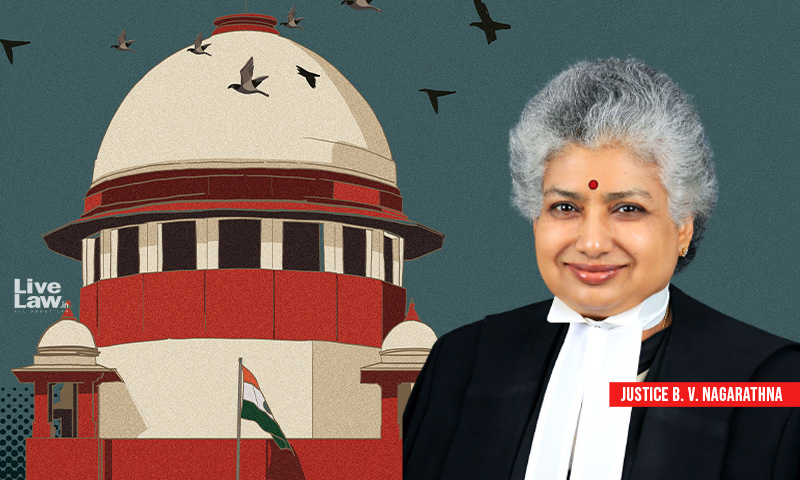
Women's Day Special | Justice BV Nagarathna : A Judge Fearless In Expressing Dissent
On this Women's Day, let us talk about the woman judge who dissented more than three times since her elevation to the Supreme Court. It is none other than Hon'ble Justice BV Nagarathna, who is touted to be India's first woman Chief Justice in 2027. Dissent is common, but what makes it more valuable is the time and occasion where the person “dissents. The essence of a healthy democracy, or even the last bastion of hope for a struggling democracy, is the independence of its judiciary; and...
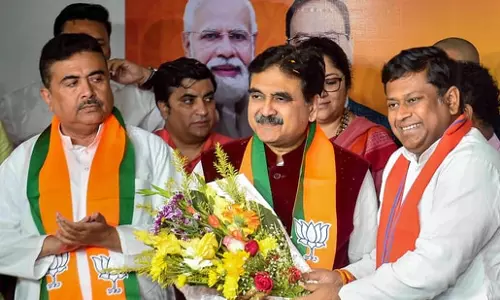
From The Bench To The Ballot Box- A Constitutional Vacuum
On March 7th, 2024, former Calcutta High Court judge, Abhijit Gangopadhyay formally became a member of the Bharatiya Janata Party (BJP), after resigning from his position as judge of the Calcutta High Court, five months before his date of retirement, writing to the President Droupadi Murmu, Chief Justice of India DY Chandrachud, and Chief Justice TS Sivagnanam of the Calcutta High Court. Being inducted into the party, sitting beside BJP leaders such as Suvendu Adhikari & Sukanta...