


Articles


Surveillance State Or Secure Nation? Unveiling The Interception Powers In India's Telecom Act
India's bustling telecommunications landscape has undergone a seismic shift with the arrival of the Telecom Act 2023. Replacing the antiquated Telegraph Act of 1885, this new legislation promises a modern framework for regulating the sector. However, amid the flurry of technological advancements and market reforms, a crucial question looms: how does the Act balance the burgeoning needs of the telecom industry with the fundamental rights of its users? This is where the Puttaswamy ...

Analyzing The Landscape Of Click-Wrap Agreements
Click-wrap agreements are essentially contracts in which a party, upon reviewing the terms and conditions presented on a website or program, usually signifies their consent by clicking an "I Agree," "I Accept," or "OK" button. Common instances of encountering click-wrap contracts include situations such as downloading software, booking airline tickets online, making purchases from e-shops, downloading music, agreeing to eBay's user terms, or acknowledging Citibank's conditions. These...

Sniffer Dogs:The Science, Investigations And Law Of Evidence
Transitioning from being man's best friend, to a crucial ally in the pursuit of justice, in the intricate realm of criminal investigations, the loyal companion took on a new role-the sniffer dog. These canine detectives, bring an unparalleled olfactory prowess to the forefront of investigations and enquiries. Nowadays, these four-legged allies play a vital role in criminal law by employing their extraordinary sense of smell to unearth evidence that eludes human detection. However, in law,...
Cox And Kings; Supreme Court On Group Of Companies Doctrine
While on the surface it may seem like the reference made by a bench, of three judges, of the Supreme Court of India, in the matter of Cox and Kings[1] was to determine the applicability of the Group of Companies doctrine, under the Indian Arbitration & Conciliation Act[2], but peel the layers away and we shall find that the whole question, pivots on accountability. The contours of reference, in terms of inquiry by the court, sought clarity on the interpretation of the phrase “claiming...
Gig Workers: The Need To Regulate The Unregulated
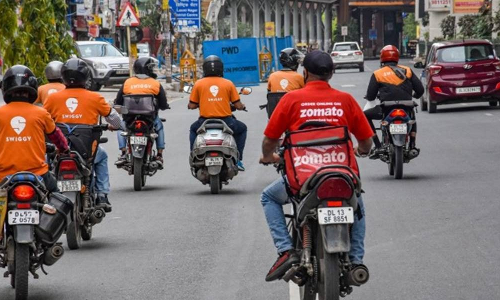
Recently, on 20th October 2023, in response to a delegation of Gig Workers Association, the Chief Minister of Delhi, Arvind Kejriwal announced that the government would certainly address the concerns of the gig workers and even legislate if the need arises.[1] Such demand from the workers and the subsequent response comes majorly because of two reasons. Firstly, with the exponential expansion of the service sector recently, such section of gig workers is ever-increasing and so is their ...

Locating The Position Of Real Estate Allottee In Light Of Section 7 Of The IBC
In the recent case of Dheeraj Raikhy v. Raheja Developers Ltd a bench of NCLAT, comprising Justice Ashok Bhushan, and Barun Mitra (Technical Member) while dismissing an application made against the rejection of an application under section 7 of the IBC, held that in the view of the law laid down in the case of Vishal Chelani vs Debashis Nanda, it is a fact that the status of the allottee does not change. Therefore, the adjudicating authority has concluded correctly that the single allotee...
De-Apotheosizing The Women's Reservation Bill Through The Lens Of Delimitation
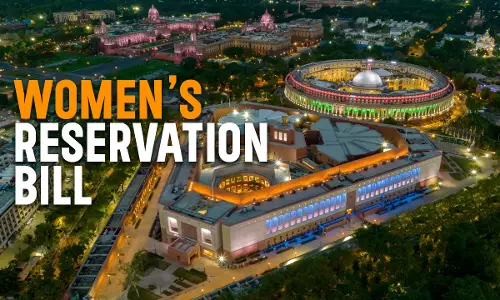
President. Smt. Droupadi Murmu signed the Women's Reservation Bill 2023 (128th Amendment Bill) on 28 September, marking a landmark legislation to come into effect which would enable greater participation of women in policymaking and equitable governance. The 'Nari Shakti Vandan Adhiniyam' reserves one-third of all seats in Lok Sabha, state legislative assemblies, and the Legislative Assembly of the National Capital Territory of Delhi for women. Seats reserved for SCs and STs in the Lok...
A Critique Of Supreme Court's 'RK Arora' Judgment Giving ED 24 Hours To Furnish Written Reasons For Arrest
The Supreme Court's judgment in Pankaj Bansal v. Union of India, delivered on October 3, 2023, came at a time when there were widespread concerns regarding the sweeping powers of the Enforcement Directorate in arresting people. In that judgment, a two-judgment comprising Justices AS Bopanna and PV Sanjay Kumar held that the ED has to compulsorily furnish the grounds of arrest to the accused in writing and that the agency cannot arrest people by simply citing non-cooperation to the summons....
Where Privacy Takes A Detour: Navigating The Controversy Of Live Location Sharing
In early November, 2023 a prisoner in Jammu and Kashmir was released on bail after he was tagged with a Global Positioning System (“GPS”) tracking device monitoring his movements. The accused, facing charges under the Unlawful Activities(Prevention) Act, 1967 (“UAPA”), secured release from jail following a special National Investigation Agency (“NIA”) court's decision in Jammu. The Court, in agreement with the prosecution's request, directed law enforcement to install a GPS tracker[1] ...

Regulating Dark Patterns; A Step to Fortify Consumer Autonomy?
On 30th November, 2023, the Central Consumer Protection Authority (“CCPA”) notified guidelines for the prevention and regulation of dark patterns (“Guidelines”) fortifying consumers' interest. The growing reliance on e-commerce platforms surpassing traditional marketplaces urged the country's top consumer watchdog to establish guidelines protecting consumer interests online. An average consumer would have come across that red-blinking line saying, “hurry up! only few left” or...