


Articles
Bail Under Juvenile Justice Act
The Juvenile Justice Board (JJB) plays a crucial role in implementing the Juvenile Justice Act of 2015. Section 8 of the Act provides that for all proceedings under the Act, the board constituted shall have the jurisdiction. The Court of Sessions or the High Court may interfere only when an order has to be passed under section 19 or when an appeal or revision has to be decided. Composition of the JJB[2]: The JJB consists of a judicial magistrate of first class and 2 social ...
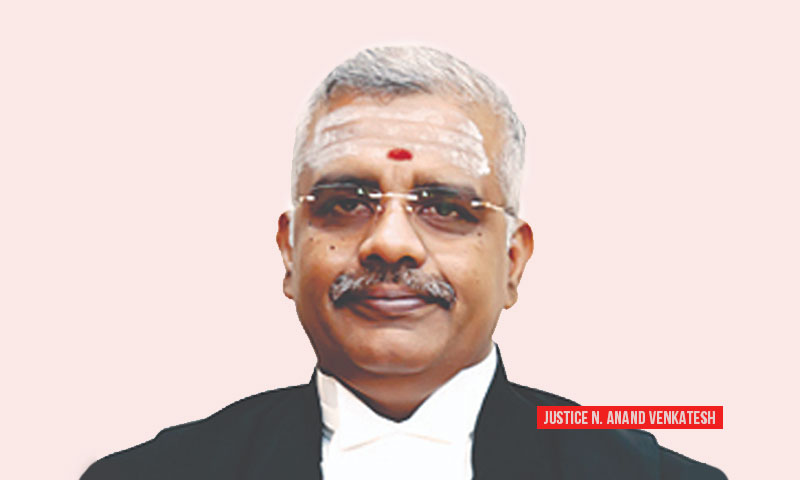
Justice Anand Venkatesh Writes : Dire Need Of “A Tall Figure“ to Guide The Judiciary
On a Sunday afternoon, after a siesta, feeling fresh and rejuvenated, a thought started occupying my mind. This article is the result of a consequential impulse to put these thoughts to paper. The thought that caught my attention was - the exponential improvement in the standards of legal education in India after the advent of National Law Schools, thanks to Dr. N.R. Madhava Menon, the architect behind this on the one hand and the absence of towering personalities who can be looked up for...
Column 12 Of Charge-Sheet, Delhi Police Showing A Person As ‘Suspect’ Is Arbitrary, Illegal, Unconstitutional
In Delhi, there is pernicious practice of Delhi Police of mentioning a person, against whom no incriminating evidence was found in the investigation, as a ‘Suspect’ in final Police Report. The practice is arbitrary, illegal, unconstitutional and ultra vires to the Code of Criminal Procedure, for the reason that it is settled law that the trial is always of an accused and once the investigation has demonstrated that the alleged person is not an accused and he has not done anything so as to make...
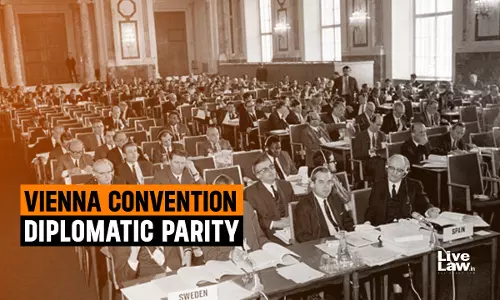
Unravelling Vienna Convention Amid India-Canada Rift On Diplomatic Parity
Amidst the recent arousal of geopolitical tensions between India and Canada, India asked its Canadian counterpart to decrease the size of its diplomatic mission to ensure the numerical parity of staff working in both countries. Following India’s requisition, Canada has removed its 41 diplomatic agents and their families, considering safety concerns post a threat of withdrawing diplomatic immunity and privileges. The Canadian Foreign Minister, Melanie Joly, claimed that “unilateral...

Urgent Interim Relief Under Section 12 A (1) Of Commercial Courts Act, 2015,- A Camouflage Or Reality
Clearing the mist of controversy among the courts of our nation, the Hon’ble Supreme Court of India in a landmark Judgement of M/s Patil Automation Private Limited Vs. Rakheja Engineers Private Limited laid down that pre institution mediation in commercial matters is mandatory for the parties before approaching the commercial courts. However, in Patil Automation, the Hon’ble Apex Court did not “dwell upon” the cases which contemplate “urgent Interim relief”. Therefore, the question arose...

Global Biofuel Alliance: India’s Tryst With Sustainable Development Goals
Biofuel technology encompasses a diverse array of methods for generating fuels from organic sources such as crops and biomass. The process begins with the selection of appropriate raw materials, ranging from corn to vegetable oils. There are two primary conversion techniques: biochemical, which involves fermentation, and thermochemical, utilising processes like pyrolysis. Biodiesel is crafted from vegetable oils through transesterification, while algal biofuels necessitate the cultivation ...

Legal Odyssey On Non-Heterosexual Marital Rights In Indian Tapestry - A Comment On Supriyo Vs. Union Of India
Despite decriminalization, the queer community faces ongoing violence, oppression, and ridicule. The State's limited efforts to address discrimination post-Section 377 persist. The law, especially Section 377, imposed social norms on homosexual relationships, shaping societal beliefs about queer identity. This lasting impact contributes to continued discrimination, pushing many LGBTQIA+ individuals into societal seclusion, making expressions of their identity acts of defiance across...

Divide If Disclosed: Divisional Patent Applications Interpreted By Syngenta Limited V. Controller Of Patents And Designs
Divisional patent applications are distinct filings stemming from an initial parent patent application. The divisional process is typically employed when the original application asserts multiple, yet separate inventions concurrently. There may be instances where the initial application's scope is overly broad, or the claims within it are too varied to be adequately scrutinized in a single submission. Divisional patent applications serve the purpose of segregating the content of an...
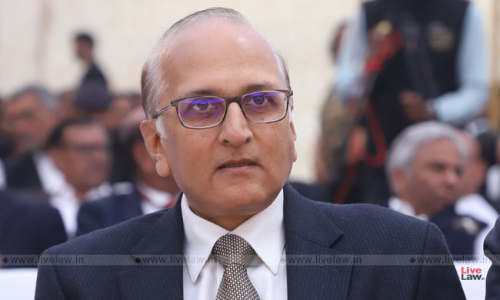
Breaking Barriers : How Justice Ravindra Bhat Expanded Scope Of Disability Rights
Justice S Ravindra Bhat, who retired as a Supreme Court judge on October 20, has made immense contributions to the expansion of disability rights jurisprudence in our country. He has advanced a pragmatic and purposive interpretation of the statutory provisions to further inclusivity and accessibility for persons with disabilities in the public sphere.Even before his elevation to the Supreme Court, as a judge of the Delhi High Court, Justice Bhat had way back in 2016 pointed out certain...

Reimagining Insolvency Resolution: Reverse CIRP A Game-Changer For India’s Real Estate Sector
The real estate industry is one of the thriving sectors in the modern business world. There are three parties in the real estate business – the real estate companies and their promoters (who develop the properties), the homebuyers (who purchase the flats/ apartments by engaging with the real estate developers), and the financial institutions (banks and other forms of non-financial institutions). When a real estate developer defaults on the repayment of debts, the financial institutions...
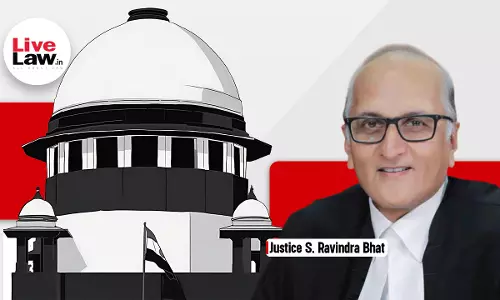
Justice Ravindra Bhat's Scholarly Legacy : A Look At His Important Judgments
“Fraternity is not the assimilation of the minority into the majority. To the contrary, it is the celebration of peaceful coexistence of differences that constitutes our national identity." - Justice Ravindra Bhat at a public lecture.In the world of jurisprudence, there exist those who simply interpret the law, and then there are those exceptional few who redefine it. Justice Ravindra Bhat, who recently retired from the Supreme Court on October 20, 2023, undoubtedly belongs to the latter...

Sex Workers, Their Adult Dependants, And Conflicting Laws
The Supreme Court of India in Budhadev Karmaskar vs State of West Bengal[1] held that prostitutes also have a right to live with dignity under Article 21 of the Constitution of India since they are also human beings and their problems also need to be addressed. Thereafter in 2022, in Budhadev Karmaskar v. State of West Bengal and Others[2] held that the “basic protection of human decency and dignity extends to sex workers and their children, who, bearing the brunt of social stigma attached to...