


Articles

Ligature/Strangulation Mark On The Neck – Is It Really Suicide/Murder?
It is often observed that on finding a ligature mark on the neck of a person, the investigating agency would be quick to carry out investigation prima facie treating the case to be of either homicide or suicide, unmindful of the fact that it could very well also be a case of natural death whereafter a scene of crime might have been meticulously created to simulate suicidal hanging or homicide to falsely implicate other persons due to personal/political rivalry. In fact, it has been...
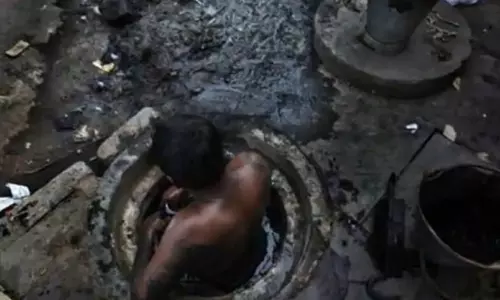
Beneath The Ground, Where The Air Of Freedom Is Still Lacking: The Evil Practice Of Manual Scavenging
On 15 August 1947 India became independent from the British Rule and at the stroke of mid-night, India rose to freedom, but unfortunately even after 76 years there are some citizens who can’t even feel the air of freedom because in those septic tanks, even their dignity isn’t counted. Even today caste remains a major source of occupational and class division in our country, at a time when we a holding talks on artificial intelligence, there’s a community which is making its...
Contribution Of Dr. Justice S. Muralidhar To Orissa Judiciary
“A great leader’s courage to fulfil his vision comes from passion not position.” The wordings of John Maxwell vastly demonstrates the very essence of Justice Muralidhar’s tenure as a Chief Justice in the High Court of Orissa. His passion for law and justice transcended beyond the fragile limitations of pride and prejudice prevalent in the legal fraternity. The bounds of his profession did not hinder his endeavour to enhance the functioning of the judicial set-up of Odisha and make it...

The Ambiguity Of Copyrightability Of AI-Generated Works
An increasing number of people are becoming aware of the usability of tools such as Chat GPT, DALL-E, and Midjourney. Undoubtedly, the influence of such tools is seen to be prominent in the creative realms, making it easier to turn your concepts into different forms of art by inputting the right prompts, but like any new trend which lacks formal legal endorsement, the sudden increase in the usage of generative AI exposes a plethora of legal questions and issues, one such issue is the...

Corporate Distress And Compassion: Integrating Humanitarian Values Into NCLT's Decisions
The Insolvency and Bankruptcy Code, 2016 (IBC) is a landmark legislation that aims to provide a speedy and efficient resolution of Insolvency and Bankruptcy cases in India. The IBC empowers the National Company Law Tribunal (NCLT) to admit and adjudicate applications for initiating Corporate Insolvency Resolution Process (CIRP) against defaulting companies. The IBC's primary goal is to establish a time-bound and efficient mechanism for resolving Insolvency and Bankruptcy in a transparent...
'Denying Information Under The Guise Of Data Protection' : Concerns Raised About Digital Personal Data Protection Bill Amending RTI Act
The Parliament passed the Digital Personal Data Protection Bill on Wednesday. The Bill seeks to provide protection to “personal data” and has provision to process it for “lawful purposes.”However, a significant change that the Bill has introduced is an exemption to provide personal information under Right To Information Act (RTI).Section 44 (3) of the Bill amends Section 8 (1)(j) of the RTI Act, which will have the effect of totally exempting personal information from disclosure.Section 8 (1)(j)...
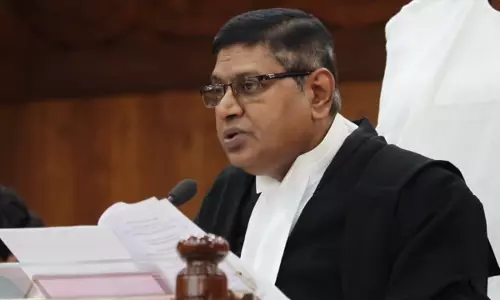
Kerala Govt Decision To Appoint Justice Manikumar As SHRC Chairperson Raises Questions
The Kerala Government’s decision to appoint Justice S Manikumar as the Chairperson of the State Human Rights Commission within a few months of his retirement as the Chief Justice of the Kerala High Court raises questions.Post-retirement appointments, which take place soon after retirement, cast a cloud on the perception of judicial independence. Justice Manikumar had a fairly long stint as the Chief Justice of the Kerala High Court from October 11, 2019 till April 23, 2023. In April, a ‘secret’...

Extent Of NCLT’s Jurisdiction Over Contractual Disputes During CIRP
A moratorium (stay) is imposed on all the legal proceedings (pending or future) by virtue of Section 14 of Insolvency and Bankruptcy Code 2016 ( IBC), when Corporate Insolvency Resolution Process ( CIRP) is initiated against a Corporate Debtor ( CD). In case a third party initiates any action against the CD (in terms of any penalty) the Resolution Professional ( RP) on behalf of the CD can file an Application under Section 60 of IBC against such third party, before the National...
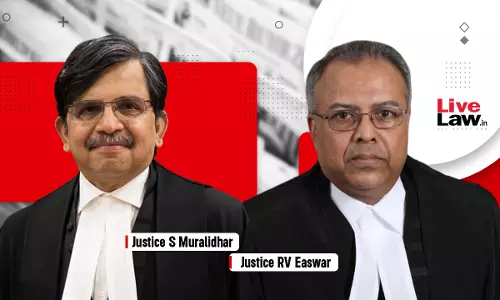
A Tribute To Justice Muralidhar By Justice R V Easwar
As I sat listening to the farewell speech of Justice Muralidhar on his retirement as Chief Justice of the Odisha High Court, two things struck me. First, can this man be provoked to anger at all? Second, why does he have to be so self-effacing? During my return flight to Chennai, I kept thinking of these traits in him. To the first question, the definite answer is a big NO. And the reason for this is quite simple, I thought. He does not view anything from a personal perspective, nor does he have...
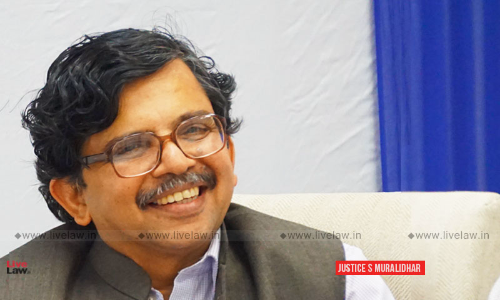
By Not Standing Up For Justice S Muralidhar, Supreme Court Collegium Fails Yet Another Independent Judge
In the last week of February 2020, when parts of North Eastern regions of Delhi were gripped with communal riots, several injured victims were trapped in a relatively small hospital in Mustafabad. They needed emergency critical care and had to be immediately taken to a bigger hospital with facilities. However, due to the raging riots, ambulances were not in a position to reach there. Police assistance was not immediately forthcoming.In this backdrop, an emergency midnight sitting was convened at...
Multistate Cooperative Societies Amendment Bill 2022 – A Bird’s Eye View
“Founded on the principles of private initiate, entrepreneurship and self-employment underpinned by the values of democracy, equality and solidarity the co-operative movement can help pave the way to a more just and inclusive economic order.” Kofi Annan With the formation of the Union Ministry of Cooperation in July 2021 a separate administrative, legal and policy framework for strengthening and streamlining the co operative movement in the country was established....