



India's Air Pollution Emergency Underscores How Special Legal Protections For Coal Do Not Serve Public Interest
Dr. Sugandha Srivastav & Tanmay Singh
5 Dec 2025 11:51 AM IST
Despite the AQI crossing 500 every year, and the staggering reality that air pollution is responsible for 9% of all under-5 deaths, coal, which is a major contributor, has legal protections and exemptions for its use due to a legacy law written almost 70 years ago, in 1957.Coal accounts for 75% of India's power generation and production has grown by 35% in the last ten years. Yet one in...
This is a premium content
Available exclusively to
Our subscribers
Subscribe Premium 
INR 1099+GST
Your support helps us to bring you more content at
an affordable subscription scheme !!!
All payment options available
Despite the AQI crossing 500 every year, and the staggering reality that air pollution is responsible for 9% of all under-5 deaths, coal, which is a major contributor, has legal protections and exemptions for its use due to a legacy law written almost 70 years ago, in 1957.
Coal accounts for 75% of India's power generation and production has grown by 35% in the last ten years. Yet one in ten deaths is attributable to air pollution in coal-bearing states such as Jharkhand and Odisha according to a paper in the The Lancet. Research also shows that child mortality increases systematically with proximity to coal-fired power plants and
When alternatives did not exist, this was the price one had to pay for access to electricity. But already in 2019, solar power was 14% cheaper than electricity generated from coal, and that cost advantage has only grown since. Research published in Nature Communications shows that India can meet 80% of its energy needs through renewable energy by 2040 at a cost which is as, if not more, competitive with a coal-based economy.
Expanding renewable energy production and complementing it with battery storage is an ethically superior route towards energy security as it does not come at a large human cost like coal.
While many actions are being taken to expand renewable energy, there is also room to update laws regarding coal. This 1957 Coal Act, which details processes for land acquisition for coal, does not require a social impact assessment, public hearings with landowners, a rehabilitation scheme for displaced people, or special protections for vulnerable communities like scheduled castes or tribes.
By contrast, India's 2013 Land Acquisition, Rehabilitation and Resettlement Act, which is used for most other projects, requires these safeguards. A simple step would be to include coal within the ambit of the 2013 law. Legal scholars can push for this on grounds that today there is a better understanding of the damages of coal combustion than back in 1957, when the coal law was originally passed.

Table based on Srivastav and Singh November 2022. “Greening Our Laws: Revising Land Acquisition Law for Coal Mining in India”. Economic & Political Weekly.
Another area for improvement is in requiring coal combustion units to meet air pollution standards. Despite the issuance of air pollution standards in 2015, coal-fired power plants have been getting systematic extensions on compliance timelines, with the most recent extension granting time until 2027 or 2028, or entirely making the coal power plant exempt from installing air pollution control systems.
Over time, standards have also been diluted. Sulphur dioxide, particulate matter, and nitrogen oxides, all of which can severely and irreparably damage human health, have laxer standards today. An analysis of Central Electricity Authority (CEA) data in November 2025 showed that in a 300km radius of Delhi, 15 of 35 power units currently do not treat sulphur dioxide at all.
Finally, mine expansions do not presently need to conduct environmental impact assessments, which creates more threats to India's natural heritage and risks to human health, since such safeguards can help ensure pollutants do not end up in water systems or pollute densely inhabited areas.
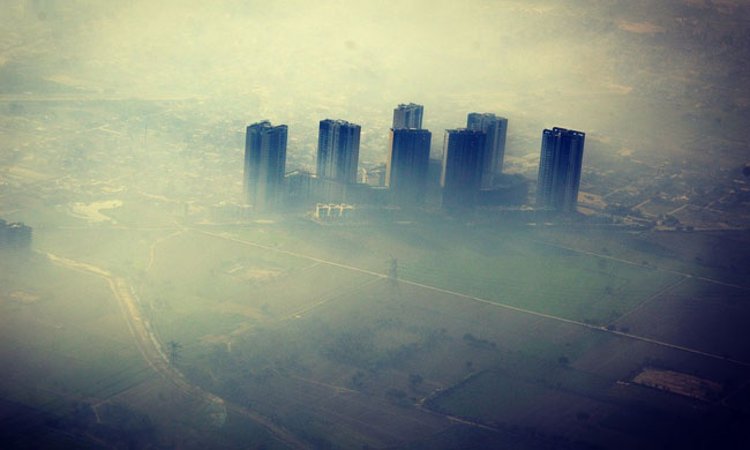
The Air Quality Index, as measured by independent measuring stations, in many places of North India crossed 500 in 2025 (anything above 150 is considered “Unhealthy”, and above 300 is considered “Hazardous”). Unfortunately, this air pollution is resulting in systematically shorter lifespans according to a study from the University of Chicago.
It is hard to defend that coal should be accorded special privileges given these facts. Our laws must be amended to adequately respond to the dangers of coal combustion and the health emergency that is enveloping the country.
Dr. Sugandha Srivastav is an economist based at the University of Oxford.
Tanmay Singh is a Lawyer practicing in the Supreme Court of India.
Views Are Personal.


