



Ambedkar Jayanti: Reminiscing A Legacy Of Equality
Muhammed Farooque KT
14 April 2026 11:45 AM IST
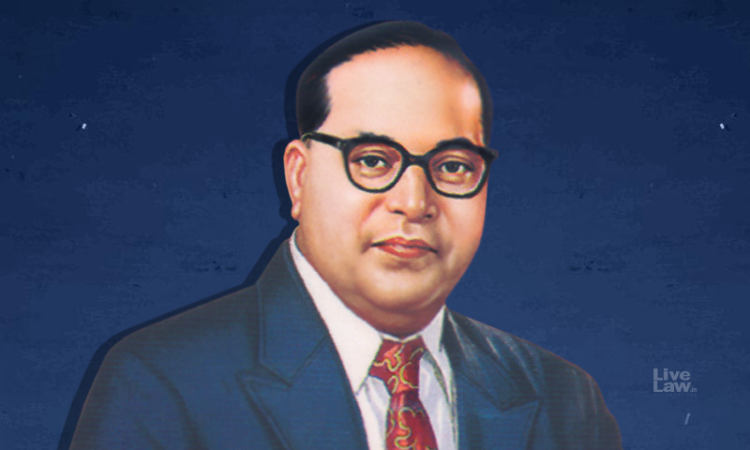
As we celebrate the 135th Ambedkar Jayanti, we reflect on the egalitarian principle of 'one man, one value.' As the father of our Constitution, he fought against a social system that treated people unequally despite democratic promises. Today, Dr. Ambedkar is honored everywhere with statues and memorials, and we even dedicated a year to Social Justice in his name. However, much of this praise feels hollow. While we celebrate his legacy, the tragic death of a Dalit medical student in Kerala reminds us that systemic inequality is still very real. It forces us to ask a difficult question: India is a free country, but are its people truly free? Dr. Ambedkar's thoughts on this theme remain profoundly relevant: “One must distinguish between the freedom of a country and freedom of the people in the country. The words such as society, nation, and country are just amorphous if not ambiguous, terms. There is no gainsaying that 'Nation' though one word means many classes. Philosophically it may be possible to consider a nation as a unit but sociologically it cannot but be regarded a consisting of many classes and freedom of the nation if it is to be a reality must vouchsafe the freedom of different classes comprised in it, particularly those who are treated as servile classes.”[1]
Ambedkar's emphasis on Democratic process and constitutional means:
Ambedkar believed that the only way to end deep-seated inequality was through the law and the democratic process. However, for this to work, the law must create true, radical equality. He warned that when those in power refuse to fix social injustice and help the poor, they make a violent revolution more likely than a peaceful change. A democracy that only focuses on "one person, one vote" at the ballot box simply keeps things as they are; it makes the higher goal of "one person, one value"—where everyone is treated with equal human dignity—much harder to achieve. One must recall the solemn caveat Ambedkar delivered to the Constituent Assembly: “How long shall we continue to live this life of contradictions?How long shall we continue to deny equality in our social and economic life? If we continue to deny it for long, we will do so only by putting our political democracy in peril. We must remove this contradiction at the earliest possible moment or else those who suffer from inequality will blow up the structure of political democracy which this Assembly has so laboriously built up.”[2]


Discontented downtrodden classes:
To put it simply, we haven't kept the promises made in our Constitution. Even though we praise leaders like Ambedkar and pass laws about human rights, we haven't actually united the country. By leaving the people who suffer most out of the law-making process, we've kept "law" and "justice" separate. This has left the poor and oppressed feeling frustrated and doubting if we actually care about the Constitution at all. Even a member of the Scheduled Castes who has converted to Christianity continues to face discrimination, as highlighted in the recent Supreme Court judgment Chinthada Anand v. State of Andhra Pradesh and Ors. These inequalities have led to many divisions, creating communal walls of separation and a fissured foundation; yet, a house divided against itself cannot stand for long. As Dr. Ambedkar cautioned long ago: “Therefore the sooner room is made for the realization of their aspiration, the better for the maintenance of its independence and the better for the continuance of its democratic structure. This can only be done by the establishment of equality and fraternity in all spheres of life.”[3]
Ambedkar and Constitution:
The categorical imperative for a free India was the establishment of a free Constitution. As Thomas Paine wisely observed: "A constitution is a thing antecedent to a government, and a government is only the creature of a constitution." Consequently, the first great challenge facing India's leaders was the task of framing a Constitution that resonated with the genius of its people and the rich cultural heritage of Bharat.
After the British Parliament passed the Indian Independence Act in July 1947, India's Constituent Assembly became a fully independent group responsible for writing the nation's new constitution. India needed its best thinkers for this massive task. Although progress is usually driven by the people, Dr. B.R. Ambedkar was the clear choice for a leadership role because of his deep legal knowledge and his dedication to fighting for marginalized groups. Even though they had political differences, Jawaharlal Nehru invited Ambedkar to be India's first Law Minister for the good of the country. On August 29, 1947, a Drafting Committee of top legal experts was formed. Dr. Ambedkar was elected its Chairman—a decision widely praised as the perfect choice for the job. Upon the completion of this exhaustive labor, Dr. Rajendra Prasad, President of the Assembly, observed: “Sitting in the chair and watching the proceedings from day to day, I have realized as nobody else could have, with what zeal and devotion the members of the Drafting committee and especially its chairman, Dr. Ambedkar, in spite of his indifferent health, have worked. We could never make a decision which was or could be ever so right as when we put him on the Drafting Committee and made him its chairman. He has not only justified his selection but has added lustre to the work which he has done….”[4]
Ambedkar and his relentless pursuit of justice:
Dr. B.R. Ambedkar was a brilliant lawyer and transformative leader who dedicated his life to destroying India's caste system and securing rights for the oppressed. Educated at Columbia University and London School of Economics, he drew inspiration from global ideals of equality to challenge social injustice through sophisticated political and legal strategies. As the primary architect of the Indian Constitution, he enshrined social democracy into the nation's foundation while famously debating the Mahatma on the best path forward for India. Ultimately, he led a mass conversion to Buddhism to escape the inequality of caste-driven Hinduism, leaving behind a monumental legacy as a fighter for human dignity until his passing in 1956.
Ambedkar and some after thoughts:
“We, the People of India” are the first five revolutionary words of the Constitution, emphatically asserting the paramount principle of people's power as the sovereign foundation. But who are the People? Integral to this human totality are the dalit and soshit sectors—those who remain the lowliest, the last, and the least among the vast community stretching from Kashmir to Kanyakumari. A government of, by, and for the people postulates a fundamental constitutional order; after all, there can be no cosmos free from chaos unless peace and order are established on the bedrock of law and justice.
To honor Ambedkar's vision, the government and the citizenry need to stop talking about the Constitution and start following it. While the founders promised social justice, today's leaders often treat those promises as nothing more than "words, words, words." They use fancy speeches to hide the fact that they lack the "grim will" to actually challenge the ruling class. The legal system still favors the powerful, reminding us of Oscar Wilde's warning: “After all, there is only one thing worse than injustice, and that is justice without her sword in her hand.” Real justice requires shifting power to the weak, but the system is built to prevent that. As Anatole France wrote: “To disarm the strong and arm the weak would be to change the social order which it's my job to preserve. Justice is the means by which established injustices are sanctioned.”
References:
1. Amberdkar, D. B. (1945). What Congress and Gandhi have done to the Untouchbles. p 190-201 ↑
2. Speech of Dr. B.R. Ambedkar on 25-11-1949 in the Constituent Assembly Debates Vol. XI – pp. 972-981. ↑
3. Ibid., pp. 944-945 ↑
4. Speech of President Rajendra Prasad on 26.11.1949 – Constituent Assembly Debates. Vol XI. pp. 984-985 ↑
Author is an Advocate. Views are personal.


