



The Governor's Address Under Article 176: A Ceremonial Duty, Not A Discretionary Power
Ashutosh Mishra
25 Jan 2026 6:54 PM IST
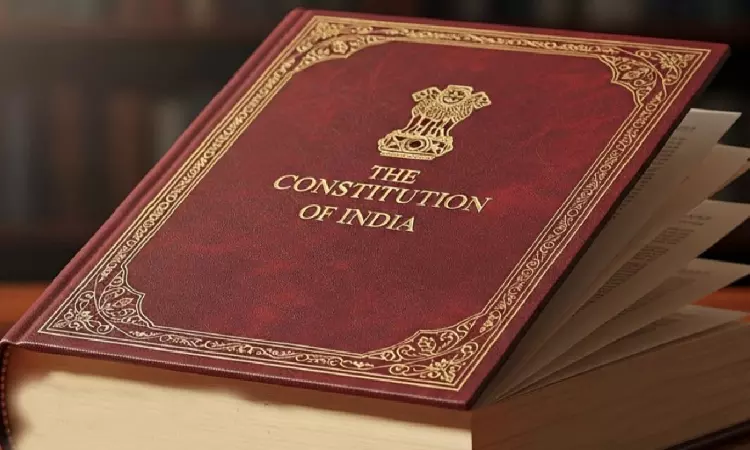
Recently, on 20th January, dramatic scenes in two state assemblies raised serious questions about the scope of the Governor's powers, which need to be urgently addressed. In Kerala, Governor R.V. Arlekar deviated from the cabinet-approved budget (policy declaration) speech, omitting passages critical of the Centre's fiscal policies and even inserting a phrase my government believes that shifted the language from the elected government's voice to his own. Additionally, in the case of Tamil Nadu, the state's Governor, R.N. Ravi, walked out of the assembly after the national anthem concluded, refusing to deliver an address he was supposed to deliver, drafted by the elected government in the state. These two issues lead to an essential question: Does Article 176 allow a Governor to change parts of an address developed by an elected Cabinet?
Article 176 states that “the Governor shall address the Legislative Assembly or, in the case of a State having a Legislative Council, both Houses assembled together and inform the Legislature of the causes of its summons.” Nothing in the text explicitly limits or defines the content of that address, making the provision narrow. On the other hand, Article 175 gives the Governor the right to address the legislature at other times and send messages (e.g. regarding bills). However, Article 163 makes clear that the Governor “shall act on the aid and advice of the Council of Ministers” in exercising his functions, except where the Constitution provides otherwise. When all this taken together, it implies that the Governor's speech is normally not a personal manifesto but a formal relay of the government's policy.


Parliamentary Practice: Governor as Ceremonial Conduit
In practice, Indian states follow the Westminster convention that the Governor's address is prepared by the elected government and merely read by the Governor. Long-standing parliamentary practice treats the speech as the government's program, not the Governor's own agenda. As one commentator rightly notes that under Article 176, the governor's speech represents the government's policy position, and only the Cabinet‐cleared text enjoys constitutional validity. This system mirrors the British style where the (Queen's or now King's) Speech in Parliament is written by ministers, and the sovereign reads it in a neutral tone. Likewise, in Australia, the Governor-General's opening speech is explicitly prepared by the Government.
The Constituent Assembly itself envisioned the Governor as a dignified constitutional head. As Dr B.R. Ambedkar stressed, post-Independence Governors were meant to be the constitutional head, not an autocratic administrator. Thus, it has been conventional that the Governor not personalise or politicise the speech. In Kerala, this convention was re-endeavoured when the Chief Minister asked the Speaker to recognize the cabinet-cleared address alone as the record, since the policy declaration remains verbatim as cleared by the Cabinet. Similarly, in Tamil Nadu, the Speaker sent a strong reminder to Governor Ravi about adhering to rules and conventions of the Assembly, which tasks him to read only that speech cleared by the Cabinet without any modification.
Put simply, the Governor's address is a constitutional act, not a platform for independent commentary. It is part of the normal functioning of the elected executive, and doctrine holds that it must follow the Council of Ministers' policy. As one legal treatise observes, conventionally speaking, the address of the Governor is prepared by the party in power, and it contains the political agenda of the ruling party, not the Governor's own views.
Supreme Court Jurisprudence: Gubernatorial Discretion is Limited
Indian case law consistently affirms that a Governor has no unfettered power over state business, including speech. In Shamsher Singh v. State of Punjab (1974), a seven-judge bench held that the principle of Cabinet responsibility is firmly entrenched in our Constitution. The Court explained that the Governor cannot act as a parallel authority or create a parallel administration; in most matters, he must act on ministerial advice. In Shamsher Singh, the Court ruled that a termination order issued in the name of the Governor was actually the State Government's decision; no constitutional function was deemed to require the Governor's personal satisfaction. In short, except for a few specified exceptions (e.g. reserving a bill for the President, or reporting under Article 356), the Governor's discretion is not all-pervasive but circumscribed by the Constitution.
This doctrine carried into Nabam Rebia v. Deputy Speaker (2016) the Arunachal Pradesh floor-test case. There, a five-judge Supreme Court bench reaffirmed that even legislative functions of the Governor are normally performed on advice. The Court explicitly held that addressing the House under Article 175(1) or making a special address under Article 176 is an executive function performed by the Governor on the aid and advice of the Council of Ministers. In other words, the Governor has no free hand to shape the legislative agenda. The Court cautioned that if Article 163's aid and advice requirement were applied even to this function, the Governor could dominate the Legislature, something completely unthinkable in a parliamentary democracy. All executive functions (including the required policy address) must be done on the aid and advice of the Council of Ministers. The Governor simply cannot act as the Ombudsman of the State Legislature or inject himself into the government's policy programme.
It is Important to note that Article 163(2), which makes the Governor's decision final in matters of discretion, but the catch is that, such discretion applies only where the Constitution expressly confers it. Article 176 contains no such conferment. As a result, a Governor cannot unilaterally invoke Article 163(2) to justify deviations from a Cabinet-approved address, rendering such actions subject to constitutional review.
Further, in S.R Bommai v Union of India, 9-Judges' Bench in 1994 in a landmark judgment in yet another federalism case upheld the importance of the elected governments in States as also the process of the legislative system in States, while sternly advising Governors that they should at no cost become the instruments in the hands of the Centre. Though S.R Bommai v Union of India related to Article 356; in arriving at its decision, its essence may be stated as applicable to all powers given to Governors in general.
Taken together, these authorities make clear that Article 176 by itself grants no independent policymaking power to the Governor. It simply imposes a duty to read a speech. The content of that speech is not the Governor's to choose. Instead, it is determined by the Council of Ministers and the rules of the House. This aligns with conventions in other Commonwealth systems: for example, the UK's King's Speech is “written for the sovereign by the government”, delivered in a neutral tone. Similarly, in India, the President's Address to Parliament (Article 87), a counterpart to Article 176, is also prepared by the Union Cabinet and contains the government's program.
Addressing the Constitutional Conscience Argument
A possible counter-argument is that a Governor, as a constitutional sentinel, may refuse to read or alter parts of a Cabinet-approved address if it is against constitutional morality or contains legally objectionable content. While this concern is not entirely unfounded, the Constitution does not contemplate Article 176 as the forum for exercising such constitutional conscience. Where a Governor genuinely believes that executive action violates the principles of the Constitution, then the Constitution provides specific mechanisms, such as reserving a Bill for the President under Article 200, reporting a constitutional breakdown under Article 356, or engaging in private communication with the Council of Ministers. Altering or withholding the Governor's Address, however, bypasses these constitutionally sanctioned routes and transforms a ceremonial obligation into an instrument of political intervention. Constitutional propriety, therefore, demands that objections be raised through designated constitutional channels, not by unilateral modification of the legislature's opening address.
Comparative Analysis
Outside India, constitutional practice supports this understanding. In the United Kingdom, the annual Speech from the Throne is drafted by ministers and delivered by the monarch, who remains publicly neutral. No one suggests the King may rewrite or refuse to read the government's legislative program. Likewise, in Australia, the Governor-General's speech is explicitly prepared by the Government. These practices reinforce that such speeches are executive functions, not personal pronouncements. Even in Canada and other Westminster systems, the Crown or Governor-General merely enacts the legislature-opening speech chosen by elected officials. India's Constitution (and Ambedkar's vision) fits this mould: the Governor should not turn the address into a forum of his own prerogative.
Nonetheless, India's federal politics have long strained these conventions. The Governor, appointed by the President (on the President's advice), can be a flashpoint if at odds with the state government. The Supreme Court, in Bommai, emphasised that the Governor must not become an agent of the Centre in subverting state governments. By the same token, interfering with a cabinet speech arguably conflicts with cooperative federalism. As Kerala's speech notes lament, unfavourable Union government actions undermine the principles of federalism. If a Governor can bluntly delete such criticisms, the democratic accountability and voice of the state are eroded. The recent events have thus revived questions about the balance of power between states and the Centre, and about the accountability of unelected Governors to the assemblies they address.
On the merits of law and convention, Article 176 does not empower a Governor to alter or withhold the substance of the address prepared by the elected Cabinet. The Governor must deliver a speech at the start of each session, but its content follows from the Council of Ministers' advice and the legislature's rules, as clarified by Nabam Rebia and earlier cases. The deviations from the cabinet-approved text are therefore not within the scope of the powers vested in the Governor by the constitution. The incidents in the state of Kerala and that in the state of Tamil Nadu have all brought into sharp relief the need for official censure; and at such a political juncture, it becomes all the more possible for legislators to call for these principles to be reaffirmed, so that the Governors in India remain within the parameters set for them in our Constitution as pure ceremonial and advisory figures. The Governor's speech in our country's political system is a Constitutional event and not a critique of himself.
Views Are Personal


