Bar Council Needs A Wise Counsel
Manu Sebastian
15 Aug 2026 7:32 PM IST
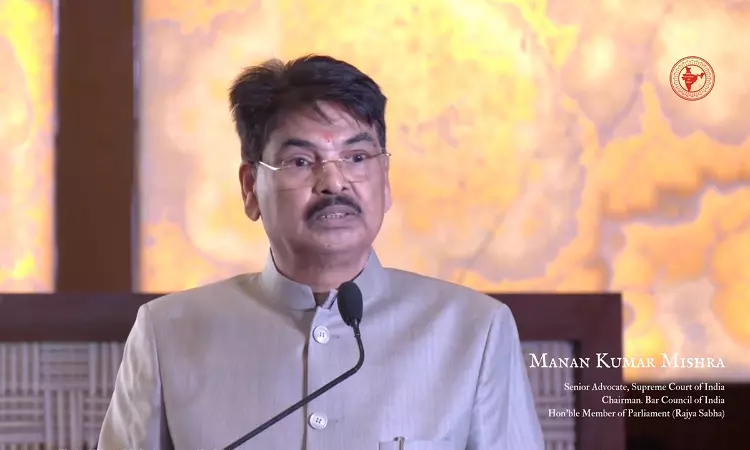
The NALSAR fiasco is symptomatic of gross deficiencies in the BCI's functioning, underscoring the need to rein in the unilateral exercise of powers by its Chairman.
“Absolute power corrupts” - this age-old adage explains the series of ill-thought decisions which Manan Kumar Mishra, the Chairperson of the Bar Council of India, took on the night of August 13. First, he announced a shocking decision that no NALSAR graduate of 2026 will be enrolled as an Advocate by any State Bar Council until further directions. This was blatantly draconian and illegal, and a new low even by the embarrassing past record of Mishra, who has faced massive backlash over his partisan and unilateral statements issued on the BCI Chairperson's letterhead. However, the decision to deny enrolment for the entire NALSAR 2026 batch was a troubling escalation, because the BCI Chairman was going beyond his trend of merely issuing inane statements, and was making incursions on the concrete rights of law students. The immediate provocation for this was the fact that a section of students wrote to the NALSAR Administration opposing the participation of Chief Justice of India Surya Kant in the convocation over his comments concerning the Delhi student protests.
However, the BCI Chairman's decision, which faced strong criticism not just from the legal community but also from the public at large, had a life of barely one hour. He rolled back the freeze on enrolment, but retained the decision to hold an inquiry. After a few hours, in a midnight post, he announced that all proceedings against NALSAR have been dropped.
To begin with, the BCI Chairman's decisions had no statutory basis. The Bar Council does not have any power to stop the enrollment of a student for mobilizing a protest campaign against the Chief Justice of India. Before announcing the unilateral decisions, the BCI Chairman should have read Section 24A of the Advocates Act, as per which the only bar for enrollment is conviction in an offence involving moral turpitude, or under the Untouchability (Offences )Act, or dismissal from government employment on the ground of moral turpitude. The BCI Chairman should also have thought about Article 19(1)(a) of the Constitution, and come to a humble realisation that he does not own the minds of the law students, and cannot regulate their thoughts and conduct. Enrolment is not a charity of the BCI Chairperson. It is the earned right of the students.


The tone and tenor of the first letter reeked of sheer intolerance and vindictiveness towards law students. According to him, "A student of Law, having no regard or respect for the highest Judicial Office of the country, is not expected to be a responsible or sensible Advocate, Teacher or a Judge.Such persons shall always be a liability on the profession.” Respect for the judicial authorities does not mean uncritical submission. Critical engagement with the sites of power and demanding accountability from authorities are inherent traits of the legal profession. That is the reason why lawyers were at the forefront of all major civil society movements across the world, including the Indian freedom fight. The BCI Chairperson wants to kill the spirit of freethinking exhibited by the students and convert them into supine conformists.
Be that as it may, all the decisions were rolled back within a matter of about six hours. That the BCI Chairperson's decision could not even last a night shows how unilateral, arbitrary and whimsical they were. The disgraceful episode also raises questions about the functioning of the BCI - can one person run it like his personal fiefdom without any attempt to reach a democratic consensus?
This fiasco is not an isolated instance; rather, it is a natural progression of the brazen manner in which Mishra has been handling his post for over a decade without any sort of accountability. Recently, he made a statement that about 35-40% of the lawyers are fake. That itself shows an abject failure on the part of the Bar Council of India. Is a 12-year term too short to identify and weed out fake lawyers? It is time every member of the legal fraternity makes a serious analysis on how the Bar Council of India has been beneficial for them.
Mishra, who is also a legislator belonging to the BJP, has been, over a long time, misusing the BCI Chairman's letterhead to issue politically partisan statements on various contentious issues- be it the anti-CAA protests, farmers' protests, or even the recent GenZ student protests. He has condescendingly discarded all such civilian protests as orchestrated by ignorant masses or anti-national elements. He even issued a statement on the BCI Chairman's official letterhead against the Supreme Court entertaining same-sex marriage pleas, when the hearing was ongoing, claiming that "more than 99.9% Indians are opposed to it". Thus, he has been showing a propensity to poke his nose into matters where the BCI has no locus. His attempts have been to surrender the diverse views within the fraternity to a singular political narrative.
The BCI has also not hesitated to overreach even the Supreme Court. When the Supreme Court mandated 30% women representation in Bar Councils, the BCI decided to increase the number of seats, after the election results were declared - a devious move seemingly taken to accommodate certain names who would be ousted if women's representation is implemented. The move was later stayed by the SC-appointed committee. When the SC directed that women members should be co-opted by High Court Chief Justices, BCI sought to undermine it by asking the State Councils to prepare a panel of women members. This was later withdrawn.
The series of flip-flops and inconsistent decisions, as well as the politically partisan stances and utter disregard for dissenting voices, reflect the classic traits of a despotic regime which only cares about pursuing and consolidating power through any means. Today, the regime thought of barring enrolment of an entire batch just because some students protested. Tomorrow they might cancel the license of a lawyer for expressing a critical view, or even for representing an accused or taking up an unpopular cause. To preserve the independence and dignity of the profession, it is necessary to resist such attempts.