



Who Speaks For The Indian Bar?
Jhuma Sen
25 July 2026 4:57 PM IST
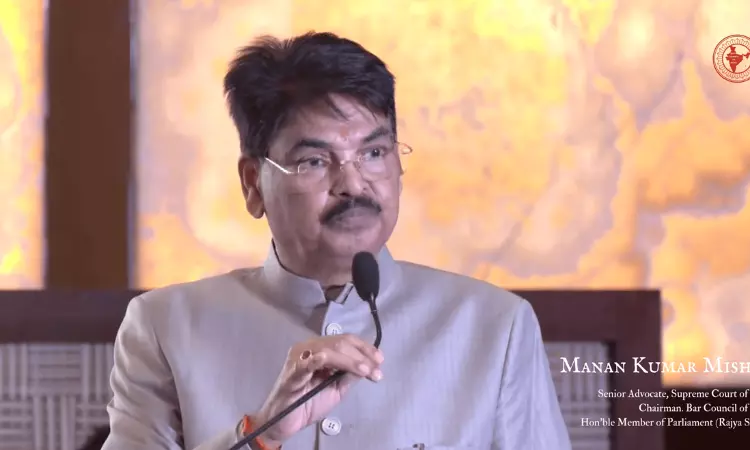
On 23 July, a press release went out on the letterhead of the Bar Council of India. It carried the Council's insignia, its address on Rouse Avenue, its telephone and its fax number. It was addressed to the "intellectuals of the country". It said that the students protesting in Delhi are not students at all.
I want to set the politics aside for a moment and ask the question that comes before the politics. By what authority was this document issued?
The Bar Council of India is not a club and its Chairman is not its proprietor. The Council is a body created by Parliament under the Advocates Act, 1961. Section 7 sets out what it may do, and the list is short. It may lay down standards of professional conduct. It may prescribe disciplinary procedure. It may safeguard the rights and interests of advocates. It may promote law reform, regulate legal education, recognise and inspect universities, organise legal aid, hold its elections, manage its funds.


That is the whole of it. There is no clause that permits the Council to identify the alleged foreign financiers of Indian politics. There is no clause that permits it to assess the loyalty of a Member of Parliament. There is no clause that permits it to hand out duties to doctors, engineers, entrepreneurs, parents and guardians, not one of whom it regulates in any respect at all.
The Act does allow the Council to do what is necessary to discharge its functions. Every lawyer knows what such a clause means. It enlarges the means. It does not enlarge the ends. Nothing in this press release was necessary to any function Parliament gave the Council.
There is a second difficulty, and it is on the face of the document. Section 5 makes each Bar Council a body corporate. A body corporate speaks through its members, by resolution, recorded. This release records no meeting. It records no resolution. It records no dissent, because it records no deliberation. One man signed it in his own hand. And yet the document says: the Bar Council of India therefore appeals to every responsible citizen.
Every advocate enrolled in this country has just been made a signatory to a political statement without being asked. That is what the insignia does. Without it, this is a private opinion. With it, it is an instrument.
Now consider what the instrument says, and to whom.
The Chairman of the Bar Council of India is not merely a spokesman. Under the Act, the Council decides disciplinary matters in specified cases, receives proceedings that State Bar Councils fail to complete within a year, and sits in appeal over every disciplinary order passed against every advocate in India. That is the office. From that office, one side of a live public controversy has been publicly described as anti-national, foreign-funded and criminal.
Think of the young lawyer in Delhi this week deciding whether to take the bail application. Whether to sign the writ. Whether to appear in the petition about surveillance of the protesters at Jantar Mantar. The Council's own rules of professional conduct contain the cab-rank principle: a brief is not to be refused on the ground of the client or the cause. Nothing in the press release repeals that rule. It simply tells every advocate in India which clients the disciplinary apex regards as enemies of the country, and leaves them to work out the rest. No formal action is required for a chilling effect because lo and behold, the architecture supplies it.
Then there is the content, and here the document fails on grounds that would embarrass a first-year student.
It says that certain politicians have foreign blood flowing in their veins. Our Constitution knows nothing of blood. Citizenship under Part II is a legal status which may be acquired, held, lost, and Article 15 forbids discrimination on the ground of descent in terms. A test of political legitimacy by ancestry is not merely offensive. It is the thing the Constitution was written to make unavailable. It has been put in writing by the body that inspects and recognises the law colleges of this country.
It treats criticism of the government as hostility to the nation. In 1962, in Kedar Nath Singh, the Supreme Court drew the opposite line and drew it clearly: disaffection towards the government established by law is not an offence against the State unless it incites violence or public disorder. That distinction is sixty-four years old. It is being unlearned on the Bar's stationery which has been used by the Chair.
It does not distinguish protected assembly from unlawful obstruction. It does not need to, because it has abolished the distinction in advance. No real student would act in such a manner, it has opined. This is unanswerable, which is its purpose. The category is defined so that no fact can ever enter it. And the consequence follows without being stated: the young people who were beaten on 20 July were, by definition, not students, and therefore not entitled to what students are owed. In 2018, in the Mazdoor Kisan Shakti Sangathan case, the Supreme Court required the State to accommodate protest at Jantar Mantar. In 2020, in the Shaheen Bagh matter, it set the honest limit (no matter how objectionable) the right is real, but public thoroughfares cannot be occupied indefinitely. There is a serious argument to be had within those boundaries. The press release does not make it.
And the allegations themselves rest on nothing. Stone-pelters reportedly brought from Jammu and Kashmir. Payments reportedly made. A politician reputedly close to a foreign financier, receiving funds for a decade. Campaigns orchestrated at the behest of three named countries. No date, no instance, no document, no complaint are provided. A Senior Advocate of forty years knows exactly what evidence is. If there is proof that a sitting Member of Parliament has taken foreign money to destabilise the Republic, the remedy is an information to the police, a reference to the Enforcement Directorate, a complaint under the foreign contributions law. The remedy is not a press note. The choice of the press note is itself a statement about the material.
One person is named in four pages. It is not the politician; there the Chairman is careful. It is a private man who has not been tried, described as a notorious criminal, by the head of the body that sits in appeal over the discipline of the entire profession. Ask which name was worth printing. Then read the name.
I do not know how to describe the last difficulty except plainly. The signature block has three lines. Senior Advocate, Supreme Court. Chairman, Bar Council of India. Member of Parliament, Rajya Sabha - elected on the ticket of the party in government. The statutory regulator of the Indian Bar is a legislator bound by the whip of the ruling party, and he has used the regulator's letterhead against that party's critics.
This is not about a Chairman holding political opinions. Every lawyer holds them. It is about whether the body that regulates the Bar can still be distinguished from the government the Bar exists to be capable of opposing.
What should be done is not complicated. The members of the Council can pass a resolution recording that this release was not authorised and reflects the Chairman's personal view. It would take one sitting. The State Bar Councils can decline to have it attributed to them. The Council is a statutory authority, and its use of the corporate name and seal without resolution is amenable to challenge under Article 226. The man who has been named has his own remedy, in his own right.
The Bar exists to stand between the citizen and the State. This week the Supreme Court Bar Association and the Supreme Court Advocates-on-Record Association condemned the force used against students and asked for an independent inquiry. Members of the Bar stood outside the Court and read the Preamble aloud.
That is the Indian Bar. It was not consulted about the letterhead the Chairperson of the Apex Body chose to use.
Author is Advocate at the Calcutta High Court. Views Are Personal.
Also read - BCI Chief Manan Kumar Mishra Faces Lawyers' Backlash Over Remarks Against Student Protests


