



Better Road To Equity In Indian Bar
Muskan Nagpal & Prannv Dhawan
25 Sept 2026 8:00 PM IST
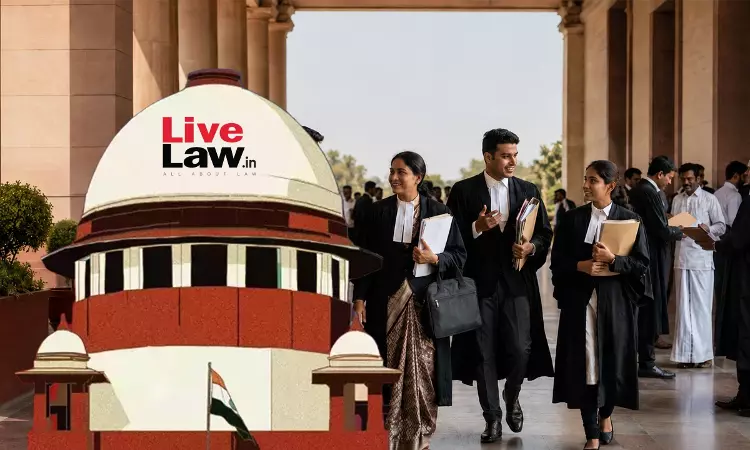
A dignified livelihood at the Bar cannot be secured by judicial affection. It has to be built by a fairer market for junior lawyers.
The Supreme Court's latest word on a never-ending saga arrived on 21 August, in 'Bhumika Trust v. Union of India, [2026 INSC 904]'. Revisiting a year-old judgment dated 20.05.2025 in 'All India Judges Association v. Union of India [2025 INSC 735]', the Court squeezed the mandatory three years of practice for entry to the post of Civil Judge (Junior Division) down to one year of actual practice. Justice K. Vinod Chandran, dissenting, warned that the country risks assembling a cadre of careerists rather than of jurists.
Recruitment to the junior judiciary was never really an employment scheme. The point of the practice requirement is that an entrant should have seen how the system works before being asked to sit in judgment over it. The life of a litigating lawyer is not merely about presenting the arguments. It is getting a matter listed, negotiating with the Registry, waiting months for certified copies, watching a file crawl from one desk to another, standing in queues to have a matter checked. These experiences, even though mundane, are formative. A judge who has never had them may occupy the chair without ever having stood in front of it, and the Court in its 2025 Judgment itself has recorded that numerous High Courts have recorded about the behavioural attitude of young judicial officers towards advocates, litigants, staff and superiors arrive on a routine basis. The Court observed in 2025 that, according to almost all High Courts, two decades of recruiting fresh law graduates without prior Bar experience had “not been a successful experience.” This is in stark contrast with medicine; wherein practical experience is not negotiable and properly compensated.


Bhumika Trust was filed on behalf of hundreds of candidates with disabilities, for whom the three-year rule was not a threshold but a wall, because the profession expected to supply the three years would not employ them at all. The connected matters also widened the frame to women candidates. This is a sobering reality of the Indian Bar.
But notice what it establishes. It establishes that the market for junior lawyers is broken and not that judging requires less experience. It is about the price of the apprenticeship, not its value. When the remedy for an unaffordable apprenticeship is to declare it unnecessary, the reasoning has quietly changed its subject.
Call this the maa ki mamta move. It is the characteristic response of a court to a hardship it cannot directly fix. The Court, sadly, cannot compel a chamber in Kanpur to pay its junior a living wage. It cannot order a senior advocate to hire a visually impaired junior and then treat her as a lawyer rather than as an act of kindness. Faced with structural failures beyond the reach of a writ, the Court reaches for the one lever it undeniably controls, which is its own rule, and relaxes that. The gesture is affectionate, not an adequate remedy. It leaves the market exactly where it was.
The objection follows from the Court's own judgment in 'In re Recruitment of Visually Impaired in Judicial Services. Decided last year on 03.03.2025, the Court took a different route and described the migration of disability jurisprudence from a charity-based approach to a rights-based regime. It held that the three-year practice-or-70%-in-the-first-attempt requirement operated as discrimination against persons with disabilities and violated the principle of reasonable accommodation. The Court therefore struck down those requirements for PwD candidates, while retaining the educational qualifications, and directed that visually impaired candidates be permitted to compete with a separate cut-off and merit list. A blanket exemption from a competence criterion is the charity model wearing the vocabulary of rights. A right, on the rights-based account, is an entitlement to the conditions of participation. It is not a discount on the terms of entry. Moreover, the proviso to Article 335 is the only textual warrant for relaxation in qualifying marks and lowering of standards of evaluation, and it is carved out for Scheduled Castes and Scheduled Tribes. Even there it speaks to standards of evaluation rather than dispensing with an eligibility condition altogether.
The Rights of Persons with Disabilities Act, 2016 has rightly been treated as a super statute, a law that resets the baseline against which every other law is read, and 'Vikash Kumar v. UPSC and others' gave that idea its sharpest expression. But the animating logic of the statute is reasonable accommodation, which means dismantling the barrier between a person and the standard, not dismantling the standard. Section 34 mandates reservation. What has gone almost entirely unused is Section 19, which obliges government to formulate schemes, including concessions, to facilitate employment and vocational training for persons with disabilities, and Section 23, which requires every establishment to appoint a Grievance Redressal Officer for same purpose.
The heart of the case deserves to be stated frankly. Lawyers with disabilities face demonstrably greater difficulty finding work at the Bar, on account of prejudice, inaccessible court infrastructure and the near total absence of accommodation in the profession. They are told to acquire experience by a profession that will not let them acquire it. That is a real chicken-and-egg problem. The way out is to break the denial rather than waive the requirement, to lift the candidate to the bar rather than lower the bar to the candidate.
The majority half understood this. It did not simply cut three years to one. It replaced the missing experience with a year of training at a State Judicial Academy followed by a year of structured law clerkship. Read carefully, that is a concession that experience matters and that where the market will not supply it, the State can. Both propositions are correct. They have simply been aimed at the wrong end of the pipeline. The Court has built a funded, structured apprenticeship and made it available only to those who have already cleared the examination, while leaving the barrier at the front door exactly where it found it. If the State can pay for two years of training after selection, it can pay for a supervised year at the Bar before it.
The Court had better tools at its disposal. Accessibility Committees of the High Courts could have been told to run recruitment assistance for lawyers with disabilities. Stipends for juniors could have been made a condition of chamber registration with the Bar Councils. Legal services panels and paid court clerkships could have been opened for the candidates who cannot afford an unpaid apprenticeship. A Court that felt able to issue ten directions in 2025 could have issued ten better ones in 2026.
Justice Chandran is right that the requirement of experience is the need of the hour. The Petitioners are right that three years are unaffordable to the people. Both can be true at once. What follows from them is not a shorter rule but a funded one. Affection is what an institution offers when it has run out of things it can enforce, and no amount of it will produce a dignified livelihood at the Bar. That will come from a market in which juniors are paid, chambers compete for them, accessibility is a condition of practice rather than a favour, and three years are worth having because somebody is willing to fund them.
Disclaimer: Prannv Dhawan consulted with the High Court of Karnataka in responding to the Supreme Court's request for suggestions and inputs.
Author Prannv Dhawan is an Advocate & Muskan Nagpal is an Advocate practicing before the Hon'ble Supreme Court of India and Hon'ble Delhi High Court. Views are personal.


