



Beyond Access: Imagining Richer Idea Of Childhood
Barkha Dwivedi & Kartikey Singh
14 Nov 2026 4:00 PM IST
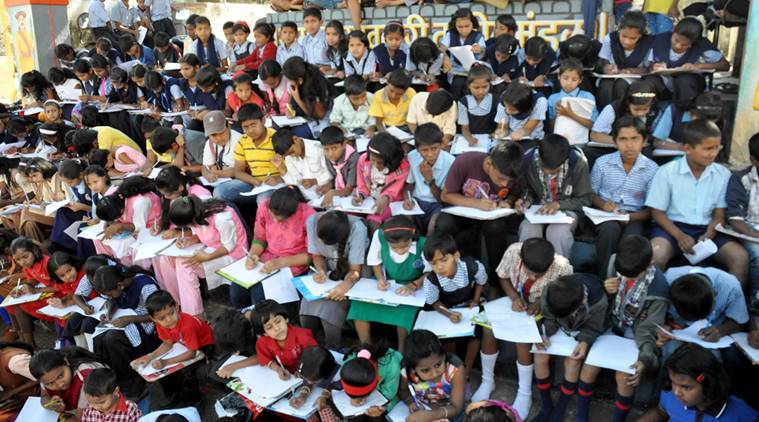
When Jawaharlal Nehru addressed children at New Delhi's National Stadium on November 14, 1957, he urged them to read, write, play, dance and sing, emphasising that the occasion should be celebrated as Children's Day rather than as an expression of personal affection for him. The date has carried that name ever since. Yet his message deserves attention beyond the annual ritual: by bringing together learning, play, intellectual effort and joy, Nehru articulated a conception of childhood that extended beyond academic achievement or eventual economic usefulness. Nearly seven decades later, the fair question to ask on this day is how much of that conception the country has delivered, and to how many of its children.
There is a considerable intellectual history behind this understanding. In The Parrot's Training, Rabindranath Tagore satirised an education system that burdened a bird with books and instructional apparatus until the very life it was meant to cultivate disappeared. His objection was not to knowledge, but to its mechanical transmission. Gandhi's Nai Talim, articulated at the Wardha Conference of 1937, similarly sought to connect education with productive work, local experience and the mother tongue. Gijubhai Badheka's Divaswapna (1931) imagined a classroom in which stories, games, exploration and the child's natural curiosity could become instruments of learning. Far from being competing educational philosophies, these approaches recognised a common principle: knowledge becomes meaningful when a child is able to engage with it, rather than merely reproduce it.


John Dewey developed a related argument in Democracy and Education (1916), treating education as a continuous process of experience and inquiry, rather than a preparation for some distant stage of life. Maria Montessori, in The Absorbent Mind (1949), drew attention to the extraordinary capacity of young children to absorb their surroundings and construct an understanding of the world through experience. These ideas are particularly relevant to India today. The country has made considerable strides in extending the material foundations of childhood. It has been far less successful in ensuring that the child who reaches school learns there. Any account written for Children's Day must hold both facts together.
The public health figures show why the progress deserves acknowledgement. The National Family Health Survey-6 (2023-24), released in May 2026, records a decline in stunting among children under five from 35.5% to 29.3%, and in severe wasting from 7.7% to 5.2%, compared with NFHS-5. Full immunisation among children aged 12-23 months, as recorded on vaccination cards, rose from 83.8% to 87.1%. These gains matter because nutrition, preventive healthcare and early development directly influence a child's capacity to learn and participate. They also leave a great deal undone. Nearly three in ten children remain stunted. The proportion of underweight children barely moved, from 32.1% to 31.8%. NFHS-6 did not test for anaemia, so the last national figure is still that of NFHS-5, which found 67.1% of children between six months and five years to be anaemic. The Sample Registration System places under-five mortality at 29 per 1,000 live births in 2023, the lowest India has recorded, yet several times the rate in Sri Lanka or China, where United Nations estimates put it at about six.
Two priorities follow. The first is to finish what is unfinished: maternal nutrition, a proper diet in the first two years of life, when only about six in ten infants aged six to eight months receive solid food alongside breastmilk, and the early publication of fresh anaemia estimates so that the problem does not slip from public view. The second is to move beyond nutritional supplementation towards language development, cognitive stimulation, play and responsive interaction, making anganwadis and pre-schools more consequential spaces in a child's formative years.
Education shows the same pattern more sharply. UDISE+ 2025-26 records 24.72 crore students across 14.67 lakh schools, taught by over one crore teachers. The secondary-stage pupil-teacher ratio has improved from 23:1 in 2022-23 to 21:1, while the gross enrolment ratio at that stage has risen from 68.5% in 2024-25 to 71.7% in 2025-26. Retention has likewise increased from 47.2% to 51.9%. The direction is right; the levels are sobering. A retention rate of 51.9% means that barely half the children who enter Class I are still in school by Class XII. More than one lakh schools function with a single teacher, and roughly a third have no internet connection. More fundamentally, UDISE+ is an administrative count. It tells us how many children are enrolled, and nothing about what they have learnt.
On that question the evidence is uncomfortable, and it is the part of the story most easily softened. ASER 2024 found that the proportion of rural government-school children in Standard III able to read a Standard II-level text rose from 16.3% in 2022 to 23.4% in 2024, the highest since the survey began. This recovery after the pandemic demonstrates that sustained teaching interventions can reverse learning deficits. But the same figure, read the other way, says that three out of four children in Standard III cannot read a text meant for the class below. In Standard V, 44.8% can do so; more than half cannot. Even in Standard VIII, the final year of the schooling guaranteed by the Right to Education Act, about a third of government-school children cannot read what a seven-year-old is expected to read. Arithmetic is weaker still: only 30.7% of rural children in Standard V can solve a simple division sum, and fewer than half of those in Standard VIII.
The government's own assessment points the same way. The PARAKH Rashtriya Sarvekshan 2024, which tested over 21 lakh students in government and private schools, found that fewer than four in ten students in Grade 6 could solve everyday arithmetic problems, and that only about three in ten in Grade 9 could work with percentages. A child may therefore spend eight or nine years in school and leave without being able to read fluently or divide. The NIPUN Bharat Mission set 2026-27 as the year by which every child should acquire foundational literacy and numeracy by the end of Grade 3. ASER 2026, now being surveyed in villages across the country, will be the first independent test of that promise. On present evidence it will show progress, and a long distance still to travel.
A comparison with countries that began their modern journeys alongside India makes the point harder to set aside. Sri Lanka became independent in 1948, the Republic of Korea was founded the same year, and the People's Republic of China a year later; Vietnam declared independence in 1945 and then endured three decades of war. The World Bank measures 'learning poverty' as the share of ten-year-olds who cannot read and understand a simple text. Its latest estimate for India is 56%. For Sri Lanka it is 15%, for China and Vietnam about 18%, and for Korea under 5%. These estimates predate the pandemic and rest on each country's own assessments, so they are not exact, but the scale of the gap is plain. Nor does income explain it: Sri Lanka and Vietnam taught nearly all their children to read while they were still poor, because they treated primary schooling and primary healthcare as the first charge on the state. India's literacy rate, according to the Periodic Labour Force Survey 2023-24, is 80.9%, and 74.6% among women. India is not alone in this difficulty. Indonesia, independent since 1945, has a learning poverty rate of 53%. That is company, and no consolation.
Part of the explanation is a promise kept waiting. The Kothari Commission recommended in 1966 that public expenditure on education be raised to 6% of national income. The National Education Policy, 2020 repeated the target. A parliamentary standing committee noted this year that combined spending by the Centre and the States stood at 4.12% of GDP in 2021-22. None of this is a counsel of despair. Punjab, Himachal Pradesh and Kerala, which lead the PARAKH survey, show that the gap is not a matter of fate, and the recovery since 2022 shows how quickly classrooms respond when a system fixes on a clear goal. That goal now needs to travel upward from Grade 3 to the middle years, where children who fell behind are seldom given a second chance to catch up. It needs a teacher for every class and subject before it needs another portal, and learning data that parents can read for their own child's school.
Reading, moreover, must extend beyond textbooks and examinations. A child who encounters Premchand, Ruskin Bond, Sudha Murty or the stories of the Panchatantra is introduced to different ways of seeing society, morality, relationships and human behaviour. School libraries, books in Indian languages, storytelling sessions and opportunities for children to write and express themselves deserve a more prominent place in educational planning. Reading develops something that examination scores cannot adequately capture: the capacity to imagine a life beyond one's immediate circumstances.
This brings us to an element of childhood that adult institutions frequently underestimate: “play”. It is tempting to regard play as a reward after learning has been completed, or as a luxury to be postponed until the basics are secure. Developmental understanding suggests otherwise. The National Curriculum Framework for the Foundational Stage, 2022, explicitly places “play” at the centre of early learning. It distinguishes between “free play”, in which children organise their own activities; “guided play”, in which children lead, and teachers support their exploration; and “structured play”, in which teachers lead activities in which children actively participate. Each has value. Negotiating rules during a game, resolving disagreements, building something together or inventing a story involve communication, problem-solving, patience and self-regulation. The school playground, art room, music class and library are not peripheral to education; they are part of its substance. This does not mean abandoning academic rigour. A child who cannot yet read is more likely to learn through a story, a song or a game than through one more hour of copying from the blackboard.
The digital environment adds another dimension to this changing experience of childhood. ASER 2024 found that 82.2% of rural adolescents aged 14-16 could use a smartphone; 57% had used one for educational activities in the preceding week, while 76% had accessed social media. Access is unequal, with 36.2% of boys owning a smartphone against 26.9% of girls, and among those using social media only a little over half knew how to make a profile private. Digital access can widen exposure to knowledge, languages, educational resources and creative expression, but operating a smartphone does not necessarily mean understanding the information it delivers. Digital education must therefore cultivate the ability to distinguish reliable information from misinformation, understand privacy, recognise manipulated content and exercise judgement online. Neither blanket restrictions nor unrestricted access suffice; the objective must be to develop 'digital discernment' alongside 'digital fluency'.
There is also a larger question of how society regards the child within its institutions. The United Nations Convention on the Rights of the Child, particularly Article 12, recognises a child's right to express views on matters affecting them, with due weight given according to age and maturity. Article 31 recognises the right to rest, leisure, play and participation in cultural life. These provisions complement the Constitutional commitment to education under Article 21A and the Directive Principle in Article 39(f), which calls for children to receive opportunities and facilities to develop in conditions of freedom and dignity. Their significance extends beyond protection from harm. They require a shift from regarding children solely as recipients of adult decisions to acknowledging their developing capacity for independent thought. Listening to children about school environments, accessibility, recreation, and the issues affecting their communities is not an abdication of parental or institutional responsibility. It is an important part of preparing them for democratic participation.
The idea is not entirely new to Indian educational thought. Nehru's Letters from a Father to His Daughter (1929) is itself an interesting illustration. Written for a young Indira, the letters introduced her to the natural world, civilisation and history through explanation and conversation rather than a list of lessons to memorise. They treated a child as someone capable of engaging with serious ideas, provided they were communicated with imagination and care. That is perhaps an especially valuable lesson at a time when children encounter an extraordinary volume of information but do not always receive sufficient opportunities to question, interpret and make sense of it.
Children's Day, therefore, offers an opportunity to think of development in terms wider than enrolment, examination results or even employability, without pretending that the narrower tasks are complete. A good childhood must make room for uncertainty, experimentation, friendship, cultural exposure, physical activity and the freedom to ask questions. It must also, at the very least, leave a child able to read. Public investment in schools and healthcare must be accompanied by attention to libraries, sports facilities, accessible public spaces, arts education, counsellors and well-trained early childhood educators. Families, too, have a role in allowing children to develop interests that may not immediately translate into measurable achievements. The purpose is not to romanticise childhood or exempt children from discipline and responsibility, but to recognise the conditions under which both character and capability develop.
Nehru's appeal to children to read, play, dance and sing remains relevant precisely because it resists a narrow definition of success. It begins, all the same, with the word “read”, and a country in which most ten-year-olds cannot yet do so has not earned the right to treat that word as settled. A society's achievement is not simply that its children eventually become accomplished adults, but that they are given the freedom, security and encouragement to become thoughtful individuals along the way. The measure of progress is not only what a child may contribute to the country tomorrow, but how fully the country allows that child to live, learn and flourish today.
Authors Barkha Dwivedi & Kartikey Singh are Lawyers based in New Delhi and currently working as Law Clerk-cum-Research Associates at Supreme Court. Views are personal.


