Beyond Binary - Employment Rights Of Transgender Persons In India
Sreenidhi VM
29 Sept 2026 10:00 AM IST
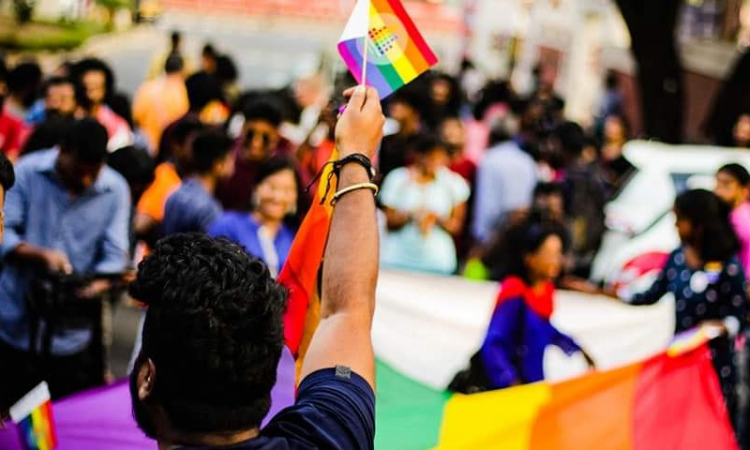
More often than not, in Indian society, conversations around sex, sexuality, and sexual orientation remain taboo, leaving many transgender persons to fend for themselves. Lacking family support, formal education, and financial security, many members of the community are forced to earn a livelihood through begging and sex work, making the transgender community one of the most unheard and ignored in India. Even those who gain formal education by keeping their identity under wraps face a fresh set of challenges in the employment market. A study by the National Human Rights Commission (NHRC) on the human rights of transgender persons found that 99% of the community experiences social exclusion and rejection at various stages of life. Despite progressive legal developments, meaningful inclusion of transgender persons in employment remains an ongoing challenge.
Against this backdrop, this article examines the legal framework governing the employment rights of transgender persons and evaluates the extent to which it promotes workplace inclusion and equality.
Constitution and Evolving Jurisprudence
Article 14 of the Indian Constitution guarantees equality before the law, while Article 15 prohibits discrimination on grounds of religion, race, caste, sex, or place of birth. Critically, the Hon'ble Supreme Court in National Legal Services Authority v. Union of India, 2014 INSC 275, (NALSA), held that discrimination on grounds of sexual orientation and gender identity violates Articles 14 and 15. This landmark judgment recognized transgender persons as a distinct group entitled to constitutional protection and declared that the right to self-identify one's gender flows from Articles 14, 19, and 21.


NALSA further held that the State must take affirmative steps to prevent discrimination against transgender persons and ensure their dignity and equal citizenship, a mandate that extends to employment, requiring legislative and administrative action to protect transgender workers.
In Navtej Singh Johar v. Union of India, 2018 INSC 790, the Supreme Court revived the discourse on the rights of sexual and gender minorities, decriminalising consensual same-sex relations by reading down Section 377 of the Indian Penal Code. The Court held that criminalising consensual same-sex relationships violated the constitutional guarantees of equality, dignity, privacy, and non-discrimination, and affirmed that constitutional morality must prevail over societal prejudice.
The Transgender Persons (Protection of Rights) Act, 2019
The Transgender Persons (Protection of Rights) Act, 2019 is the primary legislation governing transgender rights in India. Section 2(k) defines a transgender person as an individual whose gender identity does not correspond with the sex assigned at birth. The Act recognizes the right of every transgender person to be identified according to their self-perceived gender and provides for legal recognition through a certificate of identity issued by the District Magistrate.
A significant feature of the Act is its prohibition of employment discrimination. Section 8 mandates that employers must not discriminate on the basis of gender identity in recruitment, promotion, workplace facilities, social security benefits, and welfare measures, applicable across both public and private sector employment. This recognizes that employment discrimination extends beyond hiring to the everyday dignity and safety of transgender workers.
Section 9 prohibits establishments from discriminating against transgender persons in any employment related matter, and Section 11 mandates that every establishment designate a Complaint Officer to address grievances under the Act. Together, these provisions seek to promote equal opportunity, workplace inclusion, and an accessible redressal mechanism.
The Act has however, been criticised by transgender rights advocates for not fully addressing the concerns of the community.
In Jane Kaushik v. Union of India, 2025 INSC 1248, the Supreme Court reaffirmed that discrimination on the basis of gender identity is prohibited under Articles 14, 15, and 16. The Court observed that transgender persons continue to face systemic barriers in accessing employment despite the 2019 Act, and held that the State and employers have a positive obligation to prevent discrimination and facilitate workplace inclusion. It further recognized that reasonable accommodation is implicit in the Act's anti-discrimination framework, requiring affirmative measures to ensure effective participation of transgender persons in employment.
Integration with Labour Codes Framework
Many employers, particularly in smaller establishments, remain unaware of the 2019 Act's employment protections. The absence of explicit incorporation of gender identity as a protected characteristic in the Labour Codes has resulted in minimal guidance from labour authorities on compliance, and training for labour inspectorates on transgender employment rights remains inadequate.
The Codes on Wages, Industrial Relations, Social Security, and Occupational Safety, Health and Working Conditions, 2020 (collectively, the "Labour Codes") form the primary statutory framework governing employment relationships in India. While enacted after the 2019 Act and purportedly gender-neutral, their application to transgender workers merits closer examination.
The Wages Code, 2019
The Code on Wages, 2019 expands the principle of equal remuneration to all employees, irrespective of gender, across all establishments. Unlike the Equal Remuneration Act, 1976, which was limited to men and women, the Code adopts the broader term "gender" and prohibits wage discrimination on that basis. Section 3 expressly extends the Code to all employees regardless of gender, creating a more inclusive framework that may be read to encompass transgender persons. Although "gender" is undefined, this shift reflects a progressive departure from the binary approach of earlier legislation. Section 3(2) further prohibits discrimination on the ground of gender in recruitment and conditions of employment, not just remuneration.
The Industrial Relations Code, 2020
The Industrial Relations Code, 2020 (IRC) governs collective labour relations, trade unions, and industrial dispute resolution. Section 2(zr) defines a "worker" in broad, gender-neutral terms, thereby encompassing transgender persons within its scope.
The Code on Social Security, 2020
The Code on Social Security, 2020 (CSS) consolidates social security legislation relating to provident fund, gratuity, employee insurance, maternity benefits, and other welfare measures. It adopts a gender-neutral approach to coverage and does not exclude any person on the basis of gender identity, entitling transgender employees to social security benefits on an equal basis with other employees.
The Occupational Safety, Health and Working Conditions Code, 2020
The Occupational Safety, Health and Working Conditions Code, 2020 (OSH Code) is significant from a transgender rights perspective, as it expressly recognises transgender employees within its statutory framework. Section 24(1) obligates employers to provide prescribed welfare facilities, and Section 24(1)(ii) specifically requires separate bathing places and locker rooms for male, female, and transgender employees, a progressive departure from earlier labour legislation's binary understanding of gender. Section 23 further places responsibility on employers to maintain health, safety, and working conditions for all employees, extending workplace protections to transgender workers on an equal basis. This explicit recognition must be read alongside the 2019 Act, which prohibits employment discrimination on the ground of gender identity.
The Transgender Persons (Protection of Rights) Act, 2019 and the Labour Codes mark an important step towards safeguarding the employment rights of transgender persons and promoting workplace equality in India. Supported by constitutional principles and judicial developments, particularly the recognition of gender identity as a protected ground of discrimination, the legal framework seeks to ensure equal access to employment and workplace dignity. However, challenges relating to implementation, workplace inclusion, awareness, and enforcement continue to limit the effective realization of these rights. Bridging the gap between legal recognition and practical inclusion requires sustained efforts from legislators, employers, and regulatory authorities to build a more inclusive and equitable work environment, essential to securing the full and meaningful participation of transgender persons in the workforce and advancing the broader goal of substantive equality.
Author is an Advocate practicing at Madras High Court. Views are personal.