



Digitising Justice: A Blockchain Blueprint For Resolving Land Acquisition Conflict
Justice K. Kannan
7 April 2026 2:00 PM IST
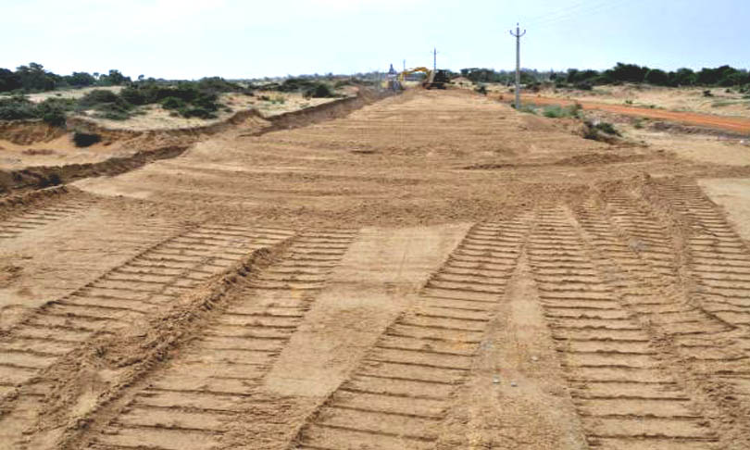
The shadow of judicial pendency in India is often cast longest by the complexities of land acquisition. As of early 2026, the National Judicial Data Grid (NJDG) reports a staggering backlog exceeding 92,000 cases in the Supreme Court alone, a significant portion of which involves civil disputes over the State's power of eminent domain. These legal marathons typically hinge on two pivots: the justification of the acquisition and the adequacy of the compensation. However, the path to de-clogging our courts lies in identifying genres of litigation where subjectivity can be replaced by the impartial precision of automated data.
The Arithmetic of Objectivity
The Right to Fair Compensation and Transparency in Land Acquisition, Rehabilitation and Resettlement Act, 2013, was designed as a reformative shield, yet its implementation remains mired in administrative opacity. By integrating a computer-automated system, the "Social Impact Assessment" (SIA) can be transformed from a contested report into an objective data set. High-resolution aerial surveys and GIS mapping can now provide an immutable record of land usage, identifying alternate sites that ensure "least displacement" with an accuracy that renders traditional site-selection disputes obsolete. When data points—revenue classification, proximity to infrastructure, and historical usage—are populated through a transparent system, the decision of an acquiring authority becomes a verifiable result rather than a subjective choice.


An Automated Compensation and Interest Regime
Valuation disputes form the heart of land litigation. The 2013 Act contemplates a specific formula: the average value of registered transactions in the vicinity over the three years prior to notification, multiplied by a location-specific factor. In a digitized ecosystem, this is a straightforward mathematical exercise. Furthermore, the statutory interest component is equally ripe for automation. Under Section 80 of the Act of 2013, if compensation is not paid or deposited before taking possession, the Collector must pay interest at 9% per annum from the date of taking possession for the first year. If the delay exceeds one year, the interest rate escalates to 15% per annum from the date of expiry of that initial year. By linking Registrar's offices and revenue records to a central engine, these computations—including both market value and statutory interest—can be executed automatically, removing the "valuation gap" that typically drives landowners to seek judicial intervention.
Blockchain and the Smart Escrow Solution
A significant cause of pendency is the "inter-se" dispute, where multiple parties claim title to the same compensation. Historically, these funds lie fallow in civil court deposits, losing value to inflation while litigation drags on. A modern approach would employ Blockchain technology to create a National Blockchain Framework for compensation. For undisputed titles, funds move via Direct Benefit Transfer (DBT) to Aadhaar-linked accounts. For disputed titles, the system triggers a Smart Escrow. These funds are not left idle but are invested in pre-approved government bonds or interest-yielding securities. The distributed ledger ensures a tamper-proof audit trail of the principal and accrued interest, which is released instantaneously to the successful party via a "Smart Contract" the moment a judicial decree attains finality.
NALSA as the Digital Gatekeeper
The leap toward technology must not leave behind the marginalised owner who lacks digital literacy. This is where the National Legal Services Authority (NALSA) must evolve into a technological oversight body. By acting as an institutional gatekeeper, NALSA can provide the human interface necessary to ensure that the data populated in the system is accurate. Legal service clinics can serve as verification hubs, ensuring that even those without a smartphone receive just compensation and are spared from the "vortex of litigation" that currently defines land acquisition in India.
The Path Forward
The transition from manual adjudication to a data-aided grievance redressal system is no longer a luxury, but a judicial necessity. All the suggestions could be brought through rule making process and do not even require amendments to the existing legislation. If the acquiring authority's offer is based on a transparent, computer-automated regime that leaves no room for varying interpretations, the grounds for litigation evaporate. By quelling these disputes at the source through Blockchain and GIS-backed objectivity, we can finally begin to reduce the volume of pendency in at least one genre of litigation and establish our progression, even if is seemingly a delayed response, to the promise of timely justice to the Indian citizen.
Author Justice K. Kannan (Retd.) is a former judge of the Punjab & Haryana High Court and Madras High Court. Views are personal.


