



Cross-Examination of All Witnesses In One Go
T.A.S.S.R.A. Rishik
12 Dec 2025 1:40 PM IST
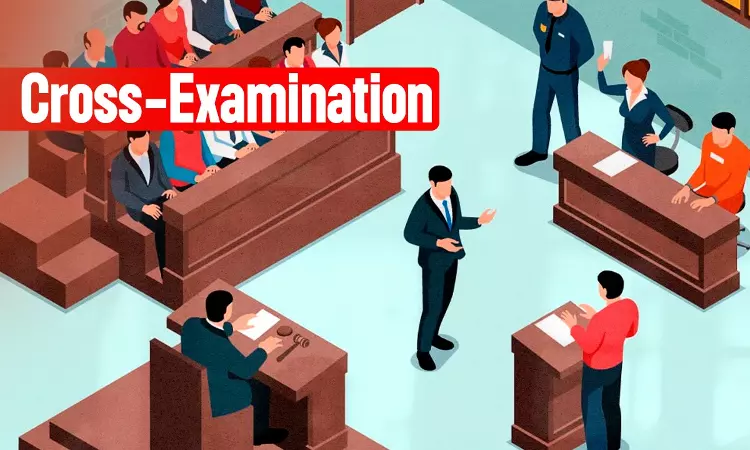
During the course of the trial, a tendency frequently arises where the defence insists on the production of all the prosecution or plaintiff witnesses at the same time. The Bharatiya Nagarik Suraksha Sanhita (BNSS), the Bharatiya Sakshya Adhiniyam (BSA), the Code of Civil Procedure (CPC), and the relevant Rules of Practice outline the general framework governing the order of evidence and the powers of the court, but they do not confer any express entitlement on a party to have all witnesses examined consecutively in a single continuous sitting.The issue, therefore, turns on the scope of the court's discretion and on the practical and legal factors that determine whether such a consolidated scheduling of witnesses can be permitted.
Section 254(3), BNSS, (in Sessions trials) and Section 265(3), BNSS, (in Warrant Cases) allow the Court, in its discretion, to postpone the cross-examination of a witness until other witnesses have been examined, or to recall a witness later. This shows that the order of cross-examination is not absolutely fixed, but it is still a matter of judicial discretion, and it applies only within the context of criminal trials.


In this regard, the Supreme Court in State of Kerala v. Rasheed, (2019) 13 SCC 297, identified certain considerations that guide a court while exercising such a discretion to defer under Section 231(2), CrPC (corresponding to Section 254(3), BNSS). These include:
risk of undue influence or threats to a witness,
possibility that later witnesses may tailor testimony,
danger of memory loss in a witness whose chief examination is already complete,
likelihood of trial delay or non-availability of witnesses if sequencing is disturbed.
Apart from these, the Apex Court also laid down a set of practice guidelines to streamline witness examination in criminal trials, i.e.:
Any request for deferring cross-examination should, as far as possible, be made before the case calendar is drawn up;
Such a request must be supported by specific, sufficient reasons explaining why that particular witness, or group of witnesses, should be taken out of the usual sequence;
If deferral is granted, the trial court must fix a proximate date for cross- examination after the chief examination concludes, so the witness is not left in suspense indefinitely;
Throughout the period of deferral, the court must take steps to ensure that the witness is protected from influence, harassment or intimidation.
Further, Sections 310 and 311 of the BNSS deal with how evidence is to be recorded in warrant cases and Sessions trials. Both assume that witnesses are taken one at a time, with each deposition recorded separately, whether in narrative form or in question-and-answer form. Section 346, BNSS, pushes trials to move on a day-to-day basis and discourages unnecessary adjournments, especially when witnesses are present. Even here, departures from the rule are allowed when the Court records special reasons.
Further, the BSA follows the same structure.Section 140, BSA, leaves the order of examining witnesses to the procedural law or, in its absence, to the Court's discretion. Sections 142 and 143, BSA, preserve the standard sequence of chief, cross and re-examination,but no provision authorises taking all witnesses in a single consolidated sequence. Similarly, Order XVI Rule 1, CPC, assumes significance because it governs how parties identify and produce their witnesses. The rule requires each party to file its list of witnesses, by stating the purpose for which each witness is required, within the time fixed by the Court and, in any event, within fifteen days after the issues are settled, and the Court may permit additional witnesses to be called later only on sufficient cause being shown.
Similarly, Order XVIII, CPC, carries this forward by regulating the mode of taking evidence, i.e., examination-in-chief is ordinarily by affidavit, with cross-examination conducted before the Court or a Commissioner. Rule 16 of the same Order permits the Court to take the evidence of a witness immediately if the witness is about to leave the jurisdiction or for any other sufficient cause, reinforcing that each witness is dealt with individually, as circumstances require. So, even if all the plaintiff's or prosecution witnesses have been examined in the sequence originally proposed, the
Court still retains the discretion to permit further evidence where the circumstances justify it. It is nowhere specified in CPC that completing the listed witnesses exhausts the Court's power to allow additional testimony when necessary for a fair adjudication.
All of this shows that the deferral of cross-examination of witnesses is not a blanket entitlement. And importantly, even when courts defer cross-examination, they never contemplate taking all witnesses in one consolidated sequence.Deferral in criminal trials can carry real substantive weight. Sometimes, a defence takes shape only after hearing certain witnesses whose testimony reveals new directions. The law recognises this by permitting postponement and recall subject to the court's discretion.And if postponement, which is a smaller step, requires careful justification, the idea of binding the entire prosecution to an “all witnesses atonce” model becomes even more untenable.
However, civil trials stand on a different footing. The written statement already lays out the defence, so the element of surprise that shapes cross-examination in criminal cases is mostly absent. Even then, postponing the cross-examination of particular witnesses can still matter, which has to be decided on a case by case basis. But that narrow flexibility cannot be inflated into a theory that all witnesses must be taken in one stretch, or that once those witnesses finish, the plaintiff loses the right to produce further evidence. No such rule exists, neither in practice nor in principle. Limited postponement for particular witnesses, where the circumstances genuinely call for it, is part of how a fair trial works.
When the idea of examining all witnesses in one go is placed against the realities, a few practical concerns begin to surface. At first glance, it may seem efficient. But the moment one witness is absent, the whole idea falls apart, and the remaining witnesses, who have attended punctually, are pushed into adjournment for no fault of theirs. In that sense, what appears as a drive for quick disposal can easily disguise a different kind of delay.
There is also the human element worth considering. Except for the primary witness or the person centrally connected with the dispute, most witnesses do not have the same degree of interest or availability. Many appear out of obligation rather than enthusiasm, and expecting all of them to gather on a single day, stay back until their
turn arises, and be ready for cross-examination at unpredictable hours may not be practically workable. Courts deal with real constraints, and any insistence on taking all witnesses in one continuous stretch has to respect those basic realities.
Even if the witnesses do attend, the trial does not always unfold at the pace counsel might hope for. If, for any reason, the examination doesn't finish that day, the Court has no real alternative except to resume it later. And once that happens, the very idea of taking all witnesses in a single continuous stretch runs into its own difficulty. Further, cross-examination itself is never a mechanical exercise.It shifts from witness to witness depending on who the witness is, what they know, how they respond, and what contradictions emerge on the spot. That is the very space in which an advocate's skill operates, and the cross-examination meant for one witness cannot be reused for another. In most situations, every witness has to be handled differently.
In criminal trials, the court may, in its discretion, permit the postponement of cross- examination, and day-to-day examination is the norm. If postponement is acceptable even in the criminal context, where consequences are far more serious, and witnesses face greater pressures, the idea that all witnesses must be taken together in one stretch in civil cases becomes even more difficult to support. Nothing in civil procedure suggests that cross-examination should be compressed in that manner, and certainly nothing prevents the Court from spacing witnesses in the way the case actually demands.Moreover, as a matter of practical reality, a trial court handles several urgent matters in a single day, and if it is compelled to sit in one case for a prolonged stretch merely to examine all witnesses, other matters requiring urgent attention, such as bail applications, senior-citizen cases, and long-pending matters, would inevitably suffer.
In fact, Order XVI Rule 3, CPC, itself allows additional witnesses, whose names are not in the list, to be brought in lateron sufficient cause. A party may begin with a particular list, but as evidence unfolds, new facts, contradictions or documents may emerge that justify examining someone not originally anticipated. The law never closes the door merely because the party has exhausted the list it initially filed. Even at the appellate stage, the law permits additional evidence to be adduced, subject to satisfaction of the required conditions. And permitting additional evidence causes no legal prejudice, as the opposing party always retains its most potent safeguard, i.e., the right of cross-examination, an art through which inconsistencies are tested, and truth isextracted.
In conclusion, it is well settled that procedural laws are the handmaids of justice. There may indeed be a few exceptional cases where examining certain witnesses together genuinely serves the ends of justice, not because it is convenient, but because the nature of the defence in that particular case demands it. Some defences only become intelligible when a set of interlinked witnesses is seen in close sequence, and in such situations, taking a small cluster of witnesses together may help the Court appreciate the defence in its true shape. But even then, the choice rests entirely with the Court.Whether some witnesses should be taken together depends on the facts of the case, the nature of the defence, and what is fair to both sides.
Further, even where the Court permits all witnesses to be taken together, or where the plaintiff has, without objection, produced all of them in one stretch, the defendant cannot later insist on an adjournment and then claim the benefit of the very delay he created. The Court cannot allow a situation where the convenience of one party becomes a punishment to every witness who attends on time. If the defence seeks an adjournment after having asked for a consolidated cross-examination, the Court is well within its powers to relax that arrangement of cross-examination in one go and proceed in a manner that prevents prejudice to the other side.
Author is Additional Civil Judge (Junior Division), Vijayawada
Views Are Personal.


