

Reassessing Burden Of Proof In Indian Election Disputes
Rinoy Innocent
27 Oct 2025 6:13 PM IST
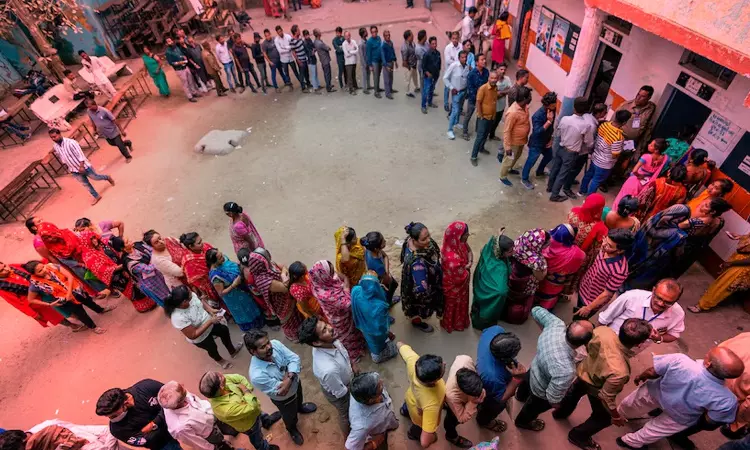
Free and fair elections are the foundational pillars of any functional democracy. To secure this ideal, the Constitution of India entrusts the Parliament and the Election Commission with the responsibility of ensuring electoral integrity. Among the legislative instruments enabling this, the Representation of the People Act, 1951 (RPA, 1951) governs the conduct of elections, defines corrupt practices, and provides for adjudication of election disputes by the High Courts and the Supreme Court.
Section 87 of the RPA, 1951 envisages that election petitions shall, as far as practicable, follow the Civil Procedure Code, 1908. However, courts in India have judicially imposed the beyond reasonable doubt standard—borrowed from criminal jurisprudence—upon petitioners alleging corrupt practices under Section 123 of the Act.
Though predicated upon the critical need for democratic stability and appropriate to the gravity of remedies like disqualification, this elevated evidentiary standard imposes an indefensible burden on private individuals. Because these litigants must proceed without the State's centralized investigatory resources and powers of compulsory process, and are instead restricted to a procedural framework—that of the Code of Civil Procedure, 1908—which is inherently ill-suited to establish facts on a standard traditionally reserved for criminal jurisprudence: proof beyond a reasonable doubt.

The Case for a Lighter yet Rigorous Standard
Allegations of bribery, undue influence, or communal appeals under the RPA carry serious civic implications but are adjudicated in civil courts, not criminal ones. Courts in the United Kingdom and other common law jurisdictions have recognised this distinction. In R v Rowe and Erlam v Rahman, UK courts held that election petitions, though sometimes involving quasi-criminal elements, are primarily civil proceedings and thus warrant a lower evidentiary threshold and furthermore the Privy Council in Jugnauth v Ringadoo affirmed that bribery allegations in election cases could be determined on the balance of probabilities.[1]
In India, however, the Supreme Court in Borgaram Deuri v. Premodhar Bora[2] and Rahim Khan v. Khurshid Ahmed[3] justified the high standard to prevent defeated candidates from abusing the process.[4] Yet, this caution has led to the opposite effect—genuine allegations of corruption often fail for want of proof “beyond reasonable doubt,” a degree of certainty that few private litigants can attain.
Towards an Intermediate Standard of Proof
To balance electoral integrity and accessibility to justice, Indian jurisprudence must adopt an intermediate evidentiary standard such as the clear and convincing evidence test. This standard, widely applied in U.S. civil cases involving fraud or serious allegations, requires the petitioner to prove that their claim is “highly probable,” though not to a criminal level of certainty. It sits between the preponderance of probabilities and beyond reasonable doubt, ensuring fairness without demanding an impossible degree of proof.
The rationale finds indirect support in Indian law itself. In Gautham Kundu v. State of West Bengal, the Supreme Court required “strong preponderance of evidence” to rebut the presumption of legitimacy under Section 112 of the Evidence Act—showing that even civil matters can demand a rigor above mere probability. This reasoning can inform electoral jurisprudence, creating room for a balanced standard that prevents frivolous petitions yet promotes accountability.
Illustrative Cases
In D.P. Mishra v. Kamal Narayan Sharma[5] charges of bribery and defamatory publications under Section 123(4) failed at first instance not due to weak evidence but due to the excessive standard of proof applied. Similarly, in S. Harcharan Singh v. S. Sajjan Singh[6], the High Court's insistence on criminal level proof led to unwarranted dismissal, later corrected by the Supreme Court. In Tukaram S. Dighole v. Manikrao Shivaji Kokate[7],the High Court's refusal to accept a VHS recording for lack of proof “beyond reasonable doubt” illustrated procedural rigidity at its peak. These cases underscore how the current burden obstructs substantive justice.
The clear and convincing evidence standard offers the necessary middle ground. Election disputes are civil in character, even when touching upon acts resembling crimes. As such, they must neither rest on a mere preponderance of probability—which could destabilise democratic mandates—nor demand proof beyond reasonable doubt, which effectively immunises corruption.
A calibrated standard would ensure that elections remain both credible and contestable. It would uphold the sanctity of democratic choice while enabling citizens to challenge corruption on fair terms. By recognising “clear and convincing evidence” as the operative standard, Indian election law can align procedural rigor with substantive justice—strengthening democracy by making electoral integrity legally attainable.
Author is Advocate, High Court of Kerala. Views Are Personal.
John Hatchard, 'Election Petitions and the Standard of Proof', (2015) 27 DENNING L.J
2004 (2) SCC 227 ↑
1974 (2) SCC 660 ↑
Rama Devi VS and Mendiratta SK, How India Votes: Election Laws, Practice and Procedure (4th edn, LexisNexis 2017) ↑
(1971) 1 SCR 8 ↑
1985 (1) SCC 370 ↑
(2010) 4 SCC 329 ↑