



Cannabis, Caste, And NDPS Act's Unexamined Asymmetry
Teghveer Singh
11 Aug 2026 3:00 PM IST
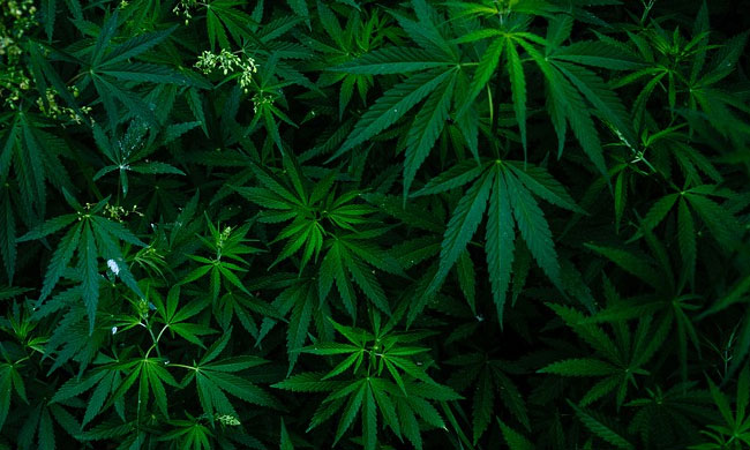
Start with two scenes, both in March, both in India. In Varanasi, a government-licensed shopkeeper ladles bhang thandai outside his stall. Crowds move through the ghats. Nobody is arrested. Somewhere else, a basti, a migrant workers' colony, a daily-wage worker is stopped by police and five grams of ganja are found on him. He is arrested under the Narcotic Drugs and Psychotropic Substances Act, 1985. Getting bail may not be straightforward. Depending on the circumstances, he could spend months in custody before his case is even heard properly. Whether he is eventually convicted is another matter.
In both cases, the substance involved is Cannabis. It is the same plant, yet the law treats these situations very differently. While there exists a plethora of literature on this contradiction, who typically consumes bhang, who is more likely to be arrested for ganja, and where enforcement tends to be concentrated remain largely unexplored. That is precisely the gap this article attempts to explore.


The Statute's Built-In Asymmetry
The NDPS Act does not prohibit every form of cannabis. Ganja and charas are banned, but bhang occupies a different legal position. Made from the leaves and seeds of the cannabis plant, bhang falls outside the Act's main prohibitions, and Section 10 allows state governments to regulate and licence its sale.
Several states have done exactly that. Uttar Pradesh and Rajasthan continue to operate licensed bhang shops, while Gujarat removed bhang from its list of controlled intoxicants in 2017. In 2022, the Karnataka High Court also held that bhang does not fall within the NDPS Act's prohibition.
As a result, the same plant can attract very different legal consequences depending on the form in which it is consumed or sold. While that distinction is legally recognised, it is worth asking whether it is culturally neutral. Bhang has long been associated with mainstream Hindu religious and cultural practices in a way that other forms of cannabis have not. It is the form of cannabis most historically associated with upper-caste Hindu religious practice mentioned in the Atharva Veda. The Indian Hemp Drugs Commission of 1894-95 noted exactly this: bhang was deeply embedded in the religious lives of the 'more respectable classes'.
Ganja and charas, meanwhile, were associated with a different class of users, including manual labourers, Adivasi communities, and other economically marginal sections of society. The 1985 Act ended up treating different forms of cannabis very differently. One form, long associated with certain social and religious practices, remained largely outside the Act's main prohibitions. Others became subject to criminal penalties. It is difficult to know how much of this was a conscious policy choice and how much was simply inherited from earlier approaches to cannabis regulation. Either way, the distinction has real social consequences worth looking at more closely.
A Law Built on Officer Discretion
The enforcement provisions are highly discretionary and unsupervised for police. Section 42 provides for a gazetted officer to enter, search, seize and arrest without a warrant on “prior information” or “reasonable belief.” Similar arrest powers are provided for public places in Section 43. The burden of proof is shifted with Section 54, meaning that if an individual is found in possession, they will be considered guilty, unless they can provide proof to the contrary.
Confessions obtained by the NDPS officers under Section 67 were routinely accepted and relied upon for conviction till Tofan Singh v. State of Tamil Nadu 2021 (4) SCC 1. A Constitution Bench disagreed and said that this was incorrect, that NDPS officers are police officers under Section 25 of the Indian Evidence Act (Section 23(1) of the Bharatiya Sakshya Adhiniyam), and that what they are asking for are essentially confessions. The officer had been an evidence gatherer and an evidence creator for years prior to that decision. This is evident in analysis that reveals extremely high rates for which accused have pleaded guilty. The pressure was the hardest hit for those who were the most susceptible.
Who is Actually in Prison
India does not record the caste or religion of NDPS accused. There is no study comparing cannabis use rates across caste or religious groups. Without that baseline, any claim about selective enforcement remains a hypothesis, not a finding.
We do have some idea that some 3.1 crore people, or 2.8 per cent of India's population, consumed some type of cannabis in the previous year, as per the survey conducted by AIIMS in 2019 across the country. Bhang made up about 2 per cent and ganja and charas made up about 1.2 per cent. The survey was not caste or religion wise, so it is not possible to make any enforcement comparison from the demand side.
The NCRB's aggregate prison data adds context. According to Prison Statistics India 2023, undertrials make up 76.2% of India's total prison population. Data shows that Scheduled Castes account for roughly 21% of undertrials against 17% of the general population; Scheduled Tribes around 11% against 8%; Muslims around 17.7% against 14.2%. It is also noteworthy that the conviction rate remains below 0.1% in drug cases. Furthermore, the way police discretion is exercised can be shaped by existing social biases.
The Status of Policing in India Report 2025 found that many police personnel held negative stereotypes about Muslims, Dalits, and Adivasis. Rajasthan highlights an interesting contradiction. The state continues to license and regulate bhang sales, treating it as a legitimate cultural practice. Yet the Report found high levels of prejudice against Adivasis among police personnel in the state. This, read alongside long-standing traditional Adivasi use in the state, raises a difficult question: is cannabis being treated differently because of the substance itself, or because of the communities most commonly associated with its use?
In practice, this tension often shows up in how the law is enforced. At large religious gatherings such as the Kumbh Mela, it is common to see Naga Sadhus and other ascetics openly consuming charas or ganja as part of long-standing religious practices. Strictly speaking, such conduct falls within the scope of the NDPS Act. Yet enforcement in these settings is rare. Attempting to strictly enforce the law in these contexts would likely provoke significant public opposition and controversy.
These are aggregate figures. NDPS cases might be above or below the average, we do not know, because very few studies have disaggregated the data by offence type. That is precisely the problem.
The US Parallel
The United States offers a documented comparison. Despite similar cannabis use rates across racial groups, Black Americans are 3.64 times more likely than white Americans to be arrested for marijuana possession, per the ACLU's 2020 report A Tale of Two Countries. Racial disparities worsened in 31 states between 2010 and 2018, including in states that had legalised the drug. Legalisation did not fix the enforcement pattern.
Michelle Alexander's The New Jim Crow[[1]] argued that formally neutral drug laws, applied through discretionary enforcement in unequal societies, tend to reproduce that inequality in criminal justice outcomes. The Indian case is not identical as caste is not race, but if enforcement discretion concentrates in poor communities that substantially overlap with Dalit, Adivasi, Muslim, and OBC populations, the direction of the effect is likely similar. In the US, that was measured over decades of civil society research. In India, it has not been tested.
The Missing Data Is the Policy Problem
In the US, establishing racial disparity in marijuana arrests required freedom of information litigation and independent data analysis. Most of that infrastructure does not exist here. There is no national study on cannabis use prevalence by caste or religious identity. The basic empirical question, whether cannabis enforcement disproportionately affects marginalised communities, cannot currently be answered.
A system that criminalises behaviour but does not track who it criminalises cannot be held accountable for patterns in its enforcement. The absence of data is not the same as the absence of a pattern.
What Might Be Done
The claim is not that the NDPS Act was designed to disadvantage any particular community. A statute with a culturally uneven exemption structure, enforced through broad officer discretion, in unequal social conditions, will tend to produce unequal outcomes. However, disparities can be reduced by:
Data collection. NDPS arrest, prosecution, bail, and conviction data should be disaggregated by caste, religion, and socio-economic background. Without sufficient data, enforcement comparisons are guesswork.
Bail reform. Section 37 was designed for trafficking. The Vidhi research found 97% of NDPS arrests in Mumbai in 2018 were for personal use. Section 27 was meant to treat personal consumption, whereas prosecutors use Section 20 in practice instead. Applying trafficking-level bail restrictions to possession keeps non-traffickers in pre-trial detention for months, especially when almost all personal-use arrests of 'those from the lowest strata'. A more careful distinction between possession and supply would reduce this, as held in Gaunter Edwin Kircher vs State Of Goa 1993 (3) SCC 145.
Adivasi cultural accommodation. The bhang licensing structure exists because one set of traditional practices was deemed worth accommodating. Traditional cannabis use in Adivasi communities has comparable historical depth. The exemption shows that Parliament was prepared to make room for certain long-standing cultural practices involving cannabis. If that is accepted, it raises a further question: why have other communities with similarly old traditions of cannabis use not received comparable recognition under the law? Thus, there is an argument under Articles 14 and 29 frameworks that the absence of any equivalent accommodation is not a neutral position.
Police accountability. Sections 42 and 43's warrantless powers need basic procedural checks: written documentation of search grounds, district-level data on who is being searched and arrested, and independent oversight in areas of concentrated enforcement.
Lastly, the shop in Varanasi and the arrest in the basti are both outcomes of the same statute. The people on either side tend to occupy very different positions in Indian society. Whether that pattern is as systematic as the available evidence suggests requires proper empirical investigation. What the available data does establish is that the conditions for differential enforcement exist, that the aggregate prison figures are consistent with such a pattern, and that India currently has no way of knowing, because the data to find out does not exist.
Michelle Alexander, The New Jim Crow: Mass Incarceration in the Age of Colorblindness (The New Press 2010). ↑
Views are personal.


