



CCTV In Hotel Restaurant Kitchens, Digital Extension Of FSS Act
Debashish Kar
17 Aug 2026 8:00 PM IST
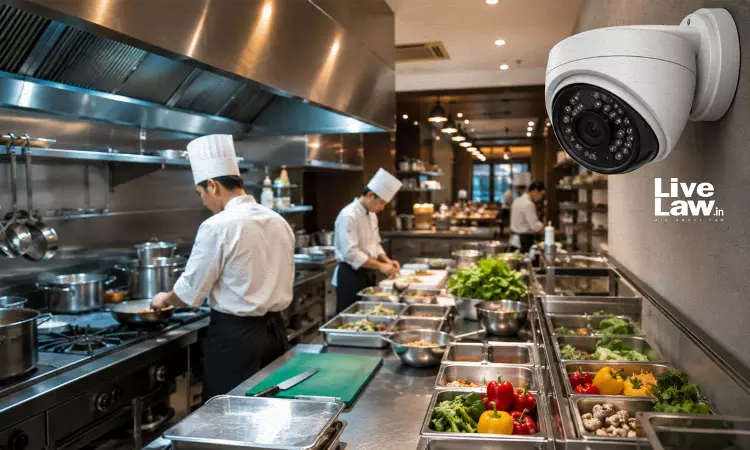
Live streaming any process or event stands as a hallmark of transparency, fairness, and accountability, offering reassurance that actions are conducted directly in full view. Generally, restaurants and food establishments serve dishes designed to appear delicious and healthy. The professional appearance and uniforms of service staff further reassure consumers that food is prepared and served under strict safety and hygiene standards but in most of the cases, the picture is otherwise.
The right to consume hygienic food is an enforceable right, a consumer ought to have the corresponding right to view the live streaming of the kitchen where the food is prepared. There should be a live display of the kitchen in the dining area (respecting the basic privacy rights of kitchen staff), enabling consumers to monitor whether their food is prepared in a clean and hygienic environment. Customers should have a real-time view of the chef and kitchen staff to verify whether they adhere to proper dress and hygiene codes throughout the preparation process, from order receipt to final service. It would also allow consumers to observe staff conduct and food-handling practices.


Similarly, when an online food order is placed via a mobile application, the app could feature an integrated live stream of the kitchen alongside updates like "Your food is being prepared." During the COVID-19 pandemic, several restaurants and hotels in Delhi-NCR initiated live streaming from their kitchens to rebuild customer trust. In a report published by the Hindustan Times on World Food Safety Day, Dr. Ankur Bhatia of Roseate Hotels & Resorts noted: "Trust will come from safety. Hence, an idea like live streaming of the kitchen will ensure our customers are confident that they are eating food cooked in a kitchen with the highest level of sanitary and safety standards. From menu selection to viewing it being cooked live, everything will be on an app."
While a customer might not easily pinpoint their specific order in a busy kitchen via a live feed, the stream provides a clear view of the overall environment. This enables consumers to assess whether food is handled hygienically or if an order should be cancelled and raised as a concern with management. Streaming instills accountability in service providers exposed to public view, compelling them to maintain high standards. This approach will significantly enhance food safety.
Measures Taken in Western Countries, Dubai, and Beyond
In Western countries, while live kitchen streaming is rare, establishments frequently maintain "open kitchens" visible to dining guests. Additionally, these establishments implement the Hazard Analysis Critical Control Point (HACCP) system to systematically monitor biological, chemical, and physical food safety hazards. In Dubai, most restaurants are required to use AI-enabled cameras and monitoring systems linked to the Dubai Municipality Digital Regulatory Ecosystem (such as Food Watch) as part of official regulatory compliance. Through this, kitchen operations are brought under the direct surveillance of authorities like Food Watch, DM Checked, HACCP, Civil Defence, and SIRA.
Similarly, China has introduced live streaming initiatives to ensure transparency and uphold hygiene standards. Through regional mandates and regulatory pushes in metropolitan areas like Shanghai, Hangzhou, and Zhengzhou, online food delivery platforms are heavily integrated with "Sunshine Kitchen" live video feeds.
Maintenance of Hygiene: A Pre- and Post-Requisite for Food Business Licensing
Numerous laws have been enacted to regulate food safety and standards in India, including the historic Prevention of Food Adulteration Act, 1954, which was later consolidated into the Food Safety and Standards Act, 2006 (FSS Act). The core objectives of the FSS Act were highlighted by the Supreme Court of India in Swami Achyutanand Tirth & Ors. v. Union of India & Ors. as follows:
i. To consolidate the laws relating to Food.
ii. To establish the Food Safety and Standards Authority of India for laying down science-based standards for articles of Food.
iii. To regulate their manufacture, storage, distribution, sale and import.
iv. To ensure availability of safe and wholesome food for human consumption."
Although the FSS Act does not explicitly mandate live feeds, Section 26 places an obligation on Food Business Operators (FBOs) to ensure that food articles comply with the Act, Rules, and Regulations at all stages of production, processing, import, distribution, and sale. Section 31 further mandates that no person shall commence or carry on any food business without a valid license.
To regulate licensing and operation, the Food Safety and Standards (Licensing and Registration of Food Businesses) Regulations, 2011 were introduced. Under Regulation 2.1, every FBO seeking a license or registration must comply with prerequisites detailed in Schedule 4. Beyond general hygienic practices across Parts I–IV, Part V of Schedule 4 specifically governs catering and food service establishments, including eating houses, restaurants, hotels, snack bars, canteens, religious venues, tiffin services, travel catering, and hospital caterers. Subsequent amendments to these regulations have incorporated even stricter sanitary criteria.
A combined reading of these regulations, particularly Parts II and V of Schedule 4, demonstrates that much of the licensing framework focuses on strict cleanliness and hygiene. Requirements cover kitchen premises, equipment sanitation, waste disposal, staff health, uniform standards, restriction of unauthorized entry, prohibition of outdoor footwear in preparation areas, and strict segregation of vegetarian and non-vegetarian items. An applicant seeking an FBO license must demonstrate that these sanitary conditions exist; to maintain the license, they must ensure these standards are continuously met.
Live Streaming as a Tool for Inspection and Regulatory Compliance
Section 29 of the FSS Act requires the Food Safety Authority and State Authorities to monitor and verify compliance at all stages of a food business. Section 38 empowers Food Safety Officers to inspect, enter, search, seize, and investigate establishments to verify safety standards. Under Section 32, Designated Officers may suspend or cancel an FBO's license following an improvement notice if compliance fails. Furthermore, Regulation 2.1.2(5) obligates licensing authorities to conduct periodic audits and inspections.
The legislative intent behind these legal framework is clear: food establishments must remain under close supervision to ensure safe food consumption. Implementing CCTV surveillance with live streams accessible in dining halls and mobile apps would render regulatory inspections and audits significantly more efficient. Food safety authorities could monitor real-time compliance, thereby drastically reducing public health hazards caused by unhygienic practices.
A Glimpse into Recent Enforcement Drives
Enforcement drives across various states highlight the necessity of such oversight:
a) The Telangana Food Safety Department and the specialized Hyderabad Food Adulteration Surveillance Team (H-FAST) conducted surprise enforcement drives across restaurants, seizing 350 kg of spoiled frozen chicken, 150 kg of rotten meat, and 750 fly-infested eggs. Inspections uncovered raw meat stored alongside cooked dishes, severe cockroach infestations, and rusted freezers.
b) FSSAI Task Forces inspected establishments across Chennai, seizing and destroying over 350 kg of stale meat, biryani, and synthetic flavours while issuing immediate stop-sale orders.
c) In Uttar Pradesh, festive season drives by FSSAI and UPFSDA led to the confiscation of over 1,300 kg of spoiled food items (including rotten dates and synthetic ghee) and thousands of litres of adulterated edible oil.
d) Joint raids conducted by Legal Metrology and FSSAI officials in Andhra Pradesh uncovered outdated frozen ingredients, improperly labelled pre-packaged mixes, and stale cooked stock stored well beyond safe limits.
These recurring violations, ranging from broken cold chains and cross contamination to pest infestations and oil reuse, underscore a critical threat to public health. Mandating live kitchen streams is a logical regulatory step to deter such practices.
While consumers can register grievances through the FSSAI Food Safety Connect portal or state-level channels (such as the Tamil Nadu Food Safety app), complaints submitted without cogent evidence are often dismissed.
The Bharatiya Sakshya Adhiniyam, 2023 explicitly permits courts to admit electronic records, including video and CCTV footage, as primary or secondary evidence. Live streaming kitchen operations would not only give consumers peace of mind that their food is prepared hygienically, but would also generate objective evidence in legal actions involving public health violations. Implementing mandatory live streaming is indeed the need of the hour to foster transparency, protect fundamental rights, and ensure food safety across India.
Author is a Special Judge (CBI) at State of Tripura. Views are personal.


