



Capital Conundrum: Threading The Needle Between Governance And History
Saurabh Gupta
10 Dec 2025 10:53 AM IST
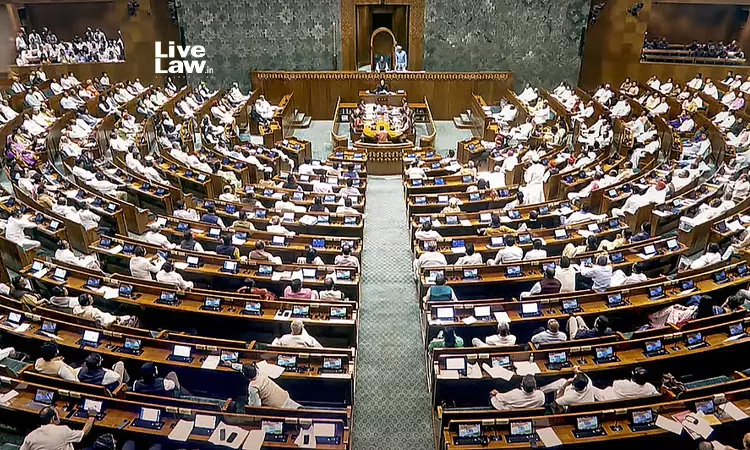
In the arcane world of Indian parliamentary procedure, it is rare for a mere listing in a legislative bulletin to trigger uproar in a state. Yet, that is precisely what happened recently. The inclusion of the Constitution (131st Amendment) Bill, 2025 in the tentative list for the Winter Session, aimed at bringing the Union Territory of Chandigarh under Article 240, set off a political...
This is a premium content
Available exclusively to
Our subscribers
Subscribe Premium 
INR 1099+GST
Your support helps us to bring you more content at
an affordable subscription scheme !!!
All payment options available
In the arcane world of Indian parliamentary procedure, it is rare for a mere listing in a legislative bulletin to trigger uproar in a state. Yet, that is precisely what happened recently. The inclusion of the Constitution (131st Amendment) Bill, 2025 in the tentative list for the Winter Session, aimed at bringing the Union Territory of Chandigarh under Article 240, set off a political firestorm in Punjab. The Ministry of Home Affairs was pushed into a swift retreat, clarifying that there was no intention to alter the administrative structure or the traditional link with the Punjab Governor.
While the Bill may have been deferred, the issue it exposed remains paramount and urgent: the governance paralysis of Chandigarh. The city, conceived by Le Corbusier as a symbol of India's modern future, is currently trapped in a legal cage built in the past. The debate has largely been hijacked by the emotive politics of territory and identity, obscuring the administrative reality that Chandigarh needs a constitutional fix for its legislative paralysis.
The Anatomy of Paralysis
To understand why the Centre proposed this amendment, one must look beyond the optics of federal power-play and into the mechanics of municipal governance. Unlike other Union Territories without legislatures (such as the Andaman & Nicobar Islands or Dadra & Nagar Haveli), Chandigarh does not fall under Article 240. Instead, its law-making is governed by a patchwork mechanism, primarily Section 87 of the Punjab Reorganisation Act, 1966.
This provision creates a unique disability. It enables the Central Govt. to merely 'extend' laws already in force in other states by way of a notification in the Official Gazette. It is a copy-paste governance model, admittedly allowing for some 'restrictions or modifications'. Let's take an example: if Chandigarh needs a law to regulate modern urban tenancy, it cannot draft one. It must wait for Punjab or Haryana (or another State) to pass such a law, which may then be extended with minor modifications. As the Supreme Court noted in Ramesh Birch v. Union of India, this power does not allow the executive to alter the 'essential legislative policy' of the borrowed act. The administration is essentially robbed of the ability to innovate.
When Chandigarh cannot 'borrow' a state law, it must turn to Parliament. The statistics are damning: in the nearly 60 years since 1966, Parliament has enacted specific legislation for Chandigarh only twice. This neglect is hardly surprising given the arithmetic of power - Chandigarh holds just one seat in the Lok Sabha. In a house of over 500 representatives, other MPs have no motivation to prioritize Chandigarh's municipal grievances over national imperatives.
The situation is equally grim when the city does borrow laws. Extending statutes from Punjab or Haryana is a fundamentally undemocratic practice, as neither state assembly includes a single elected member from Chandigarh. Thus, the city is governed either by a Parliament preoccupied with 'more' pressing issues, or by state laws imposed without representation and/or contextualised innovation.
A glaring example is the Capital of Punjab (Development and Regulation) Act, 1952. The penalties for building violations under this Act were fixed over seven decades ago. Today, the fine for certain misuse of property is merely ₹500, less than the cost of a movie ticket in the city's multiplexes. The Administration has been trying to amend this for years, but the amendment languishes waiting for a parliamentary slot that never comes. Similarly, the Chandigarh Tenancy Act, drafted to replace an archaic 1949 law, has been stuck in the corridors of the MHA for over three years. While other UTs like Daman & Diu swiftly adopted the modern Model Tenancy Act via an Article 240 regulation, Chandigarh waits.
The argument for bringing Chandigarh under Article 240 is, therefore, rooted in a desperate need for administrative efficiency. It would empower the President (effectively the Union Cabinet) to frame Regulations for the city that have the force of parliamentary law, circumventing the hurdle posed by the legislative calendar.
The Punjabi Claim
Punjab's fury over the matter emanates out of the deep scars of history and the symbolism of sovereignty.
For Punjab, Chandigarh is not just a territory, it is an unredeemed promise. The city was built to replace Lahore, lost to Partition. The Rajiv-Longowal Accord of 1985 promised Chandigarh's transfer to Punjab, a promise that remains unfulfilled. In this context, the current administrative setup, where the Governor of Punjab acts as the ex-officio Administrator of Chandigarh, is seen as the last remaining umbilical-cord connecting the state to its capital. It is a symbolic assurance that the Centre is merely a caretaker until the eventual transfer.
The fear across the political spectrum in Punjab (from Akali Dal to the Congress and AAP) is that Article 240 is a Homeric Trojan horse. The concern is that this constitutional amendment paves the way for the Centre to appoint a separate Lieutenant Governor, severing the link with the Punjab Governor and effectively turning Chandigarh into a permanent Union Territory like Delhi or Puducherry. This feeds into a larger narrative of "centralization" and the erosion of Punjab's stake, exacerbated by recent moves like the dilution of the 60:40 service cadre ratio, the imposition of central service rules on UT employees, or the recent 'Senate and Syndicate' restructuring fiasco relating to the Panjab University.
A False Binary?
However, a dispassionate reading of the Constitution suggests that this fear, while understandable, conflates two separate issues.
We must distinguish between Article 240 and Article 239. Article 240 empowers the President to make laws. Article 239(2) empowers the President to appoint the Governor of a state as the Administrator of an adjoining UT. The two are not mutually exclusive.
Legally, it is entirely possible for the Centre to bring Chandigarh under Article 240 to fix the law-making paralysis while continuing to appoint the Punjab Governor as the Administrator under Article 239(2). The assumption that Article 240 necessitates an independent LG is a political myth, not a constitutional requirement. In fact, the Centre attempted to appoint a separate administrator (K.J. Alphons) in 2016 without invoking Article 240, proving that the administrator's appointment is an executive decision independent of the legislative framework.
Therefore, the binary presented to the public, either efficiency under an LG or paralysis under the Governor, is false. We can have the legislative agility of Article 240 without dismantling the administrative link, albeit symbolic, with Punjab.
Addressing the Democratic Deficit
A more nuanced criticism of the move is the "democratic deficit." Critics, including a former Congress MP, have argued that Article 240 vests excessive legislative power in the executive, bypassing the Parliament entirely. In a city of educated, politically active citizens, replacing an absent legislature with a bureaucrat's pen feels like a regression.
This is a valid concern. Rule by executive regulation is an anomaly in a democracy. However, is the current situation democratic? Is a system where the Parliament ignores the city more democratic than one where the executive governs it efficiently?
The solution to the democratic deficit lies not in retaining the paralysis of the status quo, but in institutionalizing checks and balances. If Article 240 is applied, the Home Minister's Advisory Committee (HMAC), comprising the local MP and Mayor, must be revitalized. A convention could be established where draft Regulations are placed before the HMAC for public consultation before Presidential assent. Furthermore, the Centre must devolve genuine power to the Chandigarh Municipal Corporation, allowing the elected body to handle local governance while the Centre handles broader legislation.
An Offer They Can't Refuse
The City Beautiful needs independent governance if it is to live up to its hype. It cannot afford to wait another decade for contextualised law-making. The MHA's clarification that it wants to simplify law-making should be welcomed.
The path forward requires a carefully crafted bargain that threads the needle between administrative necessity and federal sentiment.
First, any misunderstanding about the inclusion of Chandigarh under Article 240 to unlock the city's development needs to be clarified. Crucially, it must accompany this with a statutory or binding executive assurance that the Governor of Punjab will continue to be the ex-officio Administrator. This would decouple the issue of legislative efficiency from the issue of territorial control.
Second, the Bill could include a non-obstante clause clarifying that this administrative change is without prejudice to the respective territorial claims of Punjab and Haryana. This would reassure stakeholders that the interim management of the city does not prejudice its final settlement.
Federalism in India has always been about managing asymmetries and respecting sentiments. Efficiency cannot ride roughshod over history, but neither can history or emotions be allowed to hold the future hostage. By granting the Centre the legislative agility of Article 240 while guaranteeing Punjab the political continuity of the Administrator's post, we can ensure that Chandigarh remains a city that works, without becoming a city that divides.
The author is an Advocate at the Punjab and Haryana High Court and the Supreme Court of India, and a Solicitor of the Senior Courts of England and Wales
Views Are Personal.


