Logged In, Left Out: How Code On Social Security, 2020 Only Mentions About India's Gig Workers
Tanmay Satvik
26 March 2026 5:03 PM IST
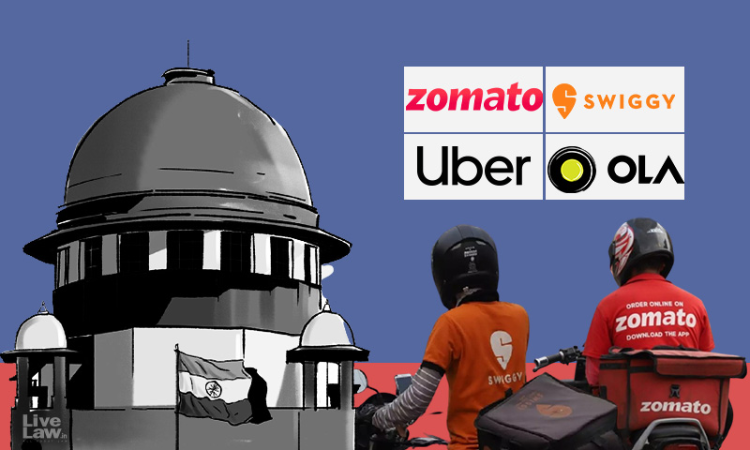
Every morning, lakhs of delivery riders log onto Swiggy and Zomato. Many of them, simultaneously, are running Magicpin or have Urban Company bookings lined up for the afternoon. They are not employees. They are not contractors in any traditional sense. They are, in the words of the Code on Social Security, 2020, 'gig workers' viz. a category India's Parliament finally saw fit to acknowledge. But acknowledgment, as it turns out, is not protection.
This piece argues that the Code on Social Security, 2020 ('the Code') is structurally incapable of protecting India's gig workforce, not merely because its definitions are vague or its enforcement mechanisms weak, but because of a fundamental and almost entirely unaddressed problem: the multi-platform worker. When a single worker earns income from more than one aggregator platform simultaneously, the Code's architecture collapses. No platform is responsible. No authority has jurisdiction. No benefit accrues. The worker, digitally hyperconnected, is legally invisible.


I. An incomplete promise by the Code: The floor which was never built
Section 2(35) defines a gig worker as 'a person who performs work or participates in a work arrangement and earns from such activities outside of traditional employer-employee relationship.' Section 2(61) defines platform workers as those who access organisations or individuals using online platforms and apps to provide services.
These definitions were celebrated, primarily by the legal community, seldom by the layperson. The Code also mandated a Social Security Fund under Section 109, with aggregator contributions pegged at 1-2% of annual turnover, or 5% of amounts payable to workers, subject to government notification. As of writing, those rates remain unnotified. The Fund exists on paper. Life and disability cover, health and maternity benefits, old age protection, all remain undelivered. What the Code gave gig workers was a legislative mention, not a legislative shield.
II. The discreet struggle of multi-platform workers: You see, you notice, but you are not aware
Walk through the economics of a typical platform worker in Delhi or Bengaluru. A delivery rider may begin the morning on Swiggy, toggle to Zomato when orders dry up, and take a Magicpin delivery in the afternoon. An Urban Company electrician may finish a booking at noon, then pick up a Dunzo task by evening. This is rational economic behaviour in a market where no single platform guarantees a living wage or consistent work.
The Code, however, is built around a dyadic relationship: one aggregator, one worker. The contribution obligation under Section 109 is cast on 'the aggregator,' singular, with respect to 'gig workers or platform workers engaged by it.' There is no provision for apportioning liability across multiple platforms. No mechanism for aggregating entitlements earned across different apps. No registry tracking cumulative labour across the gig economy.
The legal consequence is stark: if a worker earns Rs. 8,000 from Swiggy, Rs. 6,000 from Zomato, and Rs. 4,000 from Urban Company in a month, each platform sees only its own slice. The worker's total economic reality, going about Rs. 18,000 earned across three platforms, with no job security, no health insurance, and no pension, is invisible to any single regulatory authority. This is not an accidental gap. It is the result of legislative drafters designing a law around the platform's perspective, not the workers.
III. How your favourite app exploits this gap
Swiggy and Zomato classify their delivery partners as independent contractors, explicitly repudiating any employment relationship. Under the Code they are 'aggregators' subject to contributions, but only for workers 'engaged by' them. When a Swiggy delivery partner simultaneously works for Zomato, Swiggy's legal position is that the worker is not exclusively 'engaged by' Swiggy, weakening any argument that Swiggy bears full contributory responsibility.
Uber and Ola operate similarly. Their driver-partners are free, and in practice encouraged, to run rival apps simultaneously. Uber's own guidelines permit multi-apping. Yet each platform's contribution obligation is calculated in isolation. A driver earning from both receives, at best, two fractional contributions to a fund that does not yet exist in operational form.
Urban Company presents a distinct challenge. Its service professionals, the electricians, plumbers, and beauticians, often work across Urban Company, Taskbob, and direct client bookings. The Code's silence on multi-platform aggregation allows Urban Company to limit its contributory exposure to only the work done through its own platform. Each platform has a structural incentive to encourage multi-apping since it reduces the per-worker hours on which contribution is calculated, while no platform bears responsibility for the worker's total welfare.
IV. What the developed ones got bullseye on
The EU Platform Work Directive (2024) creates a rebuttable presumption of employment for platform workers. Platforms must prove their workers are genuinely self-employed, failing which employment protections apply automatically. More relevantly, the Directive requires platforms to share data with national authorities, creating infrastructure for cross-platform aggregation of worker data that India entirely lacks.
The UK Supreme Court's judgment in Uber BV v Aslam [2021] UKSC 5 held Uber drivers to be 'workers,' a third category between employee and independent contractor, entitled to minimum wage and holiday pay. The judgment turned on the economic reality of the relationship, not the label in the contract. India's Code, by contrast, creates the category of 'gig worker' without attaching to it anything like the substantive protections that the UK 'worker' category carries. Neither framework perfectly resolves the multi-platform problem, but both at least establish a worker-centric unit of analysis. India's Code does none of this.
V. The alterations the Republic needs
First, a Universal Gig Worker ID and Portable Benefits Account: The Central Government should create a Unique Gig Worker Identification Number linked to a Portable Benefits Account. Every aggregator would be required to contribute proportionate to work done through its platform. Benefits entitlement would be calculated on total contributions, regardless of source.
Second, mandatory real-time data disclosure by aggregators: Aggregators should be required to share real-time data on worker engagement, hours, tasks, and earnings, with a Central Gig Worker Registry. This eliminates the opacity that currently allows each platform to report only its own slice.
Third, notification of contribution rates without further delay: Five years after the Code's passage, contribution rates under Section 109 remain unnotified. This is inexcusable. Rates indexed to verified worker earnings across all platforms, not just one, should be notified immediately.
Fourth, a rebuttable presumption of platform liability: Where a worker can demonstrate that more than 50% of their monthly income was earned through a single platform, that platform should be presumed the primary obligor for social security contributions in that month.
Fifth, empowerment of the National Social Security Board: The Board envisaged by the Code should be given statutory authority to adjudicate disputes over contribution liability between aggregators and to compel data disclosure. Without adjudicatory teeth, it will remain advisory in practice.
VI. Winding up for good
India's gig economy employs an estimated 7.7 million workers today, projected to reach 23.5 million by 2030 (NITI Aayog, 2022). These workers are the infrastructure of urban India's service economy. They deliver food, move people, fix appliances, and provide care, being the daredevil by being unescorted by employment security, health cover, or pensions.
The Code on Social Security, 2020 had the opportunity to change this. It did not, primarily because it was designed around the platform's perspective: one aggregator, one worker, one contribution obligation. That design is wrong as a matter of economic reality, as a matter of legal architecture, and as a matter of constitutional commitment to social justice. Until India moves toward a worker-centric architecture with portable benefits, mandatory data disclosure, and real-time cross-platform aggregation, the Code will remain what it currently is: a legislative acknowledgment that gig workers exist, and a legislative failure to do anything meaningful about it.
References
1. Code on Social Security, 2020, ss 2(35), 2(61), 109.
2. NITI Aayog, India's Booming Gig and Platform Economy (2022).
3. Uber BV v Aslam [2021] UKSC 5.
4. European Parliament and Council, Platform Work Directive (2024).
5. Karnataka Platform-based Gig Workers (Social Security and Welfare) Act, 2024.
6. Rajasthan Platform-Based Gig Workers (Registration and Welfare) Act, 2023.
Views are personal.