



Recasting Representation Or Undermining Federalism? A Critical Look At Constitution (131st Amendment) Bill, 2026
Ditipriya Hazra
20 April 2026 3:00 PM IST
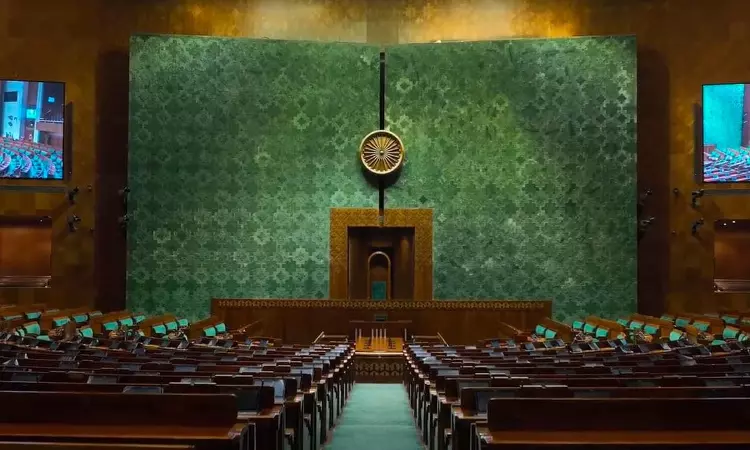
India stands at a constitutional crossroads with the introduction of the Constitution (131st Amendment) Bill, 2026, a proposal that seeks not merely to expand the Lok Sabha to 850 seats but to recalibrate the very grammar of political representation in India. While the stated objective is to align representation more closely with demographic realities, the amendment raises a foundational question - can numerical equality alone define democratic legitimacy in a Constitution that is equally committed to federal balance? The Bill, therefore, is not just an exercise in institutional expansion, but a moment of constitutional rethinking - one that demands scrutiny beyond its surface rationale.
At the heart of the issue lies the existing constitutional design under Articles 81 and 82, which embodies a delicate compromise. Article 81 permits population-based allocation of seats, but not in absolute terms; it operates within a framework that has historically accommodated federal concerns. Article 82, by mandating periodic delimitation, ensures adaptability while simultaneously allowing Parliament to control its timing. The proposed amendment, by expanding the House and advancing delimitation, risks converting what was once a balanced constitutional mechanism into a predominantly majoritarian instrument. The shift is subtle but significant- from calibrated representation to potentially unrestrained demographic determinism.


The historical context of the delimitation freeze underscores this concern. The freeze, introduced through the 42nd Amendment and extended by subsequent amendments, was not an arbitrary suspension of constitutional process but a conscious normative choice. It sought to prevent a perverse outcome- that states demonstrating demographic discipline would suffer a diminution of political voice. In that sense, the freeze represented a rare instance where the Constitution privileged distributive fairness over formal equality. The proposed amendment, by reopening delimitation without adequately addressing this underlying rationale, risks undoing a carefully constructed equilibrium.
The core concern, therefore, is not merely one of seat redistribution but of federal asymmetry. A population-driven reallocation is likely to enhance the representational weight of states with higher demographic growth, while relatively diminishing that of states which have achieved population stabilisation. This creates a structural paradox-where adherence to national policy goals such as population control may translate into political disadvantage. The constitutional question that emerges is whether representation should reward demographic expansion or uphold inter-state equity. In privileging the former, the amendment risks transforming representation into a reflection of demographic momentum rather than a product of constitutional balance.
This tension is further sharpened when viewed through the lens of India's quasi-federalism. Unlike classical federations where upper chambers robustly safeguard state interests, India's Rajya Sabha, though federal in design, does not fully offset disparities in the Lok Sabha. Consequently, any substantial reconfiguration of Lok Sabha representation has a disproportionate impact on the federal equilibrium. The proposed expansion, by amplifying population-based disparities, may therefore tilt the balance of power in a manner that weakens the structural safeguards available to less populous states. The question is not whether population should matter-it undoubtedly must-but whether it should matter exclusively and decisively.
Equally troubling is the procedural dimension of the amendment. The decision to enable delimitation prior to the first Census post-2026 raises concerns about constitutional fidelity. The existing timeline was not merely administrative but was anchored in the principle that representation must be based on updated, reliable, and nationally uniform data. Advancing this exercise risks introducing arbitrariness into a process that demands the highest degree of objectivity. In constitutional terms, the legitimacy of delimitation is as important as its legality; any perception of premature or inadequately grounded restructuring could undermine public confidence in the representative process itself.
The linkage between delimitation and the implementation of women's reservation introduces an additional layer of constitutional complexity. While the objective of enhancing gender representation is normatively compelling, its conditional dependence on delimitation raises questions of sequencing and intent. By tying two distinct constitutional reforms together, the amendment risks instrumentalising one objective to justify another. This interdependence warrants closer scrutiny, particularly when both reforms independently implicate questions of representation and fairness.
From the standpoint of constitutional doctrine, the amendment invites engagement with the Basic Structure Doctrine, particularly its emphasis on federalism and equality. The Apex Court has consistently held that while Parliament may amend the Constitution, it cannot alter its basic features. A reconfiguration of representation that systematically disadvantages certain states or disturbs the federal balance may be viewed as an erosion of these features. The critical issue is not whether the amendment changes the Constitution-it undoubtedly does-but whether it alters it in a manner that affects its identity.
Finally, the practical implications of such an expansion cannot be separated from its constitutional analysis. An 850-member Lok Sabha would significantly alter the dynamics of parliamentary functioning, raising concerns about deliberative efficiency, legislative coherence, and institutional capacity. Most importantly, the political consequences of seat redistribution are likely to be profound, reshaping electoral strategies, regional influence and coalition dynamics in ways that extend far beyond the formal text of the amendment.
In conclusion, the 131st Amendment Bill, 2026 presents a paradox at the heart of India's constitutional democracy. In seeking to make representation more proportionate, it risks making it less equitable; in attempting to strengthen democracy, it may inadvertently weaken federalism. The challenge, therefore, is not simply to expand the Lok Sabha, but to do so in a manner that preserves the constitutional balance between people and states. Absent such balance, the amendment may come to represent not a deepening of democracy, but a subtle reordering of its foundational principles.
Author is an Advocate. Views are personal.


