



Constitutional But Unfunded: Section 63 BSA And Legal Aid Litigant
Gautami Seth & Surabhi Kumari
18 Oct 2026 10:00 AM IST
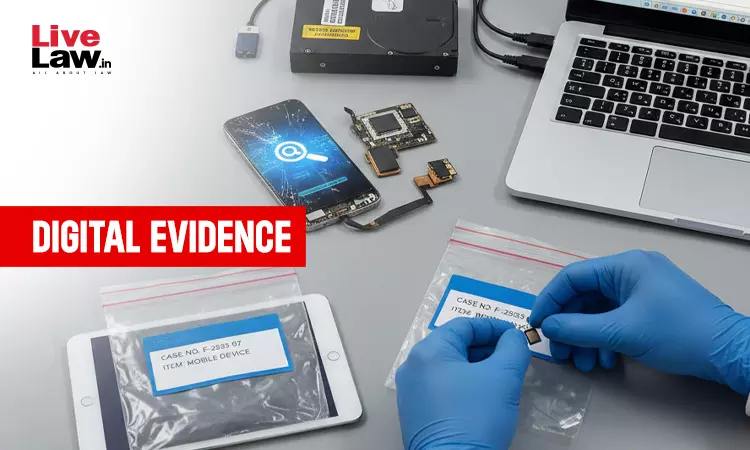
On August 19, 2026, the Delhi High Court, in Zeeshan Ekhlaque & Anr. v. National Legal Services Authority & Ors., issued notice to NALSA and the Union Ministries of Law & Justice and Home Affairs to respond to the petition on whether legal aid litigants can afford an expert needed to sign Part B of the forensic certificate for electronic evidence under Section 63 of the Bharatiya Sakshya Adhiniyam, 2023 (BSA). The PIL claimed that NALSA's response to an RTI application confirmed there is 'no provision of expert assistance' to legal aid litigants for obtaining certification under Section 63 of the BSA. A Division Bench of Chief Justice Devendra Kumar Upadhyaya and Justice Tejas Karia formed the prima facie view that an inability to comply with Section 63 could impinge on the right to access justice, and directed NALSA to consider a scheme for free forensic assistance to legal aid beneficiaries and report back to the court. The court then listed the case for hearing in October. The scheme, however, should also include disputing the evidence and not just proving it.
A scheme that funds only the examination of evidence, but not challenges to its validity, creates an imbalance in the system. The key solution is to address the costs associated with disputes to the evidence presented.
Section 63 of the BSA replaced Section 65B of the erstwhile Indian Evidence Act, 1872, as the provision governing when electronic material such as emails, messages, and device data can be admitted as evidence without producing the original. The basic structure is similar to the old law; the change is in the certification instead. The former Section 65B (4) required a single signature from a responsible officer. In contrast, the new Section 63(4) requires completion of two parts in the certificate schedule. Part A is filled in and signed by the person who controls the device or record, and must disclose the hash value. Part B requires an expert's signature to attest to the integrity of the electronic record, adding another layer of authenticity to the hash value.


A legal aid litigant needing to prove the authenticity of a WhatsApp chat must provide a complete certificate including Part B issued by an expert under Section 63 BSA. What happens if the litigant is unable to afford it? States and well-resourced private parties can access forensic expertise more easily than individual litigants. In another scenario, an indigent accused's custody is extended because of delays in the state's forensic reporting system, as no expert is available to analyse the electronic records. Delays in examination and a shortage of sanctioned experts at Forensic Science Laboratories aggravate an already precarious scenario.
The judicial precedent, as in Navjot Sandhu (2005), permitted electronic evidence to be presented without a certificate, which was overruled in Anvar P.V. (2014), making the certificate mandatory; the relaxation later came in Shafhi Mohammad (2018) for cases where the party didn't control the device, and finally Arjun Panditrao Khotkar (2020) overruled Shafhi, making the certificate a mandatory condition. This was incorporated in Section 63 of the BSA to safeguard against manipulation of electronic evidence and keep its admission consistent with due process. The complexity of obtaining the certificate requires accessibility, especially for the indigent, and without it, due process and fairness of the outcome are compromised.
In the May 2026 Pune Bar Association case, the Supreme Court, upholding Section 63(4) of the BSA, concluded that it was not manifestly arbitrary as it was rationally connected to the Act's object of ensuring the authenticity and integrity of electronic records. The Court clarified that the Madras High Court's rigid view that Part B must be signed by a notified examiner under Section 79A of the Information Technology Act was not a binding precedent. Thereby leaving the Part B question open for a future case. The Court observed that if the credentials of the expert are verifiable and the court believes the person has proven expertise in computer science and cyber forensics, they may sign Part B. The petitioner's main concern was that very few Section 79A examiners are notified. Expanding the pool benefits only those litigants who can afford to hire from it. The Court was not asked, and did not address, who bears the cost of that expert.
In September 2026, the Supreme Court, in The State of Maharashtra & Anr. v. Momin Moiuddin Gulam Hasan @ Moin Mistri & Anr., upheld the decision to extend the time to file the charge sheet, which had been sought to obtain sanction and complete Forensic Science Laboratory analysis. This extension can prove to be costly for an indigent accused who depends almost entirely on legal aid services. Section 329 of the Bharatiya Nagarik Suraksha Sanhita, 2023 (BNSS) allows reports from specific government scientific experts to be used directly as evidence in a court inquiry or trial. This section corresponds to Section 293 of the old Code of Criminal Procedure (CrPC), under which the accused can ask for the expert to be summoned, but without their own expert, their lawyer has nothing to counter it. Overburdened legal aid lawyers in India lack access to independent forensic laboratories or the money to hire private digital experts. Without an independent expert to spot technical flaws, an indigent accused's lawyer may not even know what questions to ask, effectively leaving the state's FSL report completely unchallenged.
The question is not whether the legal aid litigant gets access to forensic evidence certification from an expert; it is rather who pays for it. Access to an expert is also questionable in spatial and temporal terms; in a metropolitan area, it is easier to reach a credible expert. If the legal aid scheme targets only urban set-ups, it loses its justification for the problem it set out to resolve.
The resolution is not novel. Section 2(1)(c) of the Legal Services Authorities Act, 1987 says legal services include rendering any service in the conduct of any case or legal proceeding, which Regulation 13 of the National Legal Services Authority (Free and Competent Legal Services) Regulations, 2010 confirms. Legal Services Institutions under this regulation provide financial aid for additional incidental expenditures in an ongoing case, like court fees, compensation for court-appointed commissions, summoning witnesses or documents, and expenses for obtaining certified copies, etc. The list is illustrative, not exhaustive, so an expert's cost is a similar litigation expense that could easily fit within it. The Regulation already provides for disbursement on the advice of the panel lawyer or Monitoring Committee. The proposed scheme can include the cost of an expert examining electronic evidence without any legislative amendments.
The law is accessible only when the legal aid litigant can comply with Section 63's requirements. Whichever scheme NALSA eventually files with the court should address whether it covers the cost of both examining and disputing the presented evidence; is it accessible to everyone and not just urban low-income populations; and whether it has independent oversight of the experts it empanels. A right that exists on paper but collapses due to lack of capacity is not a fix. It is a slower version of the same problem.
Author Gautami Seth is the Manager for Research and New Initiatives & Surabhi Kumari is a Legal Research and Content Associate at India Legal Research Foundation. Views are personal.


