



The Architecture Of Uncertainty: Understanding "Blindspot" And Contractual Trap In 2025 Labour Codes
Nikhil.S.Nair
24 Feb 2026 10:09 AM IST
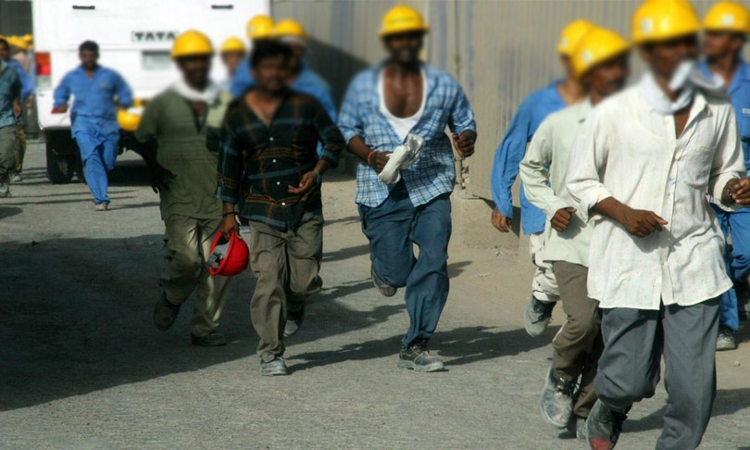
The formal announcement of India's four broad Labour Codes on November 21, 2025, was the biggest change in the country's industrial relations since the post-colonial legal framework was put in place. The State has completely rewritten the social contract between capital and labour by combining 29 separate central laws into the Code on Wages (2019), the Industrial Relations (IR) Code (2020), the Code on Social Security (2020), and the Occupational Safety, Health, and Working Conditions (OSH) Code (2020).
Now that this new government has been in power for more than three months, the official talk of "simplification" and "flexibility" has given way to a stark reality of procedural uncertainty for the growing number of salaried professionals. People who work in these salaried jobs are usually described as having jobs that need a lot of knowledge, are not manual, and are administrative or clerical, and they usually do their work in an office. These workers are now in a "contractual sovereignty" zone since the new Codes have taken away the legal protections that used to be available to the conventional "workman." Instead, they are stuck with the strict rules of private contracts and the slow pace of civil court cases. https://www.livelaw.in/top-stories/centre-brings-four-labour-codes-into-operation-with-effect-from-november-21-310772The main problem with this vulnerability is that it changes how the workforce is classified in a subtle way. The Industrial Disputes Act (IDA) of 1947 focused on protecting the "workman," which usually meant those who made less than ₹10,000 a month. The 2025 Codes create two groups: the general "employee" and the protected "worker."


The term "employee" now includes everyone from entry-level workers to senior management. However, basic rights like getting paid on time and having protections against being fired for no reason, like retrenchment compensation and the right to be reinstated, are only for the "worker" group. The IR Code (2020) upped the maximum monthly salary for "worker" category to ₹18,000, which is very important. Most salaried professionals are legally classified as "non-worker employees," which means they are not protected by specialised Labour Tribunals and must go through the expensive civil court system for any complaints. This is especially true in big cities where entry-level professional salaries often exceed this limit. Many lawyers call this exclusion the "Civil Court Impasse," which is a place where justice is not served. When a "worker" is fired, they can go to special courts to ask for "reinstatement with back wages." The Indian Contract Act of 1872 and the Specific Relief Act of 1963, on the other hand, control the salaried professional labour. Section 14(d) of the SRA makes it very hard to enforce a contract that is "in its nature determinable."
Since almost all private employment contracts have termination clauses that let people leave with a notice period, courts often say that they are "inherently determinable." In Gaurav Rajgaria v. Maruti Suzuki India Limited & Ors. (2025 DHC 7815-DB), the Hon'ble Delhi High Court made it clear that, while the SRA often bars specific performance (reinstatement), employees must instead file lawsuits for damages, which the courts often limit to the salary for the notice period. The most upsetting example of this legal gap is the growing number of forced resignations and arbitrary terminations that happen when someone is told to "resign or be fired." This is called "constructive dismissal" in legal terms. It happens when an employer employs threats or makes the workplace unbearable to force someone to quit, which lets them bypass the formal termination process and the costs that come with it. It is very hard for an employee who is not working to prove such coercion in a civil court because of the difficulties in gathering evidence and the "troublesome" remedies that can take years to resolve. The ambiguity is made worse by the fact that courts are putting the sanctity of contracts first.
In Rakesh Kumar Verma v. HDFC Bank Ltd. (2025 SCC OnLine SC 2320), the Supreme Court said that "exclusive jurisdiction" clauses are valid. This means that employers can require that all legal issues be heard in a single metropolitan hub, no matter where the employee is stationed. For a professional who has just lost their job, the logistical and financial costs of suing in a distant city frequently make it impossible for them to get the damages they deserve.The fact that the salaried professional workforce pays a lot of taxes to the Indian economy makes this systemic neglect even more ironic. For the first time ever in India, personal income tax collections have been higher than corporate tax collections. The share of personal income tax in total direct taxes rose from 38.1% in FY14 to 53.4% in FY24. Higher stated salaries in the corporate sector have been a major factor in this shift in government finances. Over the course of a decade, personal tax receipts rose from ₹2.4 trillion to ₹8.3 trillion. This part of the economy is the most important part of the country's fiscal engine, but it is also the least protected by the new industrial architecture, which means it pays a larger premium for fewer legal protections. It is also imperative to note that the centre tells the Delhi High Court that the rules for the labour code will be finalised by the end of February.The human cost of this unstable process is becoming a national mental health crisis. The Confederation of Indian Industry (CII) and MediBuddy's 2025 Corporate Wellness Index shows that 86% of corporate workers in India have mental health problems. This means that 4.3 crore people in a workforce of 5 crore are unwell. The survey shows that 78% of professionals are burned out, which is much higher than the global average, and that they are 22% more likely to commit suicide.
According to data from the International Labour Organization (ILO), India is the fifth-most overworked country in the world, with workers putting in an average of 45.7 hours a week. Even if these numbers are high, the OSH Code (2020) doesn't say anything about psychosocial dangers. It has always meant "workplace safety" to mean physical protection, and burnout is not considered a "occupational disease" that can be compensated for. The lack of collective bargaining power makes this situation of weakness even worse. Union density in India's private sector is still very low at 1.8%. This is because professionals see unions as vestiges of the blue-collar era. A lot of salaried workers have a "individualistic mindset," which means they think their only power comes from their own skills and "job-hopping." But the IR Code (2020) has made it harder for organizations to work together. To be recognized as the "sole negotiating agent," a union must have the backing of at least 51% of the workers. This is a very high bar to clear in large, spread-out corporate offices. Section 62 of the IR Code also makes the 14-day strike notification requirement apply to all businesses. This takes away the element of surprise and lets employers start mandatory conciliation proceedings that make any future strike illegal.
Many places around the world have come up with useful laws to solve these difficulties. The Employment Claims Tribunals (ECT) in Singapore are a special place where people can file wrongful dismissal claims, including "involuntary resignations." The ECT is quick and cheap, and attorneys aren't allowed to represent parties to keep expenses down. The Employment Rights Act 1996 in the UK recognizes "constructive dismissal" as a legal term. This means that employees can claim unfair dismissal if they quit because their employer broke the terms of their contract. The Industrial Safety and Health Act in Japan includes mental health. Companies with more than 50 employees must take "Stress Check" tests every year, and if significant stress is found, they must take steps to fix it. Australia has a high annually indexed High Income Threshold (HIT) (currently AUD 183,100) to decide who is eligible for unfair dismissal protections. This means that mid-level professionals can go to specialised labour arbiters instead of civil courts. Without strong legal protections, the Hon'ble Supreme Court of India has become an important watchman. The Hon'ble Supreme Court used the Dominant Nature Test to pierce the corporate veil in the important case of Srinibas Goradia v. Arvind Kumar Sahu & Ors. (2025 INSC 1467). The Court said that an employee with the title "Front Office Manager" was a "workman" because his main job was clerical and he didn't have the power to supervise others. The Hon'ble Court said that titles are often just a way for management to "eyewash" people; the real test is the "principal nature of work actually performed."
In the same way, the Hon'ble Court declared in Swati Priyadarshini v. State of Madhya Pradesh & Ors. (Civil Appeal No. 9758 of 2024) that termination decisions must be fair, clear, and free of stigma. This lets the courts look at the situation of a "termination simpliciter." https://www.livelaw.in/articles/international-law-erosion-sovereignty-519806To bring things back into balance, politicians need to do more than just combine things. They need to look at the unique problems that paid professionals face. India's knowledge economy can't have a future if it doesn't have laws that protect people from having unequal bargaining power while still allowing them to sign contracts freely. A calibrated reform that makes it easier for non-worker employees to get to specialised labour adjudicatory forums, legally recognises constructive dismissal, includes psychosocial safety in occupational health standards, and makes sense of the wage thresholds that keep modern professionals from getting protection is no longer just a good idea; it's now necessary for the economy. If the Labour Codes were meant to bring India's industries up to date, their success will be judged not only by how easy it is for businesses to run, but also by how much legal certainty and dignified security they give to the millions of people whose intellectual work supports that growth. Without this kind of legislative intervention, the current structure could lead to a silent inequality, where the best educated part of the workforce is ironically the least protected.
The author is an advocate practicing at Supreme Court and Delhi High Court. Views are personal


