



Cost Of State Neglect: How India's Writs Are Reinventing Accountability In Public Healthcare
Sameer Raj Mina
17 Sept 2026 11:00 AM IST
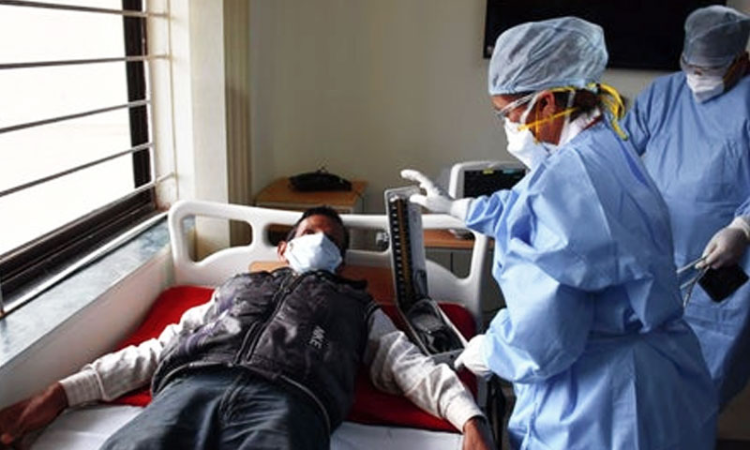
How about a case where one visits a government hospital and leaves in a condition that is disabling, not because of the inadequacy of the surgeon doing the operation but because of the lack of basic sterilisation equipment in the operation theatre? In whose court will that issue of responsibility arise, and what is its final forum for resolution?
The time is finally ripe for this long-overdue constitutional answer to that question, which for years has been clouded by the lack of clear jurisdictional lines. In Gobinda Chandra Debnath v. State of West Bengal & Ors. (Calcutta High Court, September 2026), a Division Bench rejected a Single Judge's earlier order dismissing the petition to the civil court and ruled in favour of constitutional relief of the claimant under Article 226.
The Court found that conducting operations in state hospitals without providing sufficient clinical facilities breaches not only tort law but also Article 21 of the Constitution.
From Private Tort to Constitutional Wrong
The conventional legal response to medical negligence in India has been a bifurcated one: criminal liability under Jacob Mathew v. State of Punjab (2005), where the Supreme Court adopted the Bolam standard and placed the threshold for criminal prosecution high, requiring gross and obvious recklessness and civil or consumer liability for compensation. This two-track system was designed, in theory, to balance accountability with the practical risk of defensive medicine.


That architecture, however, was built for private healthcare. In the public hospital context, it has consistently failed patients. Civil suits take a decade or longer. Consumer forums, after Indian Medical Association v. V.P. Shantha (1995), exclude free government medical services from the definition of "service" under consumer law, since no consideration is exchanged. The patient who receives free treatment at a public hospital is invariably the most economically vulnerable and is thus locked out of the one forum designed for relatively swift redressal.
This jurisdictional vacuum did not go unnoticed. High Courts, exercising writ jurisdiction, began filling it and in doing so, they drew on a constitutional tort doctrine whose foundations were laid not in health law but in custodial rights violations.
The Constitutional Tort Doctrine: Its Origins and Trajectory
It is a fact that the principle of being able to make a case for monetary damages based on a violation of fundamental rights without having to show the existence of an equivalent civil cause of action was enunciated in the case of Rudul Sah vs. State of Bihar (1983). The court's reasoning was stark: the right to move to the Supreme Court under Article 32 would be illusory if it could not furnish adequate relief. It was after a decade that Nilabati Behera vs. State of Orissa (1993) laid down the proposition more formally- the government cannot raise the plea of sovereign immunity as a defence in cases of constitutional torts. Damages in public law are not an alternative to damages under private law; rather, they are an independent claim for an independent violation.
The bridge to health rights was built in Paschim Banga Khet Mazdoor Samity v. State of West Bengal (1996) where the Supreme Court held that denial of emergency medical treatment by government hospitals on grounds of lack of capacity violated Article 21. Crucially, it located the state's obligation not merely an administrative failure but as a constitutional duty: the government that offers public healthcare takes on a positive obligation to maintain it at a level that does not endanger the patients who rely on it.
What the Gobinda Chandra Debnath case does is fuse these two lines of authority. If the state is constitutionally obligated to maintain functional healthcare infrastructure, and if its failure to do so directly causes physical harm to a patient, the resulting damage is not a tort in the private law sense; it is a constitutional deprivation. The writ court is, accordingly, the appropriate forum, and strict liability is the appropriate standard.
The Analytical Divide: Clinical Error Versus Systemic Failure
The most consequential contribution of the emerging jurisprudence is the distinction it draws between two fundamentally different categories of harm.
Clinical error is a surgeon's misjudgement during a procedure, a radiologist's missed finding, or a pharmacist's dispensing mistake involves an individual practitioner departing from the standard of reasonable professional care. These cases belong, broadly, to the Bolam framework. They require expert evidence, fact-intensive analysis, and a forum equipped to weigh contested medical opinion.
Infrastructural failure is categorically different. When a hospital operates without functioning sterilisation equipment, without minimum staffing in the ICU, without emergency blood supply, these are not decisions attributable to any individual clinician. They are administrative and governmental failures. The surgeon who operates in such conditions may not be personally negligent at all; the fault lies upstream, in the state's failure to fund, equip, and maintain the institution it has placed in a position of public trust.
This distinction matters enormously for legal accountability. In cases of systemic neglect, it is impossible and inappropriate to run the analysis through an individual doctor's conduct. The state, as institutional operator, cannot immunise itself by pointing to a medical board report that exonerates the attending physician. The physician may indeed have done all that could be expected of them in the circumstances. It is the circumstances themselves that were unconstitutional.
Strict Liability, Sovereign Duty, and the Immunity That Cannot Stand
The application of strict liability to state health failures raises an important structural point. In private law, strict liability has been confined through the rule in Rylands v. Fletcher and its Indian evolution in M.C. Mehta v. Union of India (1987) largely to hazardous industries. In constitutional tort, the logic is different. The state cannot be permitted to rely on negligence thresholds designed to protect private individuals when it is acting in its sovereign capacity and exposing citizens to systemic harm through its own institutional choices.
The Nilabati Behera court explicitly rejected the defence of sovereign immunity in fundamental rights cases, noting that it was a defence available only in private law and had no place where the state itself was the rights-violator. Applied to public healthcare, this means that a state government cannot argue, in a constitutional tort claim, that its failure to stock a district hospital with ICU equipment was merely the result of budgetary constraints or administrative oversight standard defences that might succeed in a civil suit when that failure cost a patient their mobility or their life.
A New Jurisdiction
The most underappreciated consequence of this doctrine is jurisdictional. Traditionally, courts redirected compensation claims to civil forums when the wrong was "purely tortious." That gatekeeping logic is now fracturing. Once a writ court accepts that infrastructural failure is constitutionally cognisable, it implicitly claims competence over causation, care standards, and quantum factual determinations it has historically disclaimed.
The doctrinal opening extends well beyond hospitals. The reasoning in Gobinda Chandra Debnath is anchored not in medicine but in state-operated welfare infrastructure. A deficient government school where a child is injured, a collapsing public shelter, a contaminated state food facility each shares the same constitutional structure: Article 21 harm caused by institutional failure, not individual misconduct. Practitioners can now credibly structure such claims as constitutional tort petitions under Article 226, bypassing civil court queues and sovereign immunity pleadings alike. The state's plea of budgetary constraint, dressed as administrative discretion, carries far less weight before a writ court than before a civil judge.
The Doctrine India Still Needs to Write
The constitutional tort in public healthcare is a half-built structure. The entitlement side state duty, cognisable infrastructure failures, and the unavailability of sovereign immunity is increasingly settled. What remains entirely undeveloped is the remedial architecture. Lump-sum awards between ₹5 lakh and ₹20 lakh, arrived at through judicial intuition, are constitutionally precarious: if the wrong is serious enough to be a fundamental rights violation, the remedy cannot be an administrative consolation payment.
What the doctrine needs is a bifurcated model: writ courts declare the violation, grant interim relief, and issue mandamus to remediate the infrastructure; full compensatory damages requiring expert testimony and causation analysis are remitted to a fast-track tribunal with a mandatory six-month timeline. This is not a retreat from the constitutional remedy; it is its completion. The alternative is dangerous. Ad hoc awards invite legislative reversal or Supreme Court retrenchment that could extinguish the doctrine entirely. India's constitutional courts have spent four decades expanding Article 21 into a substantive right to life. Building a principled remedial framework now is the surest way to ensure that expansion holds.
Author is an LLM scholar at Gujarat National Law University (GNLU). Views are personal.


