



Counting Women's Unpaid Care Work Is Not Enough: Data Must Become Constitutional Duty
Namit Srivastava
20 Nov 2026 3:00 PM IST
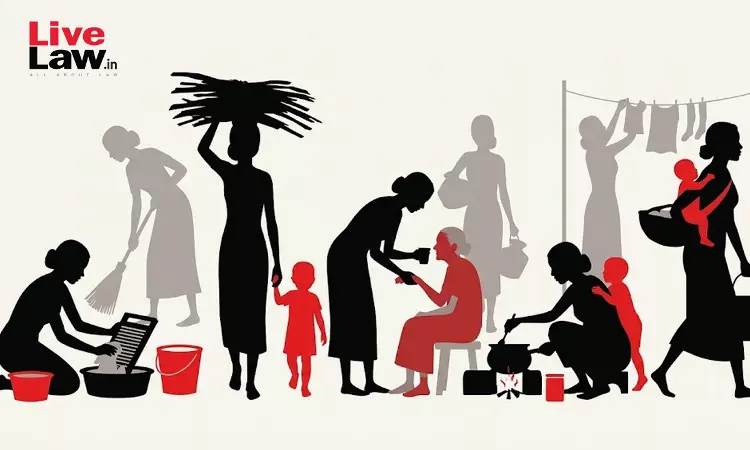
In the span of four days this October, the National Statistics Office announced two changes to how India counts work. On October 23, it released a press note on the Periodic Labour Force Survey (PLFS). From January 2027, the survey will ask people aged fifteen and above about unpaid household work, caregiving, volunteering, unpaid traineeships and production for own use. On October 26, it proposed new questions for the Annual Survey of Unincorporated Sector Enterprises (ASUSE), 2027-28. For the first time, women entrepreneurs will be asked about the gender-specific constraints they face in running their businesses. Comments on that proposal closed on November 15.
Both changes are welcome, but neither helps the woman who quits her job because no one else can pick the children up at four. The claim, here, is a modest one. Indian constitutional law already accepts that unpaid care work has economic value and that it limits women's access to paid work. What the law has not done is treat the State's knowledge of that limit as a source of duty. Better data leaves the State less room to say it did not know, and that is why it matters in law, not just in economics.


The State Has Known For Some Time
The Time Use Survey of 2024 already tells most of the story. Women aged six and above who did unpaid domestic work spent 289 minutes a day on it, while men spent 88. On unpaid caregiving, the figures were 137 and 75 minutes. Participation was just as uneven: on the reference day, 81.5 per cent of women did unpaid domestic work, against 27.1 per cent of men. In the 15 to 59 age group, a quarter of women took part in employment and related activities, compared with three-quarters of men.
These are averages per participant, and they do not prove that care burdens cause low workforce participation. They do, however, show where women's hours go.
The courts have seen these numbers before. In Kirti v. Oriental Insurance Co. (2021), Justice N.V. Ramana relied on the first Time Use Survey of 2019. That survey had recorded 299 minutes for women and 97 for men. He held that fixing a notional income for a homemaker recognises that her work contributes to the family and to the economy, even if economic analysis has long ignored it. That was five years and one survey ago, and the numbers have barely moved.
From Valuing Care To Recognising It As A Constraint
Kirti valued care at the moment of its loss, as compensation after a death. Later decisions go further and treat care as something that decides whether a woman can use her rights at all.
In Shalini Dharmani v. State of Himachal Pradesh (2024), a bench led by Chief Justice D.Y. Chandrachud said that women's participation in the workforce is not a privilege but a constitutional entitlement under Articles 14, 15, 19(1)(g) and 21. Without child care leave, the Court noted, a mother may simply be forced to leave her job.
In Hamsaanandini Nanduri v. Union of India (2026), the Court struck down the three-month age limit on maternity benefit for adoptive mothers under Section 60(4) of the Code on Social Security, 2020. Maternity benefit, it held, attaches to motherhood and not merely to childbirth. The judgment devotes a full part to the institutional invisibility of household and care work. It also urged the Union to recognise paternity leave, observing that without it, gendered roles in parenting stay in place.
Read together, these cases mark a shift. Care is no longer just a private virtue, valued only when it is lost; it is a condition that decides whether constitutional freedoms are real.
Yet the remedies share a limit. Child care leave and maternity benefit work inside formal employment, much of it in government. Most women who carry India's care burden are outside that world. They work from home, in family enterprises and in the informal economy, and are often not counted as working at all.
Why Measurement Changes The Legal Question
The legal tool for this already exists. In Lt. Col. Nitisha v. Union of India (2021), the Supreme Court recognised indirect discrimination under Articles 14 and 15(1). A rule can look neutral and still discriminate if it falls hardest on a group that already carries structural disadvantage. As one commentary on the judgment points out, the Court accepted that statistics help prove such claims, and that structural discrimination often needs structural remedies.
Much of Indian labour and welfare law assumes a worker with no one to look after. Take the crèche: under Section 67 of the Code on Social Security, the duty to provide one arises only in establishments with fifty or more employees. Maternity benefit, too, depends on working in a covered establishment. These rules are neutral on paper, but their effect on women in small enterprises and home-based work is easy to predict. The rules never reach them.
The problem for anyone challenging such rules has been evidence. Disparate impact has to be shown, and official data on informal and own-account work has been thin. The new surveys will change that. Annual PLFS estimates of unpaid work will show who carries the load, and ASUSE data will show what holds back women-run enterprises. This is exactly the kind of statistical record that Nitisha treated as useful. Once the State has recorded the burden in its own reports, it cannot easily defend a neutral rule by claiming not to know its effects.
This should not be overstated. Courts cannot order a national childcare system, and how public money is spent remains a choice for the legislature. Even Shalini Dharmani worked through a committee to frame policy rather than through a mandate. The point is narrower. When the State builds labour and welfare schemes on its own data, it should be able to explain why a gap it has measured needs no response. Article 15(3) allows special provision for women, while Articles 39(a) and 42 point the State towards equal livelihoods and humane conditions of work. Measured disadvantage gives these provisions something concrete to act on.
What Should Follow The Data
Four steps would turn recognition into policy.
First, publish the new PLFS and ASUSE results in a usable form. They should be broken down by sex, age, location and household type, not reduced to headline figures.
Second, Parliament should act on the Court's suggestion on paternity leave. This is a measure of redistribution, not one more benefit for women. It also answers a familiar criticism of child care leave given only to mothers, which is that such leave can quietly confirm that caring is a woman's job.
Third, care infrastructure must reach women below the crèche threshold. Public crèches run with anganwadis and local bodies would do more here than leave entitlements that only formal employees can use.
Fourth, ASUSE findings on women entrepreneurs should feed into credit and enterprise schemes. Lack of time and limited mobility should be treated as design problems, not personal bad luck.
None of this means paying wages for housework, which is a larger and more contested debate. It only asks the State to take seriously what it is about to measure.
Soon, the State will have an official account of who does India's unpaid work and what it costs them. The Supreme Court has already said that women's participation in paid work is an entitlement, not a privilege. The real test lies between these two facts: will this knowledge, once official, stay in survey reports? Or will it be treated as what it really is: notice, and the beginning of a duty?
Author is an Assistant Professor at School of Law, CHRIST (Deemed to be University), Delhi NCR Campus. Views are personal.


