



Deepfakes & Deception
Veera Anand
25 May 2026 8:00 PM IST
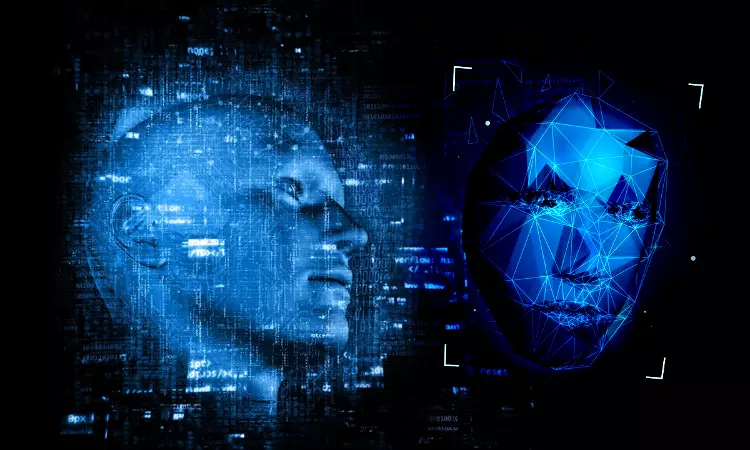
Deepfakes are no longer a technological curiosity. Traditionally, the law has relied on the trustworthiness of what people hear and see, but deepfakes fundamentally challenge that assumption. Synthetic audio, video, and images can now imitate real people and real events with enough precision to mislead viewers before any verification is possible. That is what makes deepfakes more than a technological novelty. The emergence of deepfakes presents a distinct regulatory challenge, as the existing legal frameworks were not designed to address highly realistic synthetic media. Although 'deepfake' is not formally defined under Indian law, both Indian and global regulatory approaches are beginning to treat synthetic media as a distinct category, focusing more on disclosure and transparency than on strict definitions.
Several years ago, they were talked about as primarily an intriguing use of artificial intelligence. But now, they are being used to impersonate individuals in authority, obtain consent, embarrass private individuals, and commit fraud on a large scale. It is not just the fact that content can be faked, but that counterfeited content can now appear believable enough to destroy trust itself. Deepfakes, in that regard, do not simply produce falsehoods. They undermine the fundamental principles of digital communication. The law in India has started to acknowledge that fact, particularly the Information Technology Act, 2000, the IT Rules, 2021, and more recent suggestions by MeitY concerning synthetically generated information.


A deepfake is an artificial media that has been created or modified through synthetic intelligence to seem natural, it may involve a face, a voice, a video clip, or a photograph. This technology is not illegal in nature as it may be used in entertainment, accessibility, education, or the production of content. The problem arises with the deception, exploitation, or manipulation of data with the help of synthetic media. Now, this may lead to an illegal result. To address this, on October 22, 2025, MeitY issued an explanatory note stating that “artificially or algorithmically created, generated, modified or altered… in a manner that is reasonably likely to be considered authentic.” This formulation is significant as it shifts focus from the method of creation to the effect of the content namely, its capacity to appear real and thereby mislead. Second, by using the standard of what is “reasonably likely” to be considered authentic, the note introduces an objective threshold that can guide both enforcement and compliance.
The negative impacts of deepfake videos are numerous, but they are all related to each other. For example, one of the first issues that comes to mind is the spread of misinformation. The deepfake video of a well-known person may become viral even before it is possible to debunk the information. From a political perspective, it will distort the people's debate and shape their opinions without verification. Another important issue is the breach of privacy, which is quite commonly used to create non-consensual explicit photos. A third injury is fraud. Synthetic impersonation and voice cloning can also facilitate easier scamming of the victims into releasing information or sending money. The 2025 note of MeitY mentions, in particular, the risks of misinformation, election manipulation, reputational damage, extortion, and non-consensual intimate imagery. In practice these are not distinct categories. They are various manifestations of one latent vulnerability, which is fabricated trust.
The Indian law already has provisions that can be applied to some deepfake-related activity, although they are indirect. Information Technology Act, 200 contains provisions on identity theft, personation cheating, privacy infringements, obscene electronic contents, and sexually explicit contents. These are also significant as a lot of deepfakes are based on impersonation, harassment, extortion, or reputation damage. However, the Act was not written keeping AI-created synthetic media in mind. It deals with maladaptive behavior once it has taken place. It does not specifically control synthetic creation as a category. Consequently, the cases of deepfakes frequently have to be forced into the older legal boxes, despite the fact that the issue at hand could be the misleading realism of the very contents.
The same trend is observed in the criminal law model. Offences in the Bharatiya Nyaya Sanhita, 2023, concern cheating by personation, forgery, creation of false documents and utilisation of forged material as true. All those can definitely extend to certain deepfake behaviour, particularly when there is a motive to mislead or otherwise gain wrongfully or cause harm. Nonetheless, the structure is generic. It does not separate the synthetic media as a separate regulatory object. It is to say that the law will be able to penalize the outcomes of the deepfake abuse, but has not yet fully controlled the process by which the abuses can be implemented. That distance is important since it is the mechanism that contributes to such a high degree of scalability and persuasiveness of deepfakes.
The intermediary regime does apply also. According to the IT Rules, 2021, the intermediaries are also required to practice due diligence and address complaints. The regulations also address the content that deals with impersonation using electronic forms, such as artificially morphed images. This provides victims with a way of taking down. That is significant, yet it is primarily reactive. When the content is taken down, it is possibly too late because it might be copied, reshared, and weaponized. Takedown is not the solution to the provenance problem. It eliminates damage once it is done, but it does not make artificial content simpler to detect at the time of upload or circulation.
It is the reason why the later work of MeitY is important. The October 2025 explanation note suggests changes that specifically target the synthetically generated information. It discusses a formal definition, conspicuous labels, metadata embedding, traceability, and enhanced responsibilities on important social media intermediaries. It also suggests user statements and authentication of synthetic material. This is a significant change in regulatory philosophy. The state is not just thinking of the removal. It is also thinking in terms of disclosure. That step is significant since post-hoc punishment should not be the main aspect of deepfake regulation. It must also minimize the possibility that the users confuse between synthetic content and authentic content in the first place.
This change of logic is not hard to justify. Deepfakes are harmful since they are convincing. Even before anybody can prove that it is a fake clip, a deceptive synthetic clip can do harm. It implies that the law must not be limited to determining whether content is illegal in the past sense, but it must also clearly be determined to be synthetic. A good framework must have provenance, transparency, and traceability. When a platform permits the circulation of synthetic media, users are supposed to be aware that it is synthetic media. In case a malicious object is tracked, it can be found out where it originated. When impersonation of a person takes place, the victim must have an easy way out. These are not idealistic concepts. They are realistic circumstances of an effective digital public sphere. The MeitY proposal of 2025 evidently takes this direction.
However, certain gaps still exist. The first being definitional clarity, all edited pictures are not considered to be deepfakes and AI-assisted content cannot necessarily be regarded as dangerous. Thus, the legislation should differentiate between normal editing, parody, artistry, and harmful impersonation. The second gap is related to the attribution problem. One can produce a deepfake in one place, post it in another one, and share it via multiple accounts. It makes it hard to conduct investigations and to enforce legislation across platforms. The third gap concerns overbreadth. Too tough regulation can lead to the death of satire, journalism, or even appropriate performance. So, the legal reaction should be very careful. On one hand, it needs to punish any fake personification but not any good representation. On the other hand, it must not be a ban on all AI-produced content, only the harmful ones. Constitutional issue is significant for this regulation because it must be appropriate without overlapping with the value of freedom of speech.
A better model would integrate several actions. To begin with, India ought to insist on the labelling of public-facing synthetic audio, video, and images. That would assist common users in recognising manipulated content before being deceived. Second, metadata must be maintained to enable the history of creation and editing of synthetic material to be tracked in the case of abuse. Third, the grievance redressal will need to be quicker, particularly those that are dealing with impersonation, extortion and the non-consent intimate imagery. Fourth, a greater responsibility of care should be put on platforms offering generative tools, as they are not merely neutral hosts. They are also facilitators of creation. Fifth, there should be better public awareness, since not even the best legal framework can cover a digitally vulnerable user base completely. All these are in line with the policy course as seen in the new MeitY materials.
The greater thing is that deepfakes are not merely a technological issue. They are a credibility issue. They dispel the idea that seeing is believing. After that assumption is undermined, any digital claim is a little less steady. It is a severe legal and social implication. India has already made steps in the right direction with its already in place statutes, intermediary rules and the more recently synthetically generated information framework. However, the following step should be more logical and more detailed. The legislation ought to complicate dishonesty, simplify disclosure and responsibility. With realism scalability in a digital environment, the law system needs to secure the truth in both punishment and transparency.
Views are personal.


