



Dog Dilemma In The Supreme Court's Arena
Biswajit Mohapatra
3 Feb 2026 8:00 PM IST
Lex non cogit ad impossibilia — the law does not compel the impossible. A court's authority does not lie in the sharpness of its words or the stature of its institution, but in a single working assumption: that its orders can be executed in the real world. A judicial order is not advice; it is the Constitution speaking in command. When such a command meets silence because the executive machinery charged with its implementation remains inert, judicial concern is not only natural but warranted. Yet law must confront a harder truth—execution cannot be produced by command alone. Where structural incapacity prevents compliance, even a correct order remains confined to paper. This is not a failure of judicial authority but a failure of design. In such moments, constitutional adjudication cannot end with direction; it must illuminate a framework that makes obedience possible. Law is not language, but action enabled.
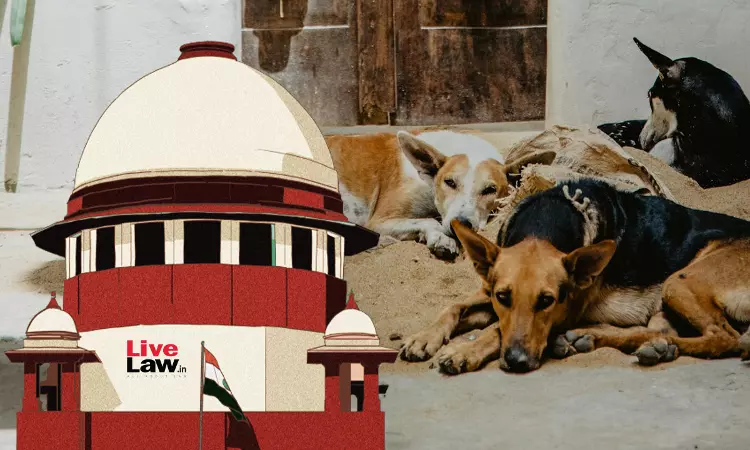
It is from this principle that the recent engagement of the Supreme Court of India with the stray-dog issue must be understood. The Court did not step in to arbitrate compassion against safety, nor to assume the role of municipal administration. It intervened because a routine civic failure had hardened into daily public risk. Recurrent dog-bite incidents, preventable rabies deaths, and the erosion of safety in public spaces left little room for constitutional silence. Streets and footpaths are not abstract commons; they are lived spaces. When fear becomes routine in those spaces, the State's obligation under Article 21 cannot be indefinitely deferred.


Public response followed predictable lines. Many citizens supported the Court because the problem had already entered their daily lives—children attacked, elderly persons altering routines, sanitation workers and delivery personnel navigating territorial packs. Opposition arose from animal-welfare groups and feeders who relied on statutory protection, sterilisation norms, and ethical objections to relocation. Both positions were sincere, yet incomplete. They collided because they operated within a system that guarantees conflict. The debate appeared moral; the failure was structural.
What remained missing was accountable governance. Municipal bodies acknowledged the problem but disclaimed capacity. State governments deferred responsibility downward. The Union framed rules without building institutions to make those rules workable. As long as stray-dog management remained framed as a contest between judicial authority and animal-welfare sentiment, the executive was never compelled to confront questions of scale, infrastructure, and sustainability.
The Order's inexecutability lies not in law or resistance, but in political economy. Any meaningful compliance requires perennial expenditure—continuous funding for housing, feeding, veterinary care, sanitation, staffing, and security. This is not a project; it is a lifelong obligation. The Indian State has historically failed to sustain such obligations even for humans. Education, healthcare, housing, sanitation, and research remain chronically underfunded. In this context, expecting governments to shoulder an open-ended financial commitment without any internal mechanism of recovery is institutionally unrealistic.
This is why existing frameworks fail at execution. When compliance becomes a budgetary contest, it predictably loses. Governments do not remain inactive out of defiance; they falter because compliance implies financial commitments they cannot sustain. What follows is procedural compliance—reports, drives, committees—without structural change. An order that demands endless expenditure without recovery remains, in practice, unexecutable.
Where government pleads practical impossibility, constitutional adjudication cannot end with repetition. At that point, the Court is entitled—and obligated—to compel the creation of an executable framework: financial, institutional, and operational. This is neither governance nor excess; it is adjudication carried to completion. Once such a framework exists, continued inaction no longer reflects incapacity but refusal. Contempt, then, becomes enforcement rather than coercion.
This demands a decisive shift in approach. Public streets cannot remain default animal habitats. Streets must be made completely dog-free, not because animals are disposable, but because streets are the most violent, unregulated, and undignified habitats a society can impose on any living being. The choice, therefore, is not between freedom and confinement, but between unmanaged harm and structured care. Partial measures merely redistribute risk for both humans and animals. Moreover, removing animals from streets creates a psychological vacuum that disrupts habituation and forces society to recognise the shaping role that presence once played. The vacuum is not cruelty; it is cognition. Leaving animals to survive amid traffic, hunger, territorial violence, and disease is not coexistence; it is abandonment disguised as compassion.
Only after this vacuum exists does reintroduction become possible—and reintroduction must occur through identity, not abandonment. Dogs cannot return as nameless strays. They can return only as certified entities with defined roles: companion, therapy, service, or institutional protection. This requires permanent institutions outside urban conflict zones—large campuses with intake and quarantine systems, behavioural and health evaluation units, veterinary hospitals, training academies, regulated scientific crossing and breeding units, lifelong care zones for non-adoptable animals, mechanised sanitation, and integrated waste-to-energy systems that reduce operational cost.
Identity, however, requires imagination—and imagination is shaped by branding. Anything consistently branded acquires trust. Foreign dog breeds dominate aspiration not because of superiority, but because of sustained institutional branding. Indian dogs suffer not from incapacity, but from invisibility. A viable ecosystem must therefore invest in certification marks, training narratives, visual identity, global showcasing, and disciplined public communication. Without branding, even the most rational framework remains unseen.
This exposes a deeper contradiction. India imports prestige through foreign breeds while abandoning its own. Yet Indian dogs are more climate-adapted, resilient, and disease-resistant. Structured training, behavioural certification, and ethical breeding can create a recognised Indian dog identity. This is Make in India applied to living capital.
Globally, the pet-care industry is valued at approximately USD 250–300 billion, with dogs forming the dominant segment across breeding, training, veterinary care, food, boarding, grooming, insurance, therapy deployment, and security services. Yet no such integrated economic zone has been conceived around Indian dogs. India remains largely a consumer, not a producer, of canine value.
A structured ecosystem reverses this. Training builds trust. Trust enables adoption. Adoption generates revenue. Revenue sustains a vertical economy—training, breeding, veterinary services, food, equipment, grooming, boarding, deployment, and certification. Waste is converted into biogas and compost, generating power and closing ecological loops. The system funds itself.
The same institutional logic need not be confined to dogs alone. India's streets also carry unmanaged cattle, bullocks, and buffaloes, contributing to road accidents, night-time fatalities, traffic obstruction, and routine disruption of urban mobility. Road-safety data across states consistently record thousands of accidents each year involving free-roaming cattle, apart from chronic inconvenience to commuters, pedestrians, and emergency services. Municipal responses—temporary shelters, sporadic drives, or penalties—have failed for the same reason as stray-dog policies: perpetual care without sustainable institutional design. If this gap persists, the issue will inevitably return to constitutional courts, repeating the same cycle of petitions, directions, and non-execution. An integrated campus-based framework—accommodating dogs and abandoned cattle with shared shelter, veterinary care, controlled movement, and waste-to-energy systems—offers a way to prevent this recurrence and preserve judicial time.
This is not welfare in the conventional sense. It is institutional design with dignity, where care survives because the system sustains itself. Justice Oliver Wendell Holmes Jr.'s observation that “the life of the law has not been logic; it has been experience” finds its meaning here—not in abstraction, but in execution. A rule that cannot enter lived reality has no life beyond paper. Law, therefore, fulfils its purpose not when it merely declares what ought to be done, but when it makes doing possible.
The Author is an Advocate practising at Odisha. Views are personal


